A plant can turn yellow from too much water, too little water, a dark corner, a cold window or simply an old leaf letting go. Most of those look alike at first glance, and the fix for one (more water) makes another (overwatering) worse.
So don’t change anything yet. Two quick checks, which leaves are yellow and how wet the soil is deep in the pot, will point you to the right section below.
In This Post
Start With Two Checks
First, the soil. The top of the pot dries first and fools people. Push a finger or a wooden chopstick a few inches down, then lift the pot. A pot that feels heavy and soil that comes up damp mean there’s plenty of water down there. A light pot and dry, crumbly soil mean the opposite.
Second, which leaves are yellow, and how. Pick the line that matches your plant best:
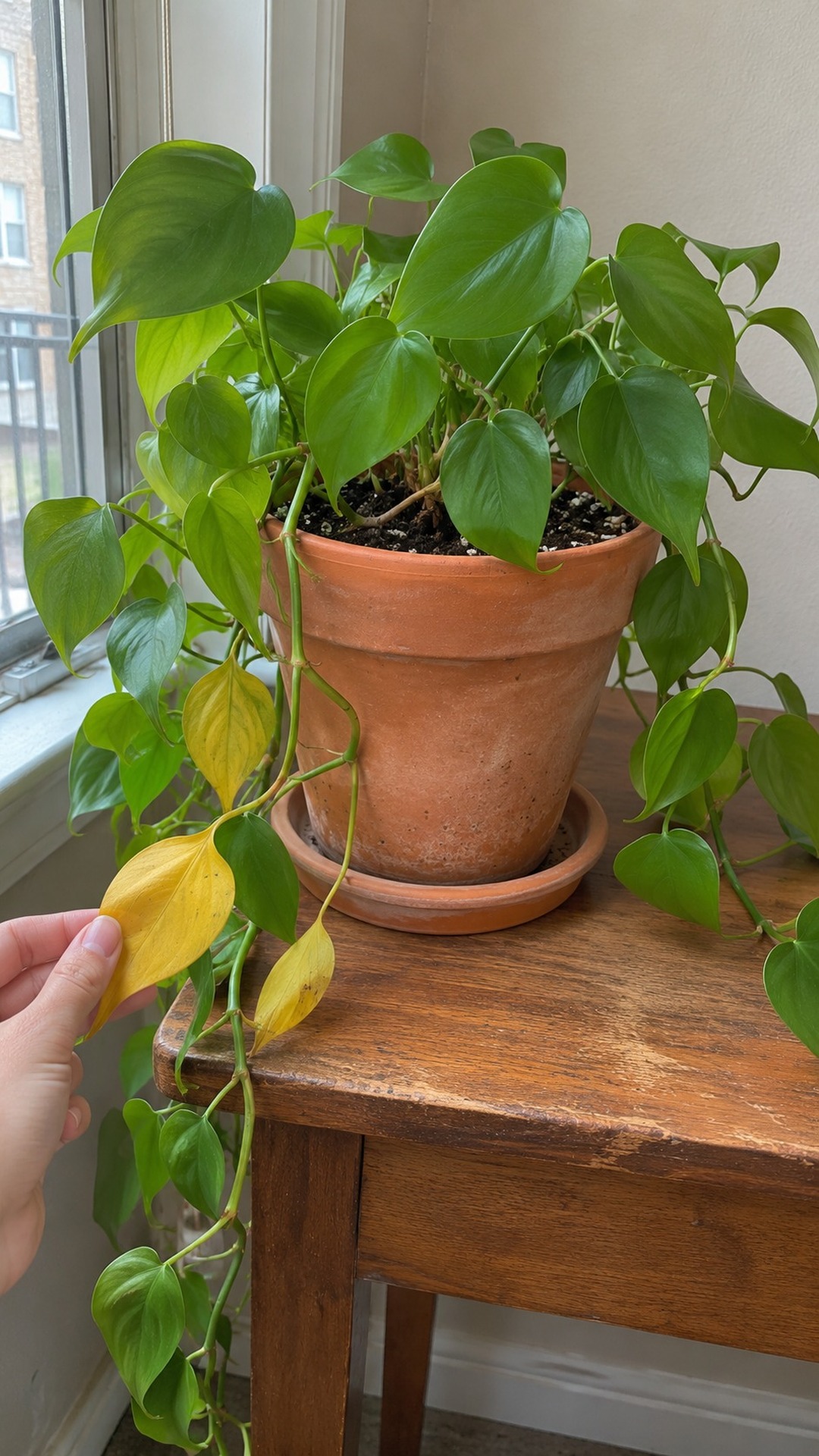
- The lowest, oldest leaves are going yellow, often soft: Yellow lower leaves
- Leaves are yellow and dry, with brown, crispy edges: Yellow and crispy
- The newest leaves at the top come in pale, or yellow with green veins: Pale new leaves
- Leaves look speckled with tiny yellow dots: Speckled leaves
- Yellowing started right after a change, like a move, a repot or a cold night: After a change
 Save
Yellow Lower Leaves
This is the most common pattern, and it has four usual causes. Start with the first one, because it’s the one that can end in root rot.
Too much water
The University of Maryland Extension puts it bluntly: “Overwatering is the number one reason why indoor plants fail and will cause leaf yellowing.” Roots need air as well as water. In soil that stays soggy they can’t breathe, they start to rot, and the leaves turn yellow and limp, usually from the bottom up.
If your soil check came up wet, stop watering, empty the saucer and let the mix dry out. For most leafy houseplants, water again only when the soil is dry a few inches down and the pot feels light (succulents and snake plants like to dry out further), and make sure the pot has a drainage hole. If you keep the plant in a decorative pot without one, tip out the water that collects inside after watering.
 Save
If the soil smells sour or the stems feel soft at the base, slide the plant out and look at the roots. Go by feel more than color: healthy roots are firm and usually white to light tan, while rotten ones are mushy and dark brown to black. Cut the rotten roots off with clean scissors and repot in fresh, well-draining mix. Hold off on fertilizer for a couple of weeks while the plant recovers.
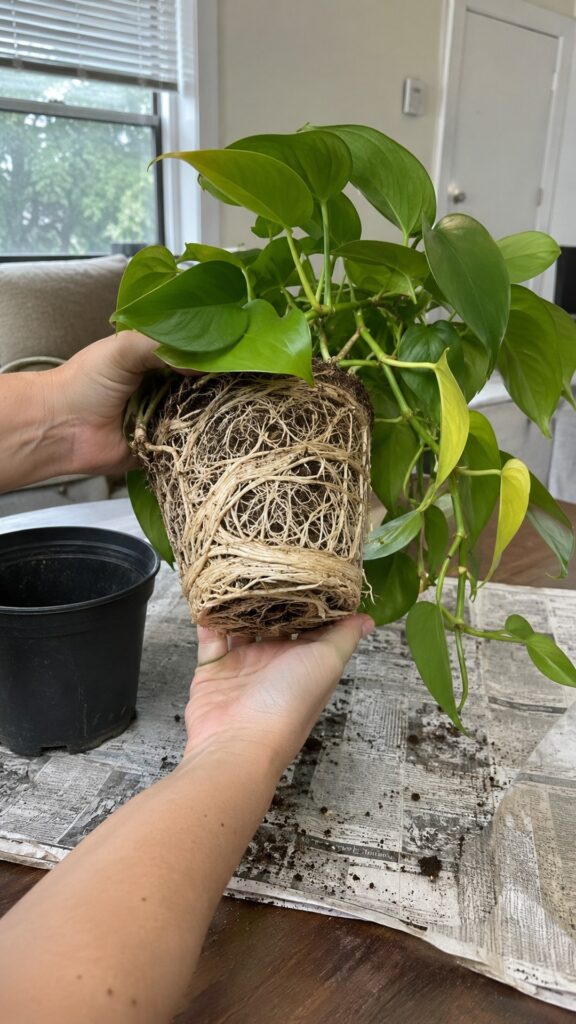
A pot full of roots
When roots fill the pot, there’s little soil left to hold water, so the plant dries out within a day or two of watering and the lower leaves suffer. Roots coming out of the drainage hole or up at the soil surface are the giveaway.
Move it to a pot no more than 2 inches wider than the old one, as NC State Extension advises. A much bigger pot holds more wet soil than the roots can use. Spring is the best time to repot, but a plant that dries out every day can’t wait that long.
 Save
A hungry plant
A plant that has sat in the same soil for a long time can run short of nutrients, particularly nitrogen. The older leaves turn pale green and then yellow, fairly evenly, rather than in spots or patches.
Wet soil and low light can cause the same look, so rule those out first. A plant with damaged roots can’t use fertilizer anyway. Then feed it with a balanced houseplant fertilizer at the strength on the label while it’s actively growing, and feed less or stop when growth slows in winter. For a plant that hasn’t been repotted in years, fresh potting mix often does more than fertilizer.
Just an old leaf
As the Royal Horticultural Society notes, “It is normal for the odd lower leaf on a mature plant to yellow and fall.” If it’s one leaf at a time, at the bottom, and the plant keeps putting out healthy new leaves, nothing is wrong. Pull the leaf off once it comes away easily.
Yellow and Crispy
Yellow leaves that turn brown and crunchy, often from the edges in, point to thirst when your soil check backs it up: the pot feels light, the mix is dry right through, and it may have shrunk away from the sides of the pot.
Water slowly until it runs out of the drainage hole. If the water rushes straight down the gap at the sides, set the pot in a bowl of water and let it soak until the top of the mix feels moist, then let it drain. After that, check the soil more often, especially in summer or near a heater.
If the soil isn’t dry but the edges are still brown, look at the rim of the pot and the soil surface. A white crust there is salt from fertilizer or hard water building up. Illinois Extension recommends scrubbing the crust off and flushing the soil with clear water: pour plenty through until it streams out the bottom, then let the pot drain completely.
Pale New Leaves
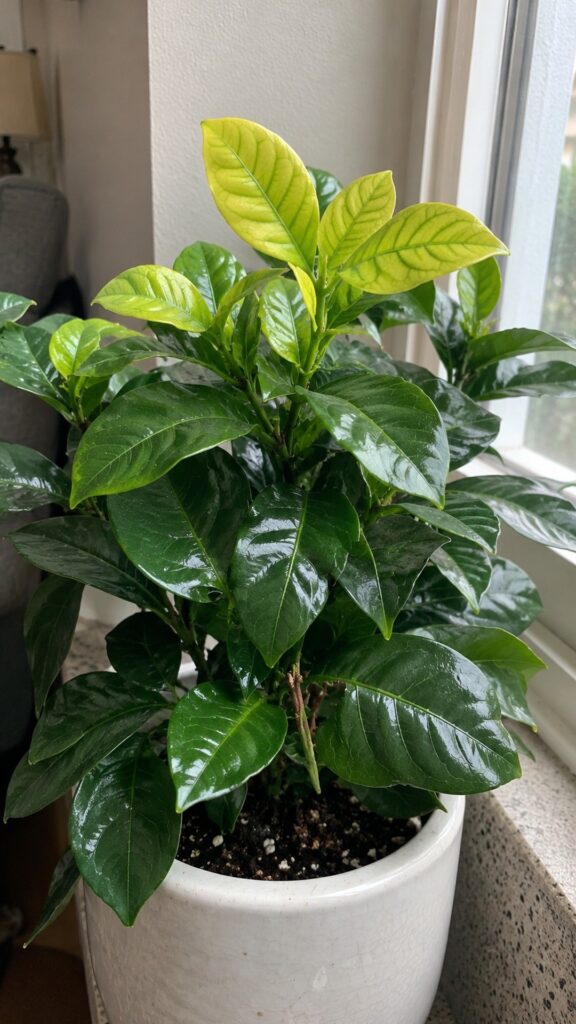
When the newest leaves at the top come in yellow while the veins stay green, it’s often a sign the plant can’t get enough iron, especially in lime-hating plants such as gardenias. Usually there’s iron in the soil, but the roots can’t take it up. The RHS links firm yellow upper leaves to too much lime in the soil and to watering for a long time with hard water instead of rainwater. Magnesium shortage also yellows the leaf between the veins, but the RHS notes it tends to start on the older leaves, while iron shortage hits the youngest ones first.
 Save
Damaged roots can cause the same pattern, so rule out wet soil first. If the soil is fine and your tap water is hard, switch to rainwater or distilled water for a while and use a fertilizer that lists trace elements such as iron and magnesium. If that was the problem, new leaves come in greener. The yellow ones probably won’t change back.
Pale new growth can also simply mean too little light. A plant in a dim spot grows long, leggy stems with small, pale leaves spaced far apart and leans hard toward the window. Move it closer to the light, or add a grow light, and water less while it’s somewhere dim. Our low light plant guide has a quick phone test for measuring how much light a spot really gets.
Speckled Leaves
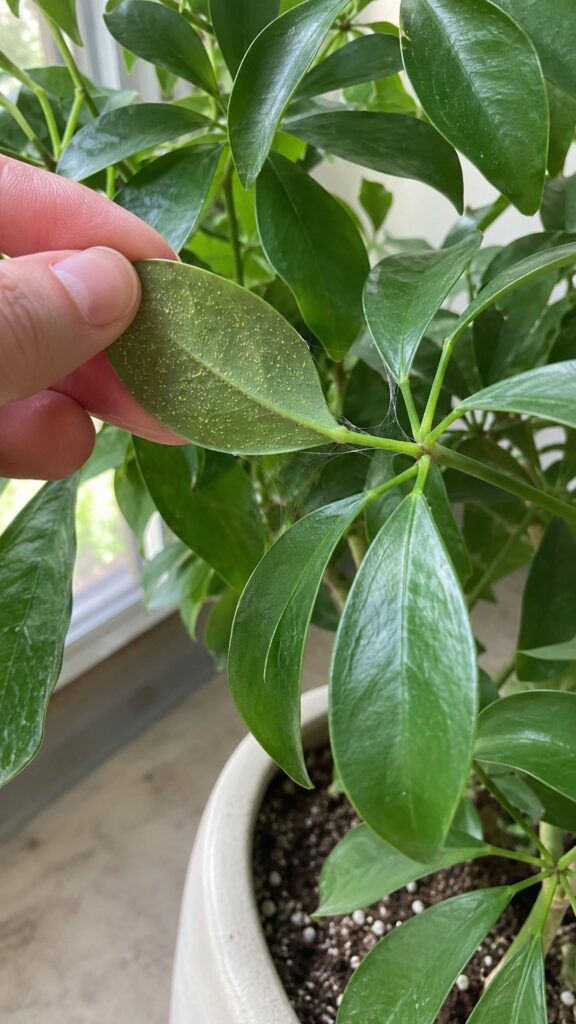
Flip a few leaves over and look closely, ideally in good light. Fine speckling often means pests, so look for the insects themselves, or their webbing, before you treat anything.
- Spider mites: Iowa State Extension describes light infestations as foliage “speckled with very tiny yellowish green spots,” with “very fine webbing” on the leaves and stems as numbers grow. They do best in warm, dry rooms.
- Thrips: silvery, scraped-looking patches with tiny black specks, often on new growth.
- Aphids, scale and mealybugs: sticky leaves, plus green or black insects, brown bumps or white cottony tufts.
 Save
Move the plant away from your others first. Then take it to the shower and rinse the leaves with a strong spray of water, undersides included. For pests that keep coming back, use an insecticidal soap or miticide labeled for houseplants and follow the label for how often to repeat it, since one spray rarely gets the eggs. Iowa State Extension says it’s usually best to discard a heavily infested plant, so if yours is wrapped in webbing, replacing it may be the easier choice.
Yellowing After a Change
Yellowing that starts soon after something changed is usually stress. Illinois Extension says, “Many plants go through an adjustment period whenever they are moved,” whether that’s from a bright garden center to your living room or from one window to another. Repotting can do the same.
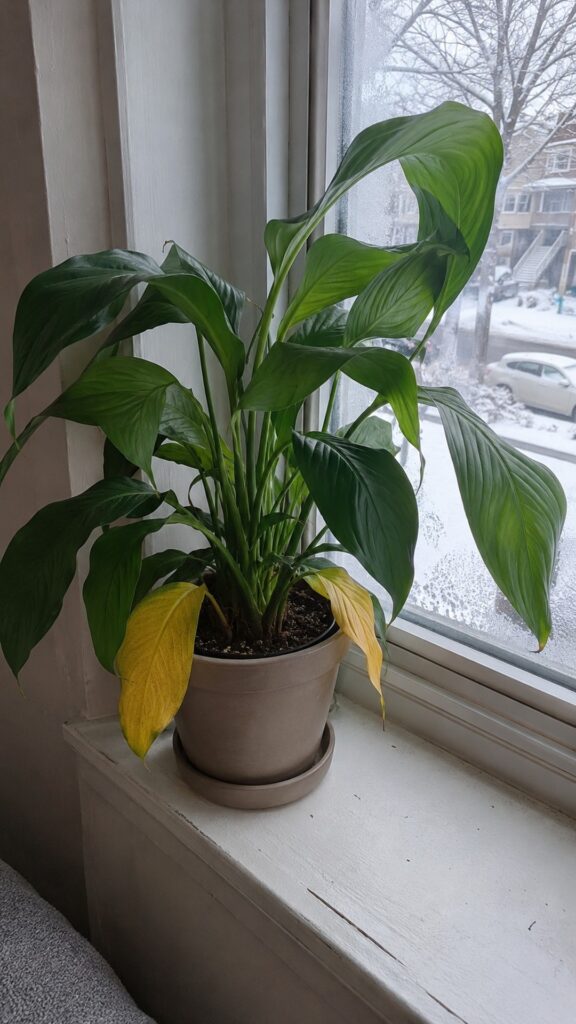
Cold causes it too. The RHS lists “too cold a temperature, a sudden drop in temperature or exposure to draughts” among the causes of yellow leaves. In winter, that means leaves touching icy glass, a spot next to an outside door, or a plant sitting under an AC vent.
 Save
Move it away from the cold spot, then leave it alone. Don’t repot, fertilize or move it again straight away. Give it a few weeks. If yellowing keeps spreading after that, try a different spot and check your watering again.
Your Recovery Plan
- Fix one thing at a time. Change the watering, or the spot, or the pot, then wait. If you change everything at once, you’ll never know what worked.
- Watch the new leaves, not the old ones. A leaf that has turned fully yellow usually won’t go green again. Healthy new growth is the sign the plant has recovered.
- Remove yellow leaves once you’ve found the cause. Cut them off close to the stem with clean scissors. If a struggling plant has lots of half-yellow leaves, take off only the worst ones, so it keeps some green to feed itself.
- Act fast on the serious signs. Yellowing that spreads quickly, a stem base that’s soft or black, soil that smells rotten, or a plant that wilts even though the soil is wet: check the roots now, because the sooner you cut away rot, the more of the plant you save.
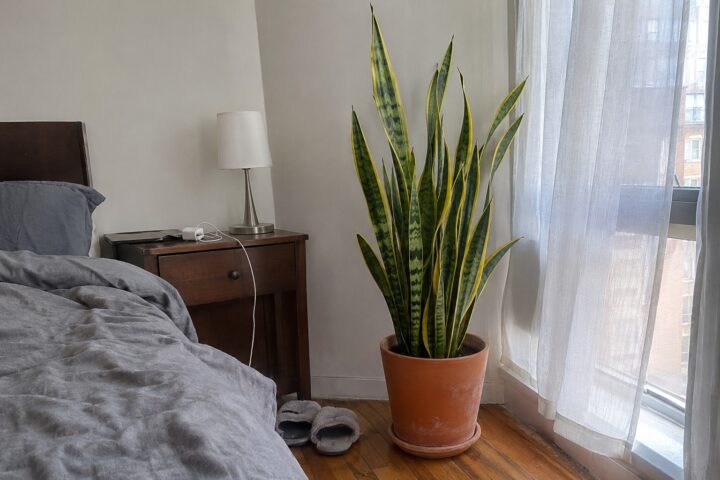
Some plants have their own habits. When a snake plant turns yellow, the cause is usually too much water and sometimes cold, and our snake plant care guide shows how to rescue one.
A Few More Questions
How can I tell overwatering from underwatering?
Check the soil deep in the pot and lift it. Overwatered plants have soft, limp yellow leaves, damp soil a few inches down and a heavy pot. Underwatered plants have dry, crispy yellow-brown leaves, soil that’s dry right through and a light pot.
Why are my plant's leaves turning yellow after repotting?
A few yellow leaves in the first weeks after repotting are normal stress, especially if roots were disturbed. Keep the plant out of strong sun, water only when the mix starts to dry, and don’t fertilize until you see new growth.
Can a yellow leaf turn green again?
Usually not once it has turned fully yellow. A leaf that’s only slightly pale can sometimes green up after the cause is fixed. Either way, the new leaves tell you whether the fix worked.
Sources
This guide is based on the University of Maryland Extension guide to yellowing leaves on indoor plants, University of Illinois Extension advice on houseplant problems, the Royal Horticultural Society guide to leaf damage on houseplants, NC State Extension on repotting, Iowa State Extension on spider mites, and the New York Botanical Garden on nutrient deficiencies in houseplants.