Every “low light plant” list makes the same promise, and then the plant sulks in your hallway for six months. Most of the time the plant was fine; the spot was darker than the label meant. “Low light” covers a huge range, from a bright north-facing bedroom to a windowless bathroom lit by one bulb, and a plant that’s happy in the first can slowly starve in the second.
The short version: ZZ plant, snake plant, pothos, cast iron plant and Chinese evergreen are the most reliable. As a rough guide, they keep growing at about 50 to 250 foot-candles, the light a few steps back from a north window, though growth at the dim end is slow. In a room with no window at all, no houseplant does well long term without a grow light. Nine of the plants below actually grow in low light; the other six only tolerate it. Which group you should shop from depends on how dim your spot really is, and that takes about a minute to check.
In This Post
First, Measure Your Spot
Indoor light is measured in foot-candles (or lux; one foot-candle is about 10.76 lux). The University of Minnesota Extension uses these rough bands for houseplants:
- Low light: 50 to 250 foot-candles (about 540 to 2,700 lux)
- Medium light: 250 to 1,000 foot-candles (about 2,700 to 10,800 lux)
- High light: more than 1,000 foot-candles
Treat these as a guide, not a hard line. Plants respond to how long the light lasts as well as how bright it is.
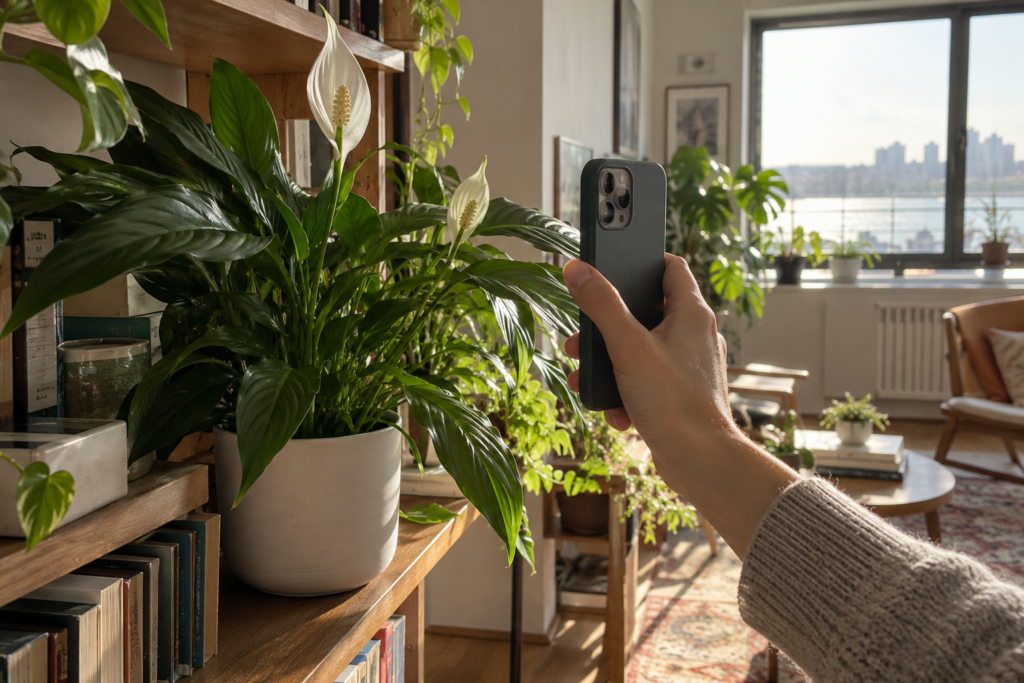
A free light-meter app on your phone won’t match a lab meter, and readings vary between phones. But it’s good for comparing spots in your own home, which is all you need here.
- Test on an ordinary day around midday, then again in late afternoon.
- Hold the phone where the leaves will be, pointed toward the window. Most apps read the light sensor near the front camera, so the screen usually faces the light. If your app says otherwise, follow its instructions.
- Take a few readings a step apart and note the typical number, not the brightest one.
- Repeat in winter if you can. In much of the US, window light drops a lot between June and December.
 Save
What your reading means
- Well under 540 lux: you’re below even the low-light band. The toughest plants may hang on, but expect very little growth. If it’s only a couple of hundred lux or less, skip to the grow light section before you buy anything.
- About 540 to 2,700 lux: true low light. Start with the nine plants that grow there.
- Toward the top of that range, or above it: you can add the six that only tolerate low light. Above about 2,700 lux you’re in medium light, where most plants on this page grow faster and fuller.
One Rule Before You Pick: Water Less Than You Think
A lot of low-light plants die the same way: watering on the same schedule as a plant on a sunny windowsill. In dim light a plant uses much less water, so the soil stays wet for longer. Wet soil plus low light is the classic setup for root rot.
Check the soil, not the calendar. Push a finger or a wooden chopstick a couple of inches in; if it comes out damp, wait. For ZZ plants and snake plants, wait until the whole pot is dry. Use pots with drainage holes and a well-draining mix, and empty the saucer after watering. In winter, when days are short, stretch the gaps even further.
The 15 Plants at a Glance
| Plant | In low light it… | Water | Size indoors | Cats and dogs (ASPCA) |
|---|---|---|---|---|
| ZZ plant | Grows slowly | Very little | 2–3 ft | Keep away (not listed; irritant) |
| Snake plant | Grows slowly | Very little | 1–4 ft | Toxic |
| Pothos | Grows, gets leggy | Moderate | Trailing | Toxic |
| Cast iron plant | Grows slowly | Little | 2 ft | Non-toxic |
| Chinese evergreen | Grows | Moderate | 1–3 ft | Toxic |
| Peace lily | Grows, flowers less | Moderate | 1–3 ft | Toxic |
| Heartleaf philodendron | Grows, gets leggy | Moderate | Trailing | Toxic |
| Dracaena ‘Janet Craig’ | Grows slowly | Moderate | 3–6 ft | Toxic |
| Parlor palm | Grows slowly | Moderate | 2–4 ft | Non-toxic |
| Peperomia obtusifolia | Tolerates | Little | Under 1 ft | Non-toxic |
| Lucky bamboo | Tolerates | Grows in water | 1–3 ft | Toxic |
| Prayer plant | Tolerates | Keep lightly moist | Under 1 ft | Non-toxic |
| Spider plant | Tolerates | Moderate | 1–2 ft | Non-toxic |
| Bird’s nest fern | Tolerates (needs humidity) | Keep lightly moist | 1–2 ft | Not on the ASPCA list (unconfirmed) |
| Boston fern | Tolerates (needs humidity) | Keep lightly moist | 1–3 ft | Non-toxic |
Sizes are typical for houseplants in a home, not the maximum a plant can reach.
If you have pets: several of the toughest low-light plants, including pothos, peace lily, philodendron and Chinese evergreen, contain insoluble calcium oxalate crystals. Chewing a leaf releases them, which irritates a pet’s lips, mouth and throat. Pet Poison Helpline describes the usual signs:
“Drooling, gagging, and vomiting are common signs in animals following ingestion of this plant.”
Serious throat swelling is rare, but if your pet has chewed one of these plants, call your vet or a pet poison hotline rather than waiting to see what happens.
Plants That Grow in Low Light
1. ZZ Plant: Stores Water in Its Roots
 Save
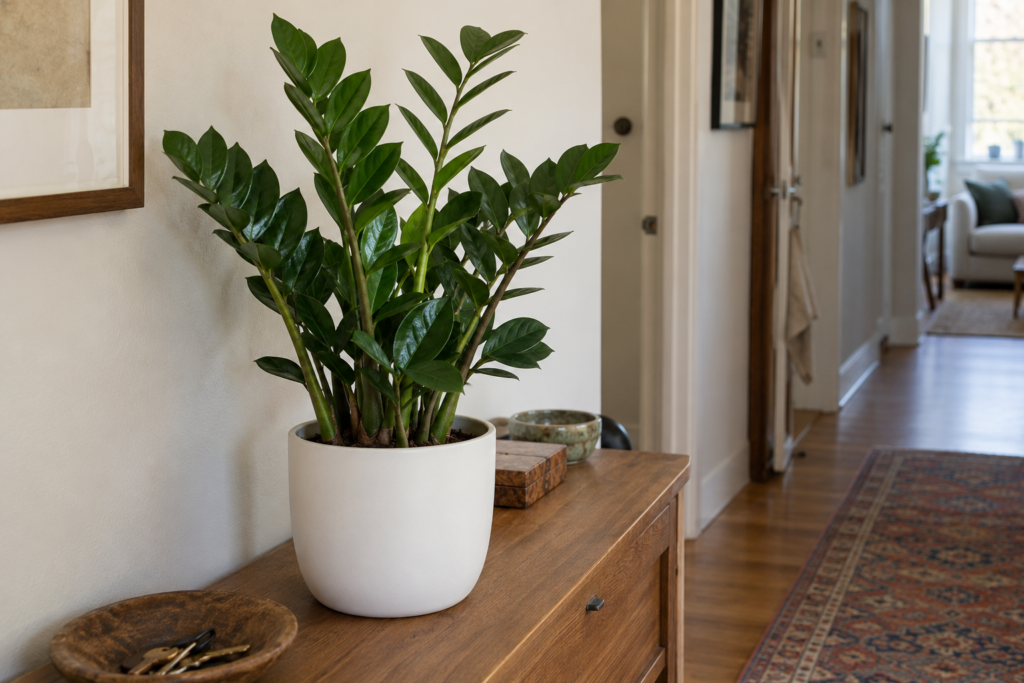
The ZZ plant (Zamioculcas zamiifolia) stores water in thick underground rhizomes, which is why it shrugs off weeks without attention. In a dim room it grows slowly but keeps its glossy, dark leaves looking good.
Light: low to bright indirect. Water: only when the pot is dry all the way through; in a dim room that’s often every three to four weeks, less in winter. Watch for: yellow, soft stems, which usually mean too much water. Pets: it isn’t in the ASPCA database, but NC State Extension rates it as moderately toxic to cats and dogs, so keep it out of reach.
2. Snake Plant: For Forgetful Waterers
 Save
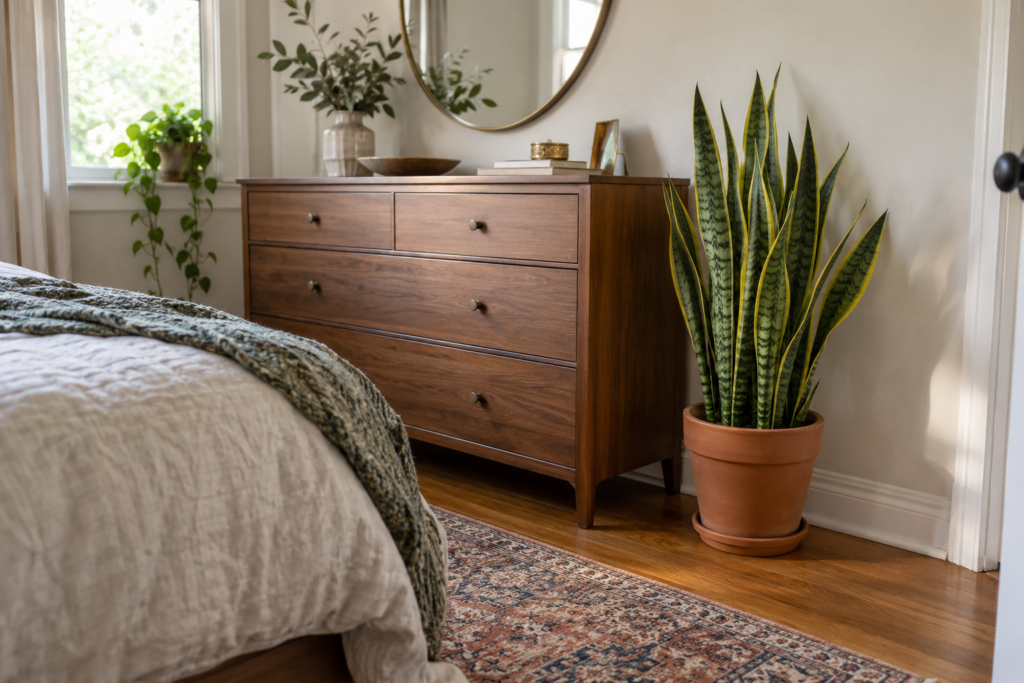
Snake plants (Dracaena trifasciata) cope with low light and dry air and forgive skipped waterings. They grow faster and stand straighter in brighter light; in a dark room, expect a new leaf here and there rather than a growth spurt.
Water: let the potting mix dry through, which in low light can mean once a month or less. Pets: toxic to cats and dogs. Our snake plant care guide covers the details.
3. Pothos: The Easiest Trailing Plant for a Dim Shelf
 Save
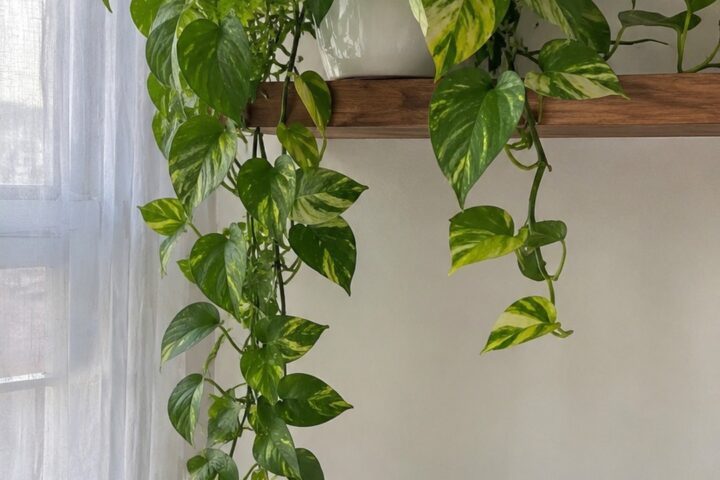
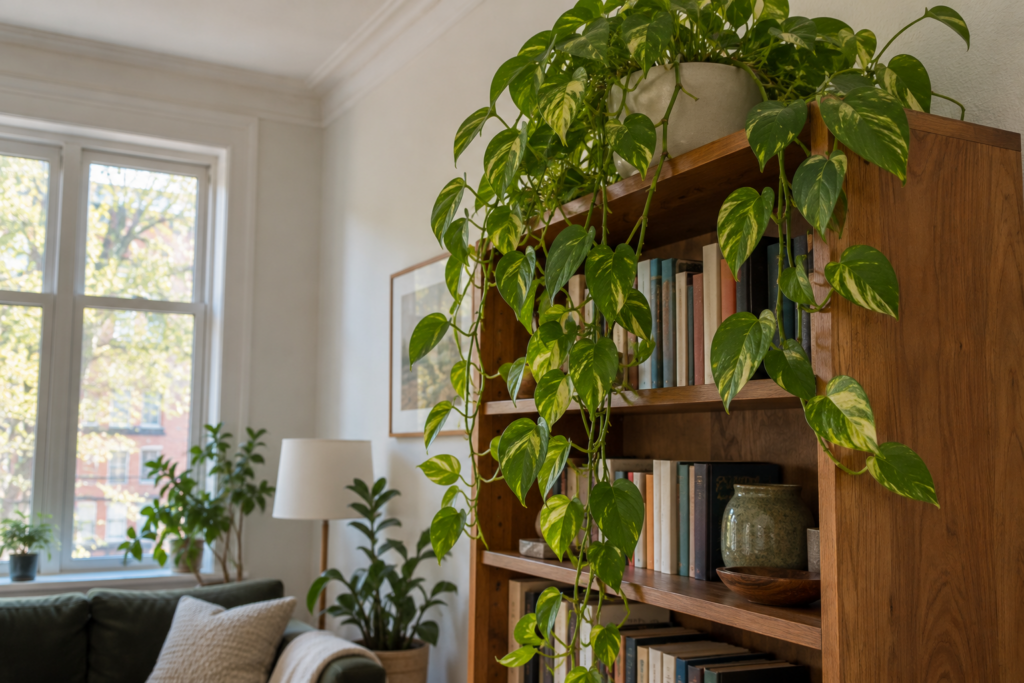
Golden pothos (Epipremnum aureum) handles dim corners and the odd missed watering, which is why it’s so often someone’s first houseplant. In low light, the yellow marbling fades and the vines stretch, with more bare stem between leaves. That’s the plant reaching for light, not dying.
Water: when the top couple of inches are dry. Tip: trim long, bare vines and root the cuttings in water, then plant them back in the pot to make it fuller. Pets: toxic to cats and dogs (it causes mouth irritation and drooling).
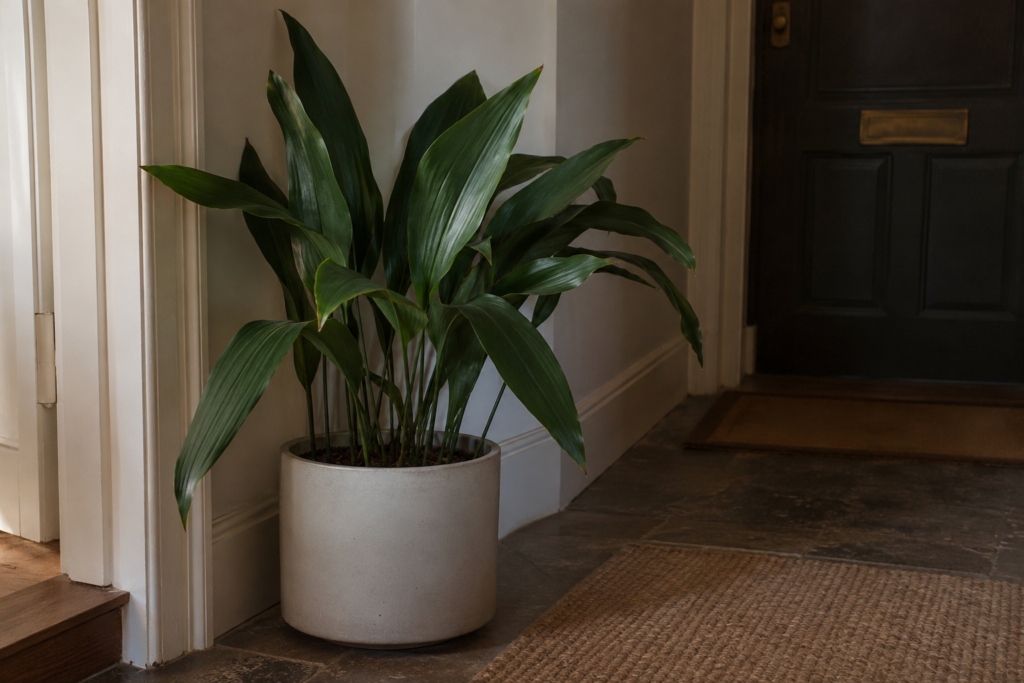
4. Cast Iron Plant: Slow, Tough and Pet-Safe
 Save
The cast iron plant (Aspidistra elatior) handles deep shade and irregular watering better than almost anything else. Its one flaw is speed: it can take a year to add a few leaves, so buy the size you want. It’s also one of the few truly low-light plants listed as non-toxic to cats and dogs.
Water: when the top half of the pot is dry. Avoid: cold drafts in winter, which can mark the leaves.
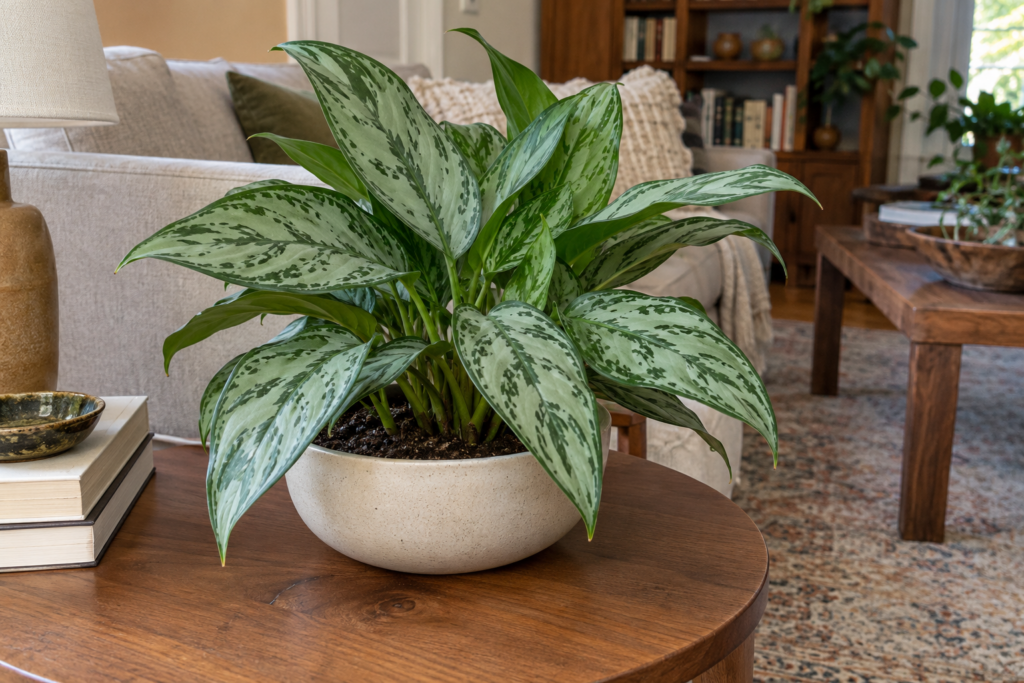
5. Chinese Evergreen: Patterned Leaves in a Darker Room
 Save
Chinese evergreen (Aglaonema) is the pick if you want pattern, not just green. The darker green and silver types handle the lowest light; the pink and red varieties keep their color better in medium light. It dislikes cold, so keep it away from winter drafts and exterior doors.
Water: when the top inch or two is dry. Pets: toxic to cats and dogs, so keep it out of reach.
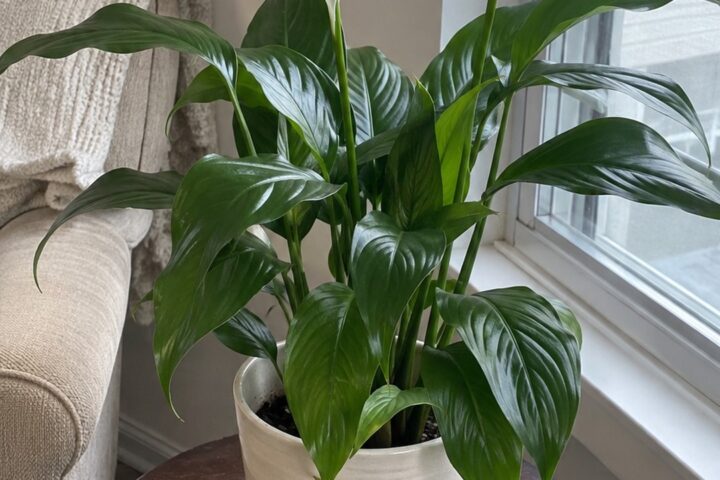
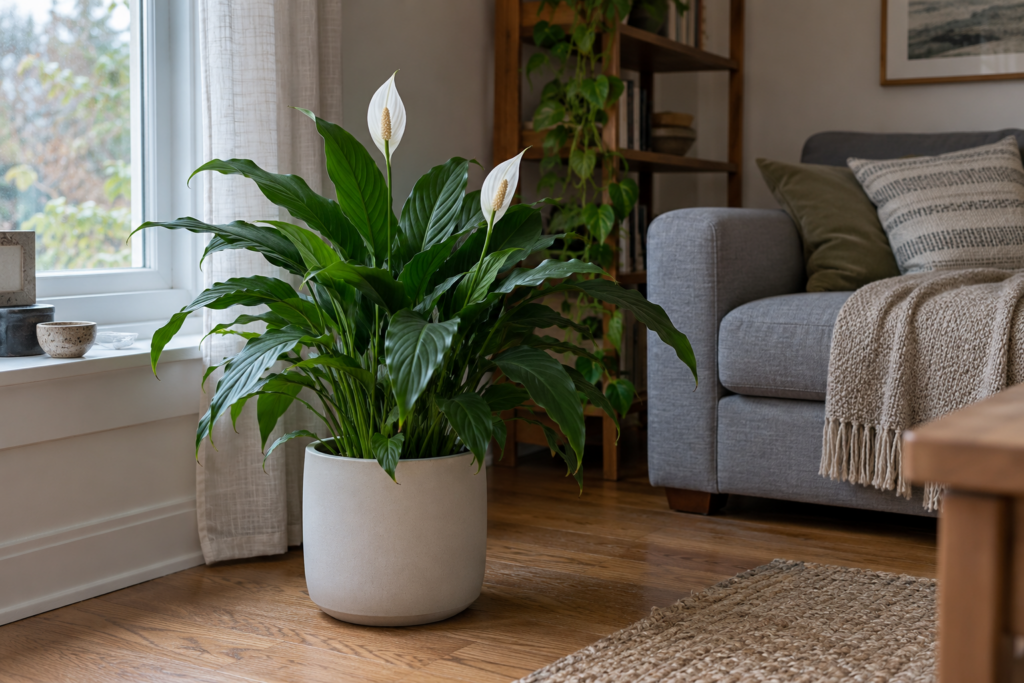
6. Peace Lily: Grows in Low Light, Flowers in Brighter
 Save
Peace lilies (Spathiphyllum) grow happily in low light but flower more reliably toward the bright end of it. They’re also good at telling you they’re thirsty: the whole plant droops when it’s dry.
Don’t use the droop as your watering schedule, though. Repeated wilting browns the leaf tips. Water when the top inch is dry. Pets: toxic to cats and dogs, though it isn’t a true lily.
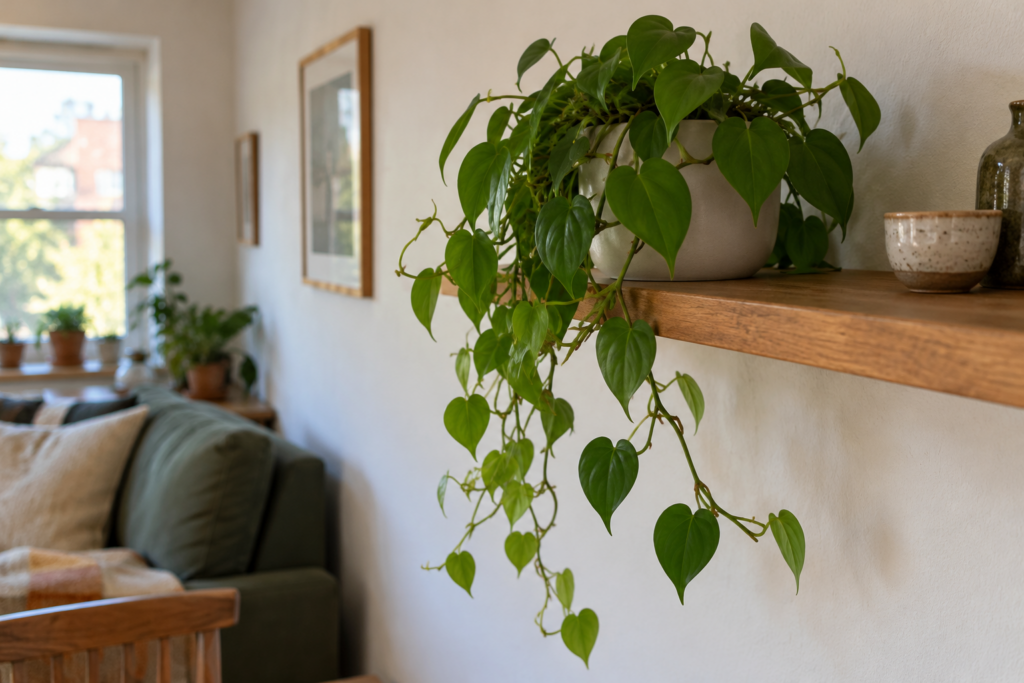
7. Heartleaf Philodendron: Softer Than Pothos
 Save
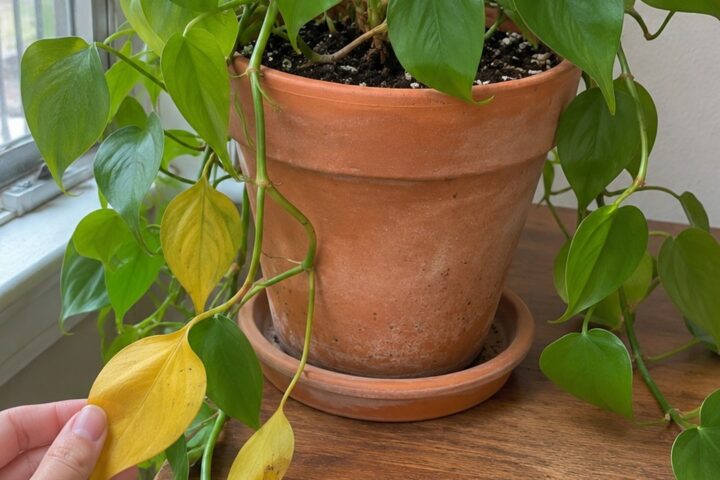
Heartleaf philodendron (Philodendron hederaceum) looks like pothos with thinner, heart-shaped leaves, and it tolerates low light just as well. It’s lovely on the top of a bookshelf, where the vines can hang. Water: when the top inch or two is dry. Pets: toxic, like other philodendrons.
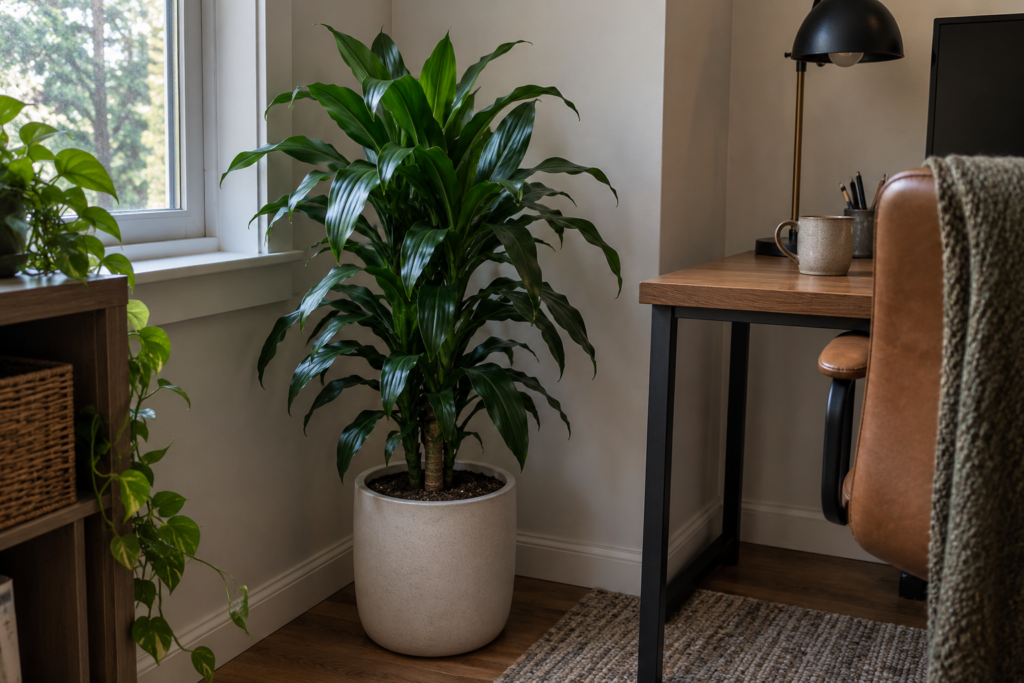
8. Dracaena ‘Janet Craig’: Height Without Sunlight
 Save
‘Janet Craig’ is the tall option for a dim room. It has dense, glossy, dark green leaves, which made it a classic office plant. It’s sensitive to fluoride and salts in water, which show up as brown tips; if they appear, try distilled or rain water. Pets: toxic to cats and dogs.
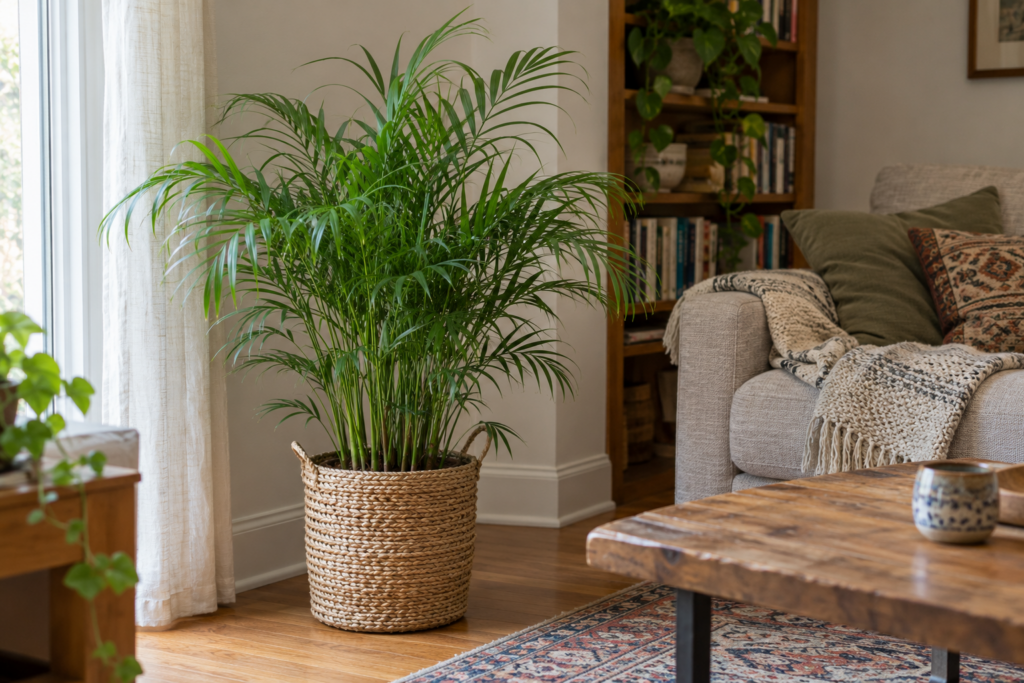
9. Parlor Palm: The Palm Most Likely to Cope Indoors
 Save
Most palms want a lot of light. The parlor palm (Chamaedorea elegans) still needs some, but it tolerates far less than other palms, and it was a favorite in Victorian parlors, which is where the name comes from. Keep the soil evenly moist but never soggy. It’s listed as non-toxic to cats and dogs.
Plants That Tolerate Low Light (but Prefer More)
These six are often sold as low-light plants. They’ll live in a dim spot, but they look their best a little closer to a window.
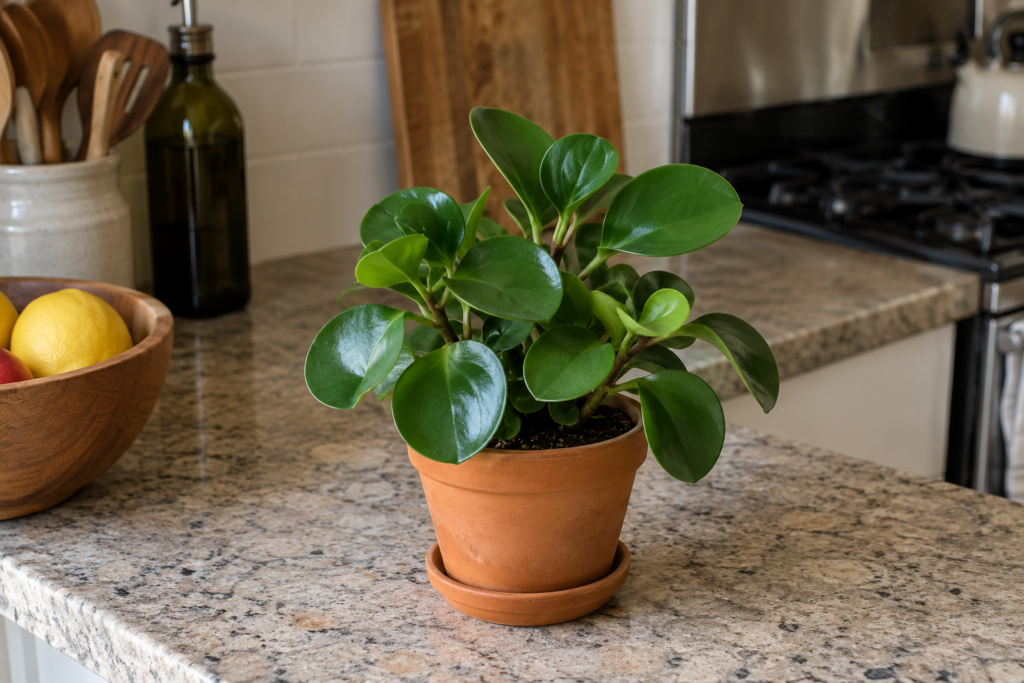
10. Peperomia: Small and Forgiving
 Save
The baby rubber plant (Peperomia obtusifolia) stays small and tidy, with thick, glossy leaves that hold water, so it forgives a missed watering. It’s listed as non-toxic to cats and dogs. Overwatering is the usual way people lose it; let the mix dry most of the way between waterings.
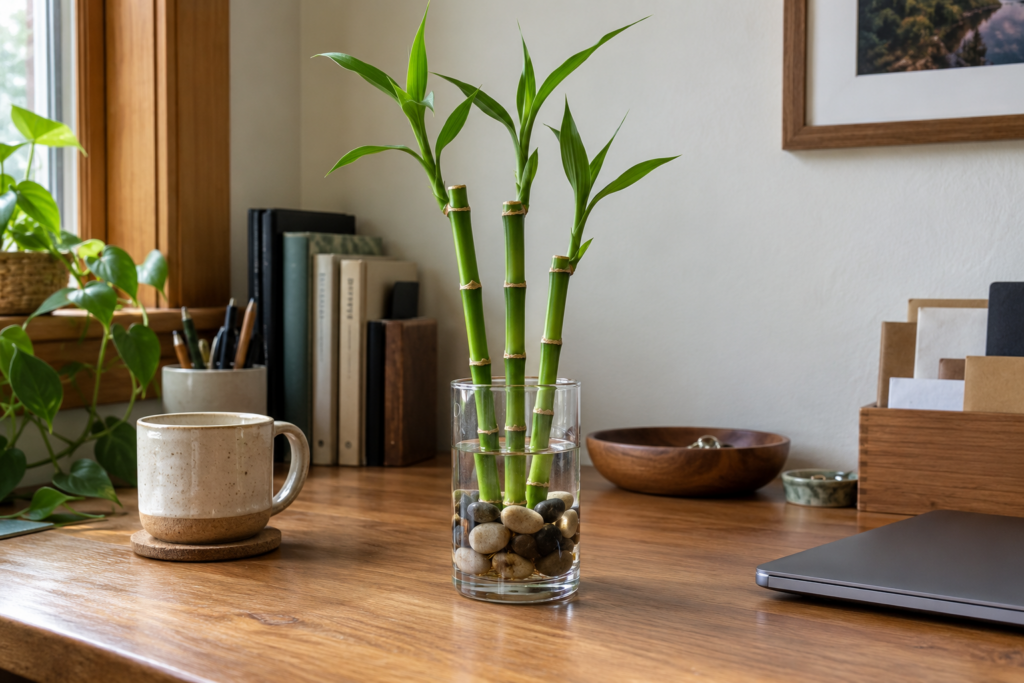
11. Lucky Bamboo: Grows in a Vase of Water
 Save
Lucky bamboo (Dracaena sanderiana) isn’t bamboo. It will grow in a vase of water in low light, but it isn’t care-free: change the water whenever it turns cloudy, rinse the vase if algae appear, and try filtered water if your tap water leaves a white crust. Plain water has no nutrients, so a very weak liquid fertilizer now and then helps. Pets: toxic to cats and dogs.
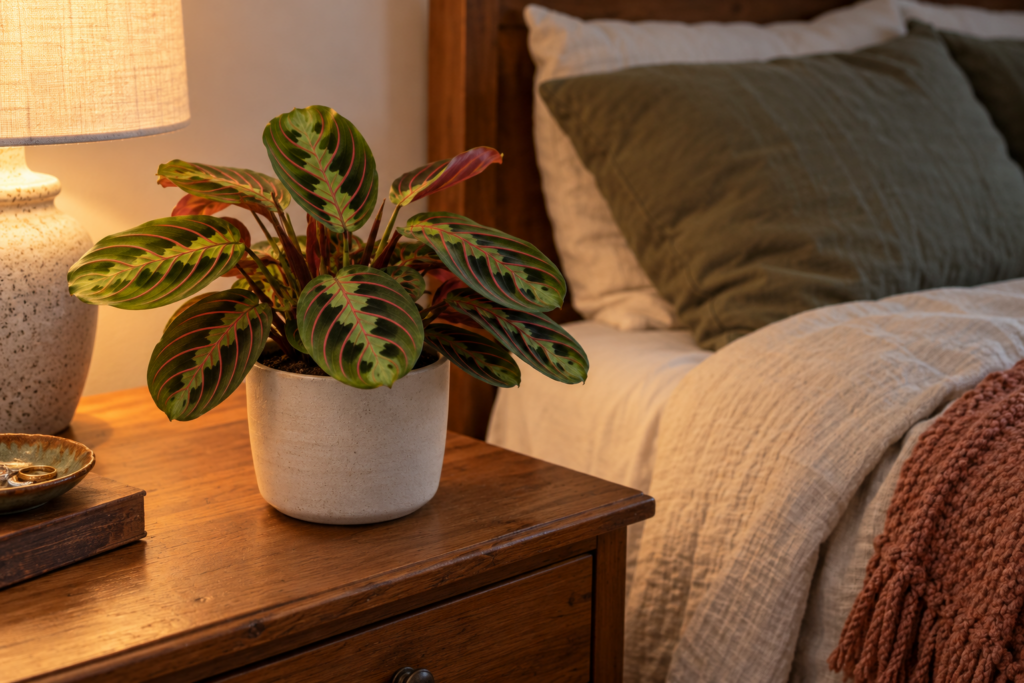
12. Prayer Plant: Leaves That Fold at Night
 Save
Prayer plants (Maranta leuconeura) fold their leaves up in the evening, which is half the fun. They do best in medium light and burn in direct sun, but tolerate the brighter end of low light. Crispy edges usually mean dry air or hard water. Listed as non-toxic to cats and dogs.
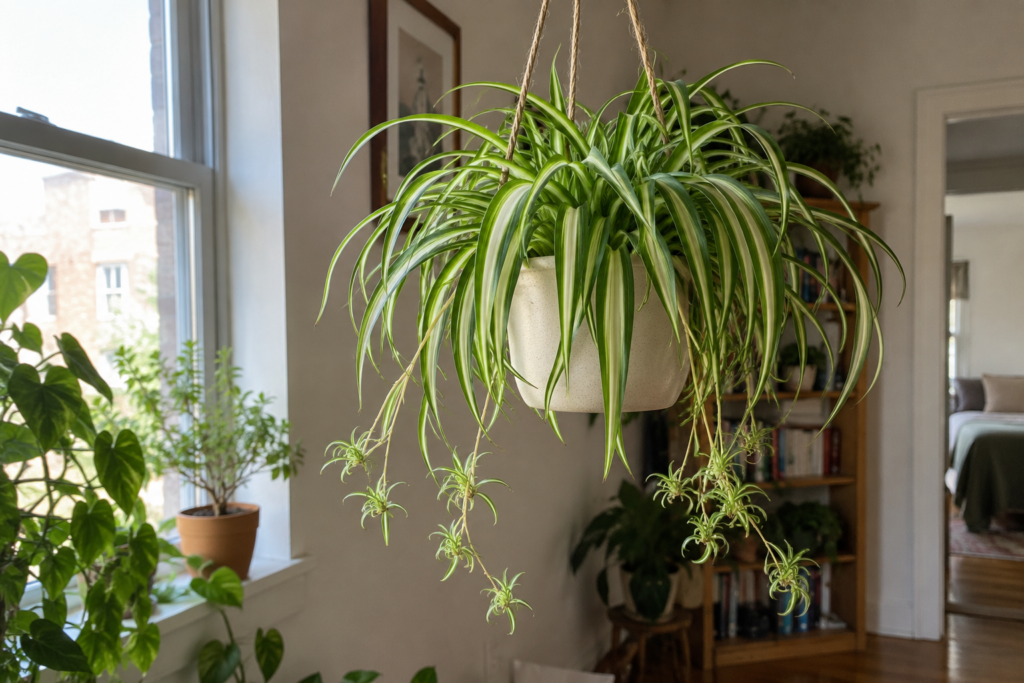
13. Spider Plant: Fine Under Office Lights
 Save
Spider plants (Chlorophytum comosum) prefer medium light but put up with less, and they do well under bright office-style LED or fluorescent lighting. In dim spots they make fewer baby plantlets. They’re non-toxic to cats and dogs; hang one up if your cat tends to chew leaves.
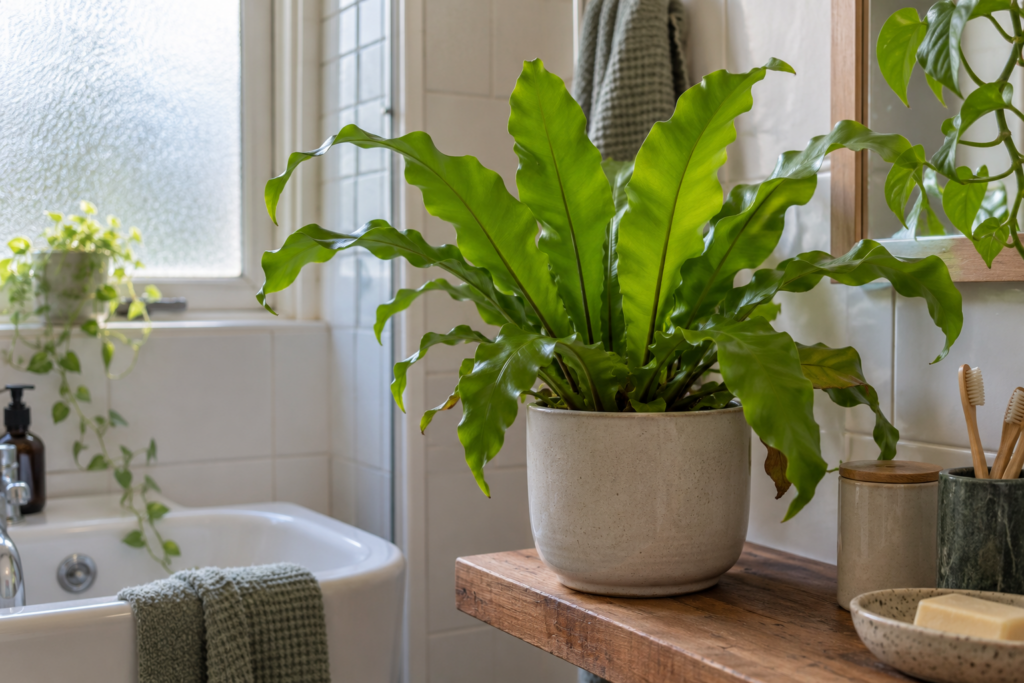
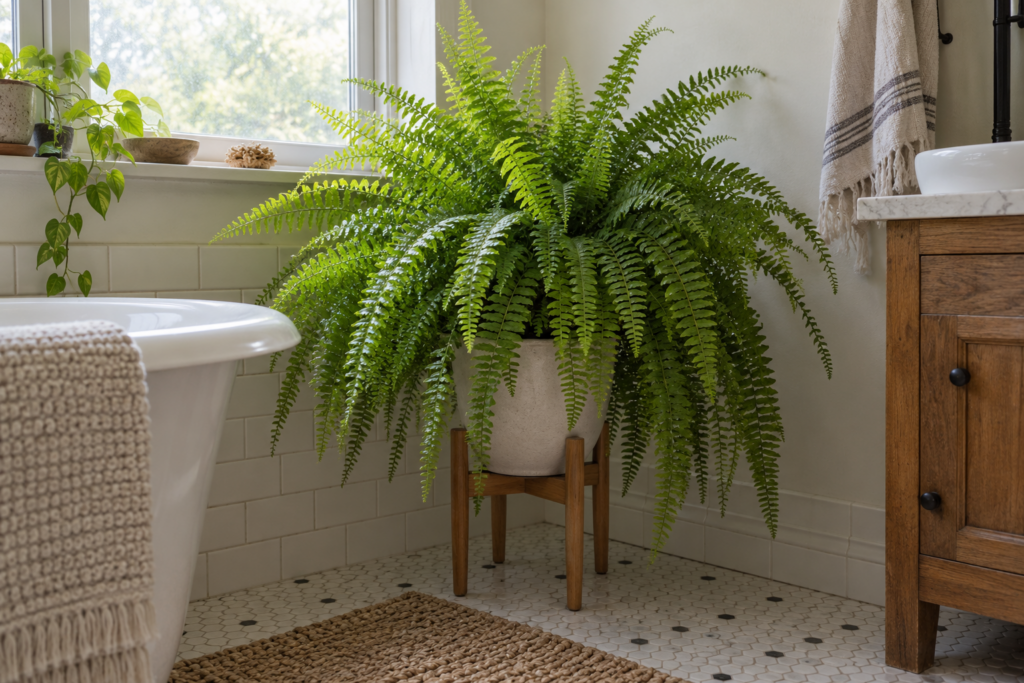
14. Bird’s Nest Fern and 15. Boston Fern: For a Humid Spot With a Window
 Save
 Save
Both ferns tolerate lower light than people expect, but they hate dry air. A bathroom or kitchen with a window suits them far better than a heated living room. Keep the soil lightly moist. With bird’s nest fern (Asplenium nidus), water around the edge of the pot rather than into the center of the rosette, which can rot. Boston fern is listed as non-toxic to cats and dogs.
Which Plant for Which Room?
- Total beginner: ZZ plant, snake plant, pothos.
- Bathroom with a small window: bird’s nest fern, Boston fern, pothos, peace lily.
- North-facing bedroom: snake plant, ZZ plant, parlor palm, prayer plant.
- Dim living room corner: cast iron plant, Dracaena ‘Janet Craig’, Chinese evergreen.
- No windows at all: ZZ plant, snake plant or pothos, under a grow light on a timer.
- Homes with cats or dogs: cast iron plant, parlor palm, spider plant, peperomia, Boston fern. See our full list of plants safe for cats.
No Window? When a Grow Light Is Worth It
If your spot reads only a couple of hundred lux at midday, a grow light will help more than any fertilizer. Ordinary room lighting usually won’t do it; a ceiling fixture is too weak and too far from the leaves. What works:
- A light placed close to the plants. Light fades fast with distance. For a fluorescent fixture, Iowa State Extension suggests 4 to 6 inches from the tops of the plants; for an LED grow light, use the distance the maker gives. White LED grow lights look normal in a living room.
- 12 to 14 hours a day, Iowa State’s guidance for houseplants under lights.
- A plug-in timer, so the plants get the same hours every day.
With that setup, a windowless bathroom or a dark office can keep a ZZ plant, pothos or snake plant healthy.
FAQ
What is the best low light indoor plant?
For most homes, the ZZ plant: it grows slowly in low light, stores water in its roots and copes with missed waterings. Snake plant, pothos, cast iron plant and Chinese evergreen are close behind. Pick by your spot and whether you have pets, since ZZ, snake plant and pothos are not pet-safe.
Can any plant live in a room with no windows?
Not long term on room lighting alone. Tough plants like ZZ plant and snake plant can hang on for months under ordinary ceiling lights, but they slowly decline. With a plant grow light on a timer, they can stay healthy.
How far from a window is low light?
Roughly a few steps back from a north window, or deeper into a room with an east or west window. Light drops quickly as you move away from the glass, which is why measuring beats guessing.
Why is my low light plant getting leggy?
Long, bare stems with small, widely spaced leaves mean the plant is stretching for light. Move it closer to a window or add a grow light, then trim the leggy stems to encourage fuller growth.
Which low light plants are safe for cats?
From this list, cast iron plant, parlor palm, spider plant, prayer plant and Boston fern are on the ASPCA non-toxic list. For more options and the popular plants to avoid, see our list of plants safe for cats.
Sources
- University of Minnesota Extension: Light requirements for houseplants
- ASPCA Animal Poison Control: Toxic and Non-Toxic Plants (individual entries linked above, checked October 2026)
- Pet Poison Helpline: Insoluble oxalates (checked October 2026)
- Iowa State Extension: Will standard fluorescent bulbs provide sufficient light for houseplants? (checked October 25, 2026)