Cats chew plants. Some do it out of boredom, some like the texture, and some just want the sunny spot the plant is sitting in. If your cat is a chewer, the real question is what happens when it takes a bite.
Every plant on this list is marked “non-toxic to cats” in the ASPCA Animal Poison Control Center’s plant database. We checked each one individually in October 2026 and linked its entry, so you can see it for yourself. We left out plants we couldn’t confirm there, even ones other sites call safe. The ASPCA database isn’t a complete catalog of every plant, so this is a checked selection of common houseplants rather than every safe plant there is.
If your cat has already chewed something and you’re worried, skip straight to what to do right now.
The short answer
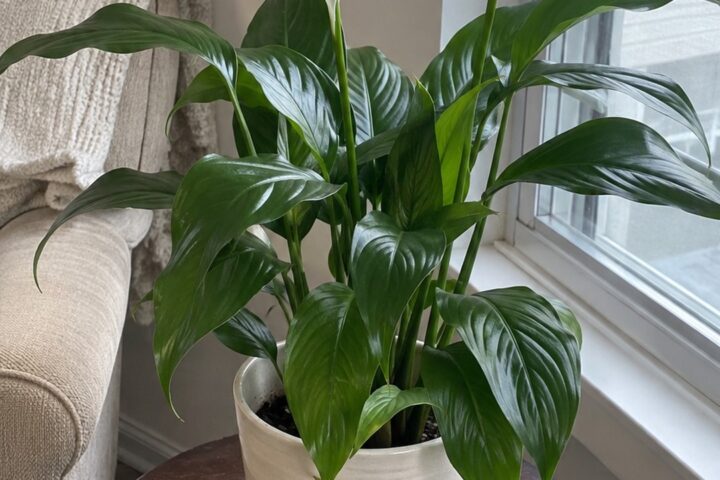
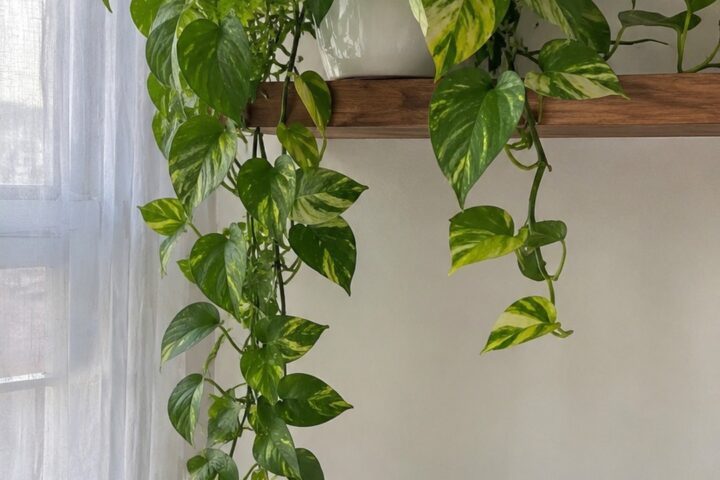
Easy houseplants the ASPCA lists as non-toxic to cats include spider plant, Boston fern, parlor palm, areca palm, cast iron plant, prayer plant, money tree (Pachira aquatica, not jade), ponytail palm, peperomia and African violet. Popular plants that are toxic to cats include true lilies (extremely dangerous), pothos, snake plant, peace lily, monstera and aloe.
In This Post
- Love a Plant That Isn’t Safe? Swap It
- If Your Cat Chewed a Toxic Plant
- What “Non-Toxic” Actually Means
- Safe Plants for a Dim Spot
- Safe Plants to Hang Up High
- Bigger Safe Plants for a Bright Room
- Small Safe Plants for Shelves and Windowsills
- Safe Plants With Flowers
- Keeping Cats Off Your Plants
- FAQ
- Where This List Comes From
Love a Plant That Isn’t Safe? Swap It
Already set on a pothos or a monstera, and just found it on the toxic list? These swaps give a similar look:
- Pothos → spider plant. You lose the long vines, but a spider plant in a hanging pot gives you the same easy, spilling-over-the-edge look, especially once its baby plantlets dangle down.
- Snake plant → ponytail palm or cast iron plant. Ponytail palm if the spot is bright, since it stores water and forgives a missed watering. Cast iron plant if the spot is dim.
- ZZ plant → cast iron plant. The closest match for a dark corner and irregular watering. More dim-spot picks are in our low light plant guide.
- Monstera → money tree or areca palm. Both make a big, leafy floor plant for a bright room.
- Aloe → zebra haworthia. The same spiky succulent look, smaller and cat-safe.
- Peace lily → parlor palm, or African violet for flowers. Parlor palm copes with similar lower light; African violets need a brighter window to bloom.
- Lilies → don’t swap, just skip them. More on why below.
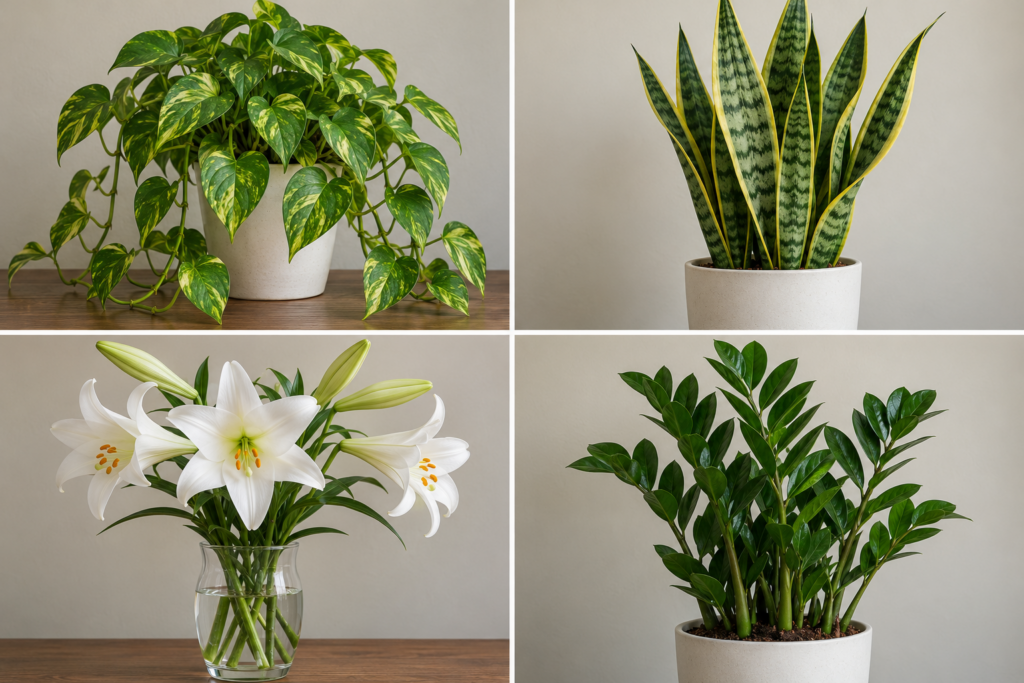
Why each of those is on the toxic list (each name links to its ASPCA entry; the ZZ plant has no current ASPCA entry, so it’s explained on its own line):
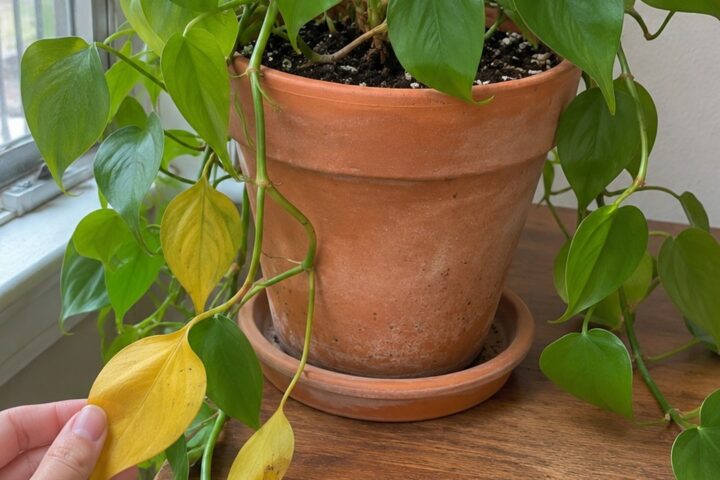
- Pothos: insoluble calcium oxalates cause mouth irritation, drooling and vomiting.
- Snake plant: saponins can cause nausea, vomiting and diarrhea.
- Peace lily: not a true lily, but still irritating because of calcium oxalates.
- Monstera (Monstera deliciosa, sometimes sold as split-leaf philodendron).
- Aloe.
- ZZ plant: we didn’t find a current ASPCA entry for it, but it contains calcium oxalate crystals, so we’d keep it away from cats as well.
Why lilies are in a different league
True lilies (Lilium) and daylilies (Hemerocallis) are the most dangerous plants on this page. The ASPCA lists kidney failure in cats, and the U.S. Food and Drug Administration spells out how little it takes:
“Eating just a small amount of a leaf or flower petal, licking a few pollen grains off its fur while grooming, or drinking the water from the vase can cause your cat to develop fatal kidney failure in less than 3 days.”
If you have a cat, keep lilies out of the house entirely, and that includes cut flowers in a bouquet. If you want flowers indoors, African violet and Christmas cactus are both on the safe list below.
If Your Cat Chewed a Toxic Plant
Don’t wait for symptoms. Call your vet or the ASPCA Animal Poison Control Center at (888) 426-4435 (a consultation fee may apply), and have the plant’s name or a photo ready. Don’t try to make your cat vomit unless a vet tells you to.
Go straight to a vet, even before any symptoms, if your cat may have chewed a lily, licked its pollen or drunk the vase water. For any other plant, call first; if your cat has trouble breathing or swallowing, get emergency care right away.
What “Non-Toxic” Actually Means
“Non-toxic” means the plant isn’t expected to poison your cat. It doesn’t mean your cat can eat a whole pot of it. The ASPCA notes that eating any plant material can cause vomiting or an upset stomach.
Two more things can make a “safe” plant unsafe:
- Treatments: plants from garden centers may have been treated with pesticides. Rinsing the leaves may remove some surface residue, but it doesn’t make a treated plant safe: systemic insecticides are taken up inside the plant and don’t wash off. Ask the seller how it was treated, and keep systemic insecticide products out of pots your cat can reach.
- Wrong labels: common names are confusing, and plants are sometimes mislabeled. Check the scientific name on the tag against the ASPCA entry.
The 15 plants below are grouped by where they’ll live in your home.
Safe Plants for a Dim Spot
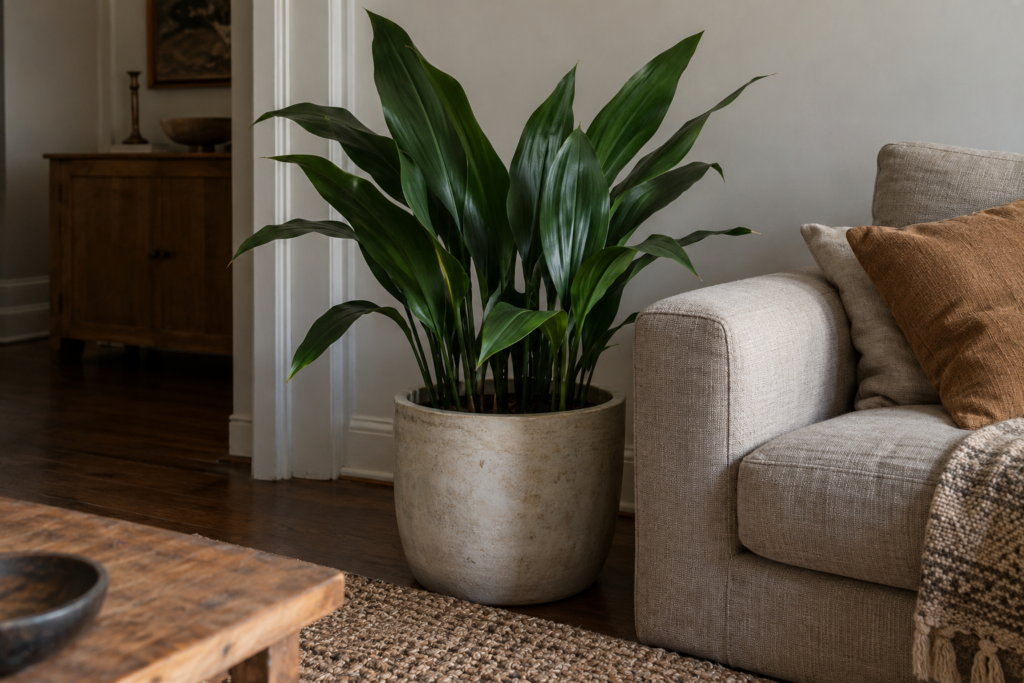
Cast Iron Plant
 Save
Cast iron plant (Aspidistra elatior) tolerates shade and irregular watering better than most houseplants, and it’s non-toxic to cats. It grows slowly, so buy a good-sized one if you want it to fill a corner.
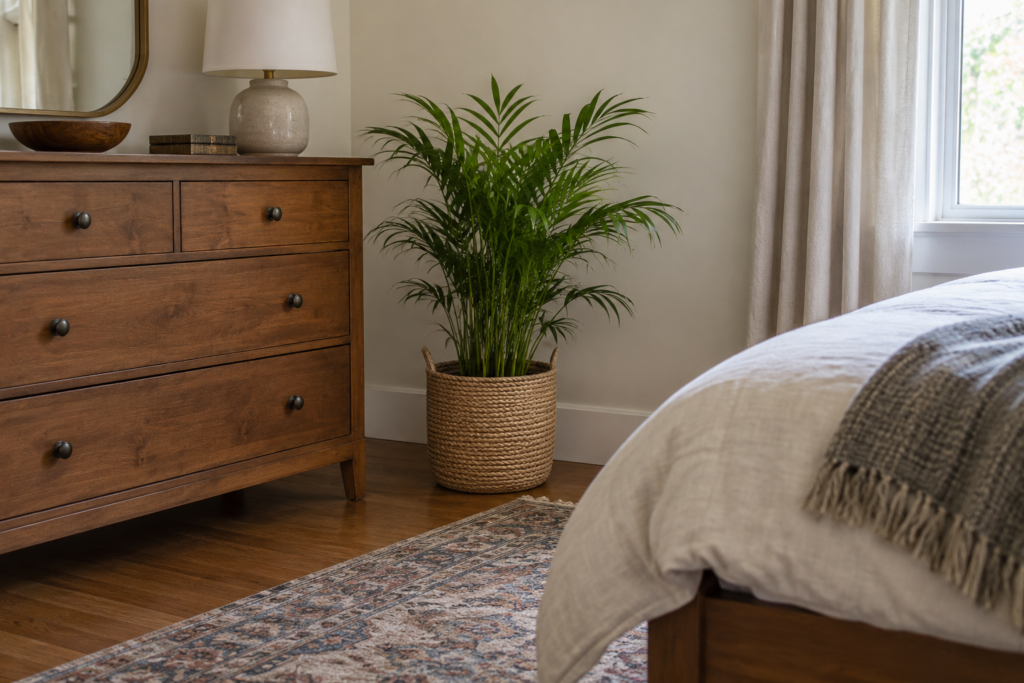
Parlor Palm
 Save
The parlor palm (Chamaedorea elegans) is non-toxic to cats and one of the few palms that tolerates lower light. Water when the top inch of soil is dry, and keep it out of cold drafts.
Safe Plants to Hang Up High
If your cat is a determined chewer, start here. Anything in a hanging pot is out of reach for most cats, as long as it isn’t next to a shelf they can jump from.
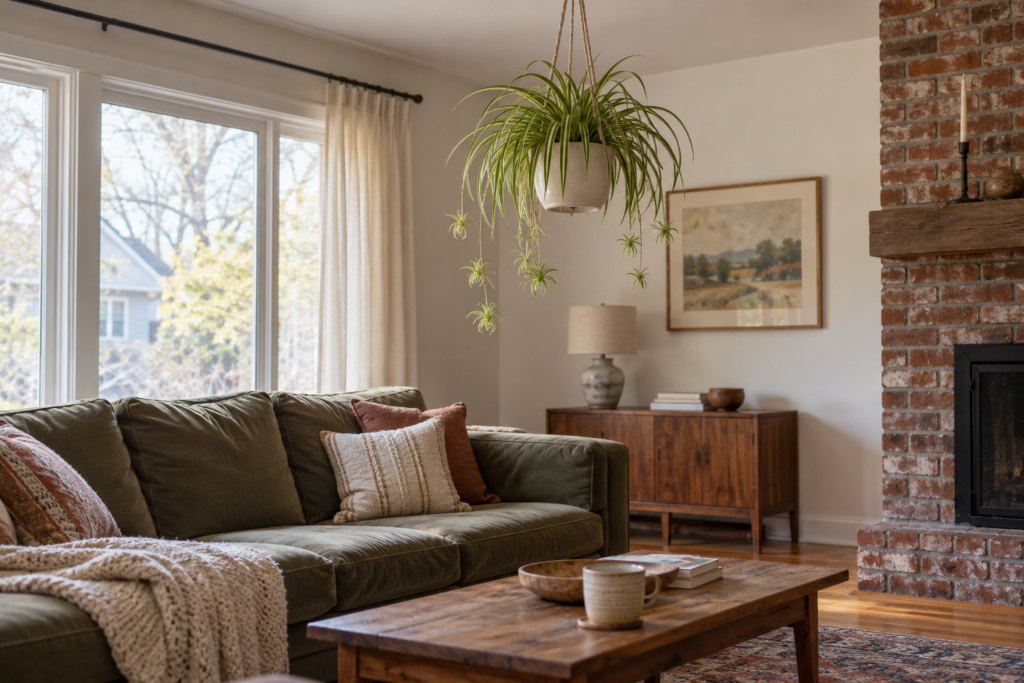
Spider Plant
 Save
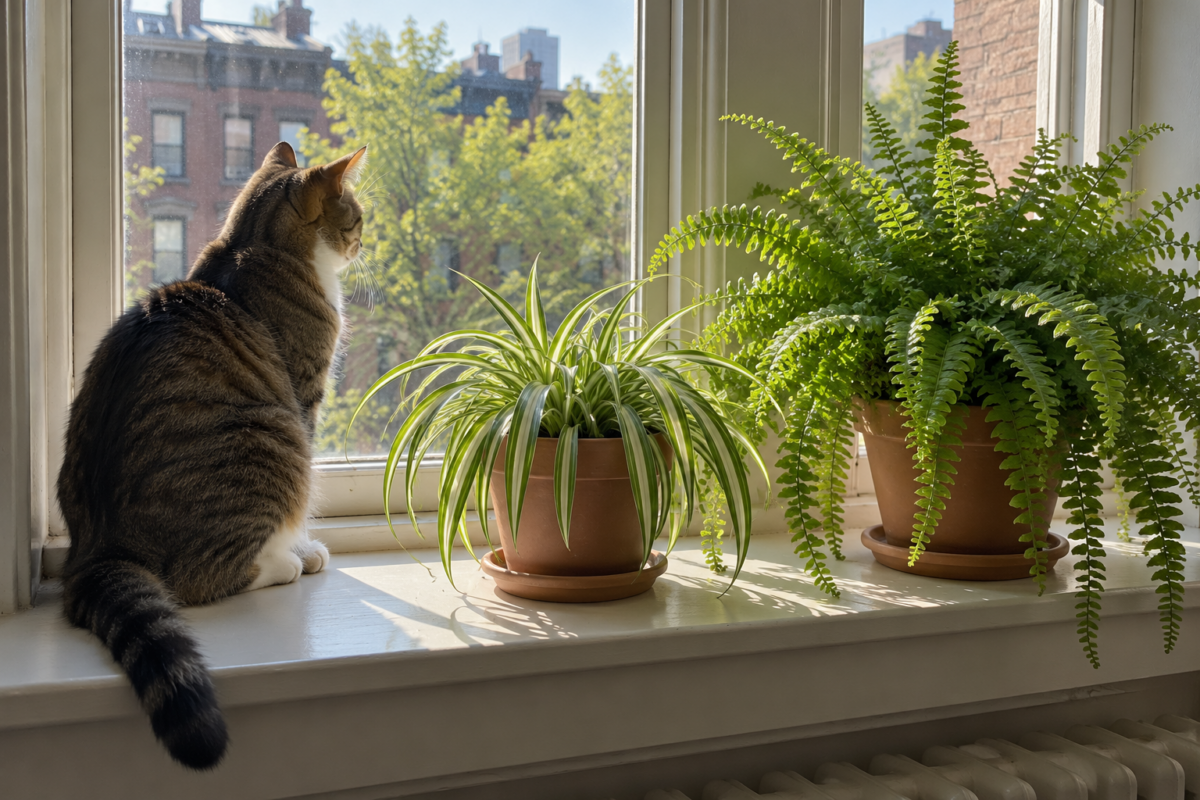
Spider plants (Chlorophytum comosum) are non-toxic to cats and dogs, easy to grow, and fine in medium or fairly low light. Their long, arching leaves are a favorite for chewing, though, so a hanging pot keeps the plant looking good and keeps your cat from treating it as a snack.
Boston Fern
 Save
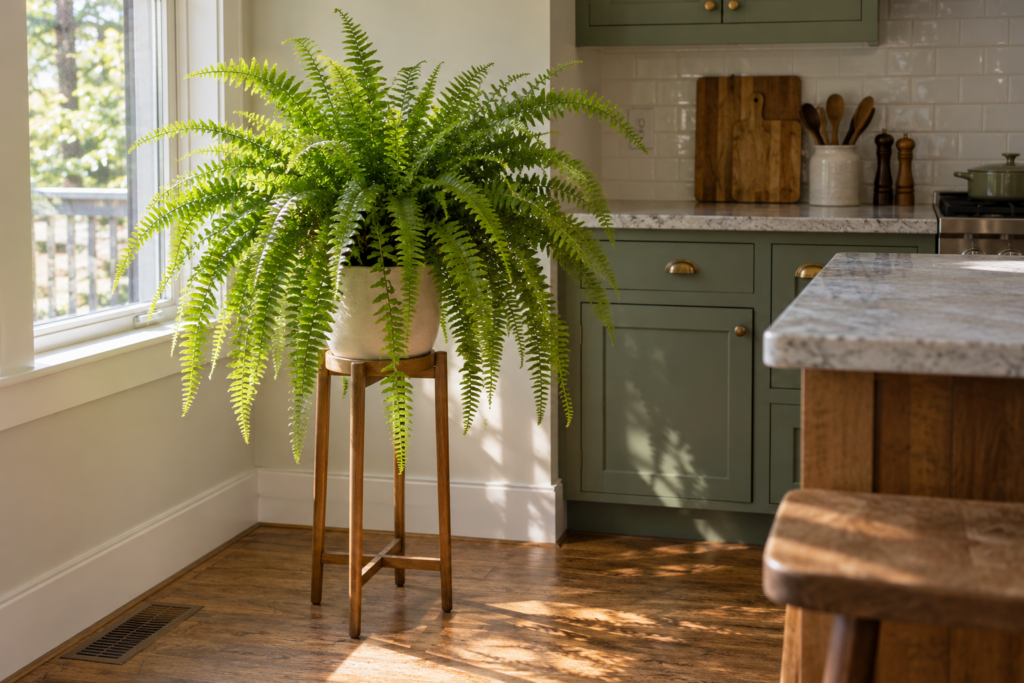
Boston fern (Nephrolepis exaltata ‘Bostoniensis’) is non-toxic to cats. It wants humidity and evenly moist soil, so a bathroom or kitchen with a window suits it better than a dry, heated living room. Hang it, or put it on a tall stand to keep it away from diggers.
Bigger Safe Plants for a Bright Room
Areca Palm
 Save
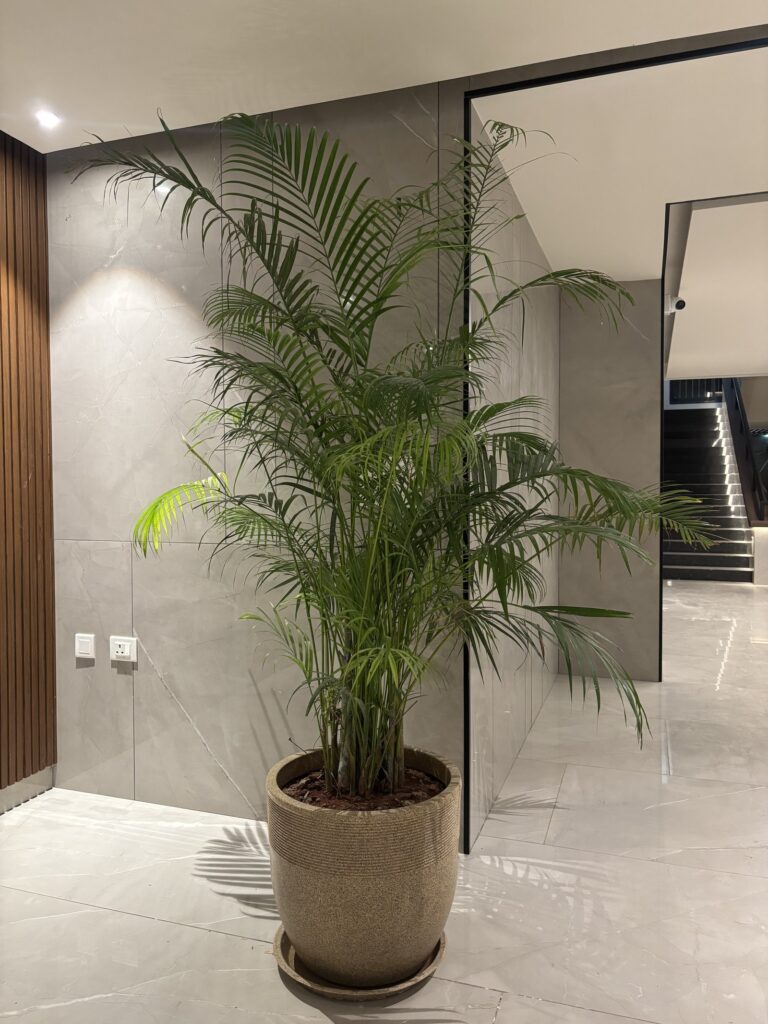
If you want something tall, the areca palm (Dypsis lutescens) is non-toxic to cats and dogs. It needs a bright spot near a window and regular watering; in low light it slowly declines.
Money Tree
 Save
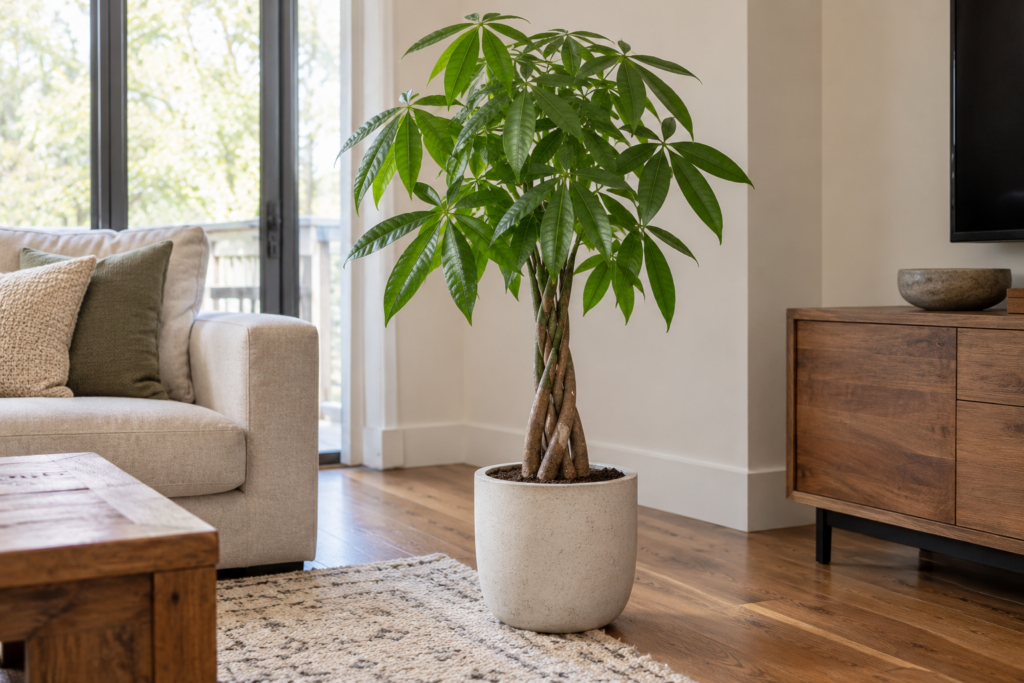
Money tree (Pachira aquatica) is non-toxic to cats and dogs. It likes bright, indirect light and soil that dries a little between waterings. Turn the pot every few weeks so it grows evenly.
Ponytail Palm
 Save
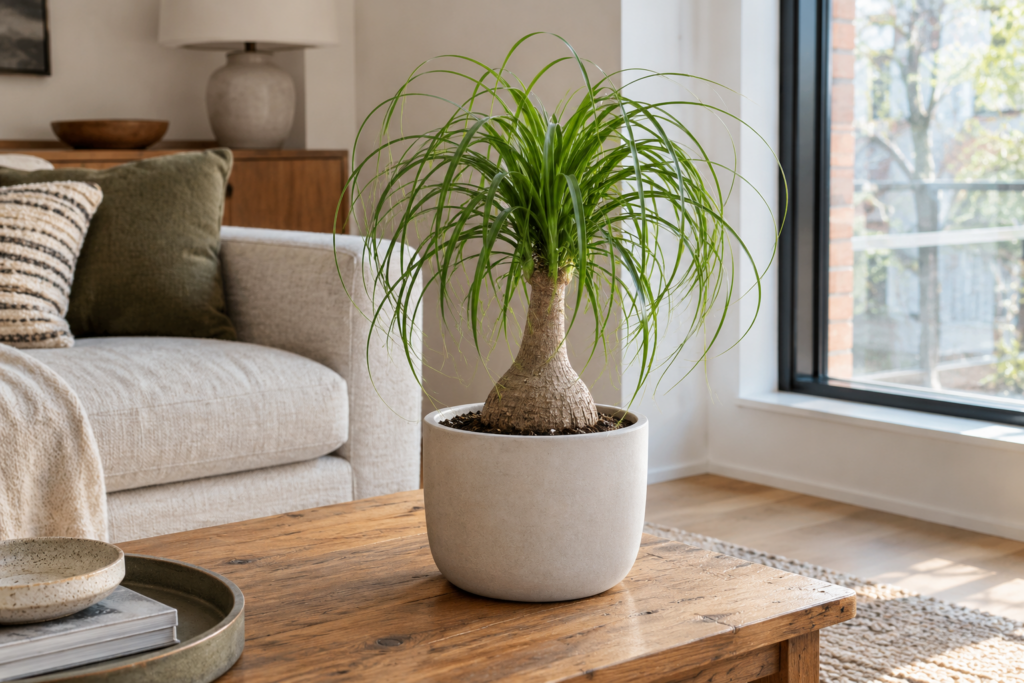
The ponytail palm (Beaucarnea recurvata) isn’t a palm. It’s a succulent that stores water in its swollen trunk. The ASPCA lists it as non-toxic under the names “pony tail” and “bottle palm”. Give it bright light and let the soil dry out between waterings; it handles a missed watering much better than soggy soil.
Small Safe Plants for Shelves and Windowsills
These are easy to fit anywhere, which also means they’re easy for a cat to reach. Watch for nibbling, and move a plant higher if it starts losing leaves to teeth.
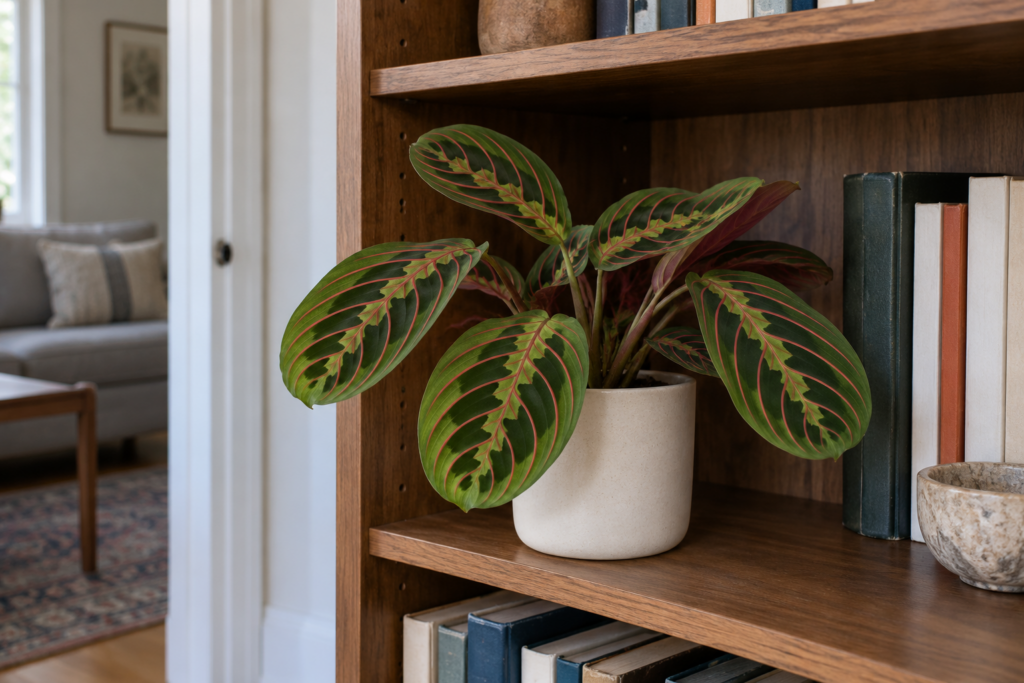
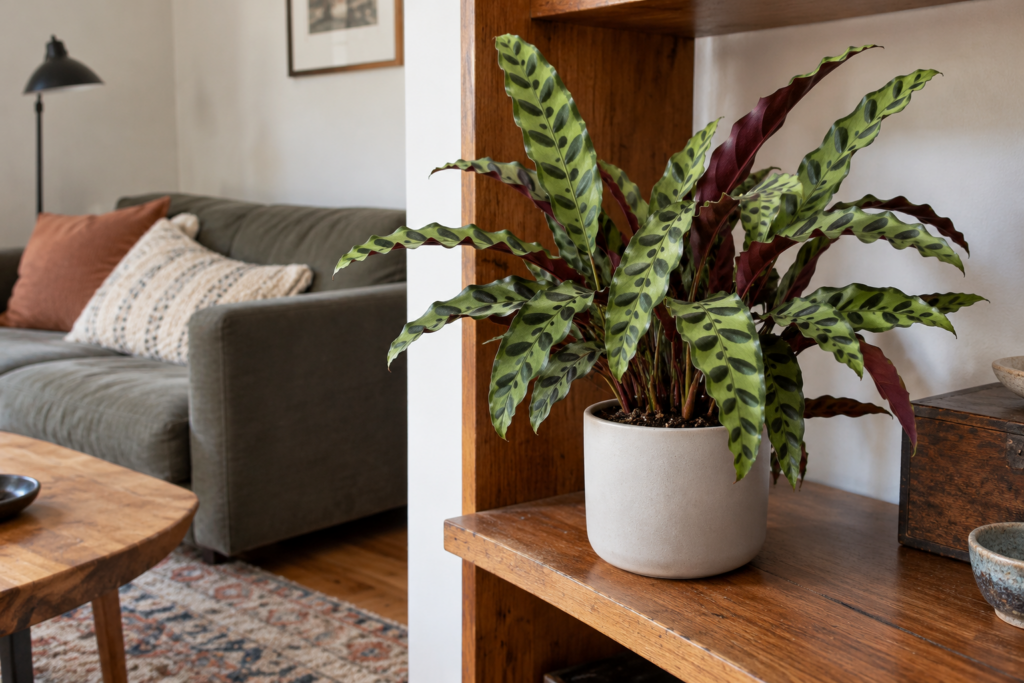
Prayer Plant and Rattlesnake Plant
 Save
 Save
These two are cousins, and both are on the ASPCA’s non-toxic list for cats and dogs:
- Prayer plant (Maranta leuconeura): red-veined leaves that fold up at night. The ASPCA lists it as red veined prayer, with Maranta and prayer plant as its other names.
- Rattlesnake plant (Goeppertia lancifolia, usually sold as Calathea lancifolia): long, wavy leaves with dark spots and purple undersides. It has its own Calathea lancifolia entry.
One quirk if you look them up yourself: the ASPCA files these entries under the scientific name Calathea insignis, a name the plant trade has long used for the rattlesnake plant, so match by the common name too.
Both like medium, indirect light and humidity. If the leaf edges turn crispy and your tap water is hard, try filtered or distilled water.
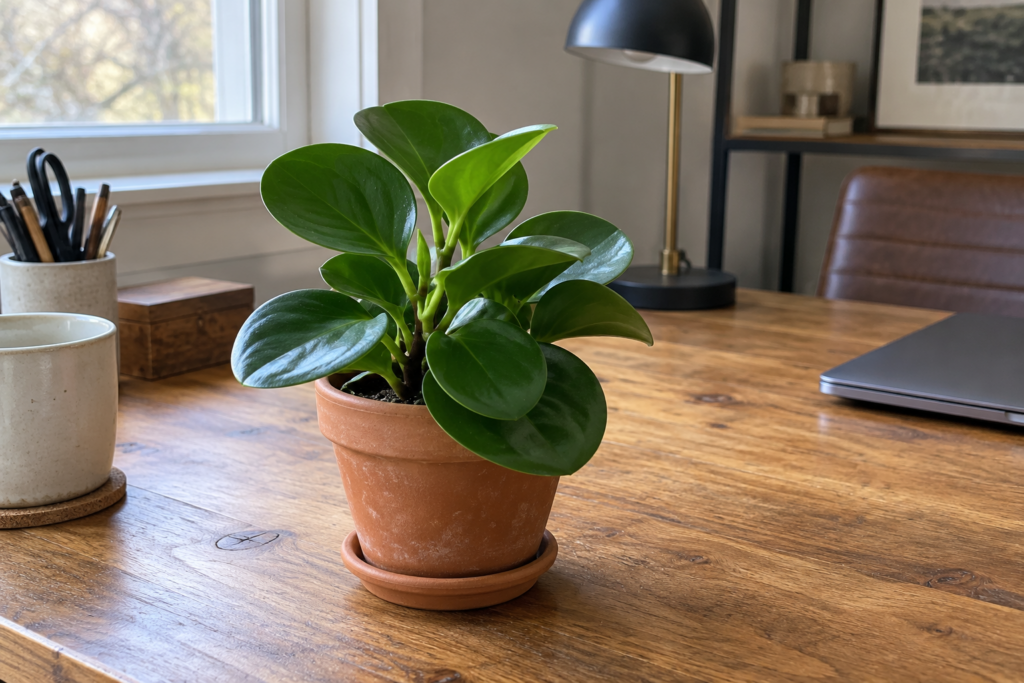
Peperomia
 Save
The baby rubber plant (Peperomia obtusifolia) is non-toxic to cats and dogs. Its thick leaves store water, so it forgives a missed watering. It’s small enough for a desk or windowsill.
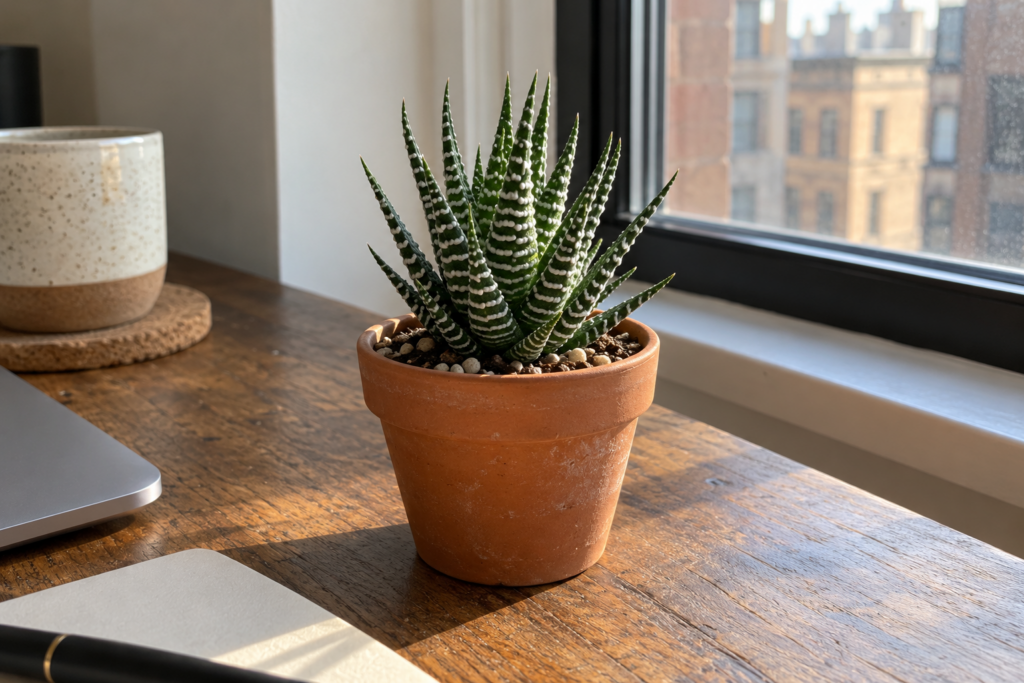
Zebra Haworthia
 Save
Zebra haworthia is listed as non-toxic to cats. It matters because it looks a lot like aloe, which is toxic. Give it bright light and let the mix dry out well before watering again.
Polka Dot Plant
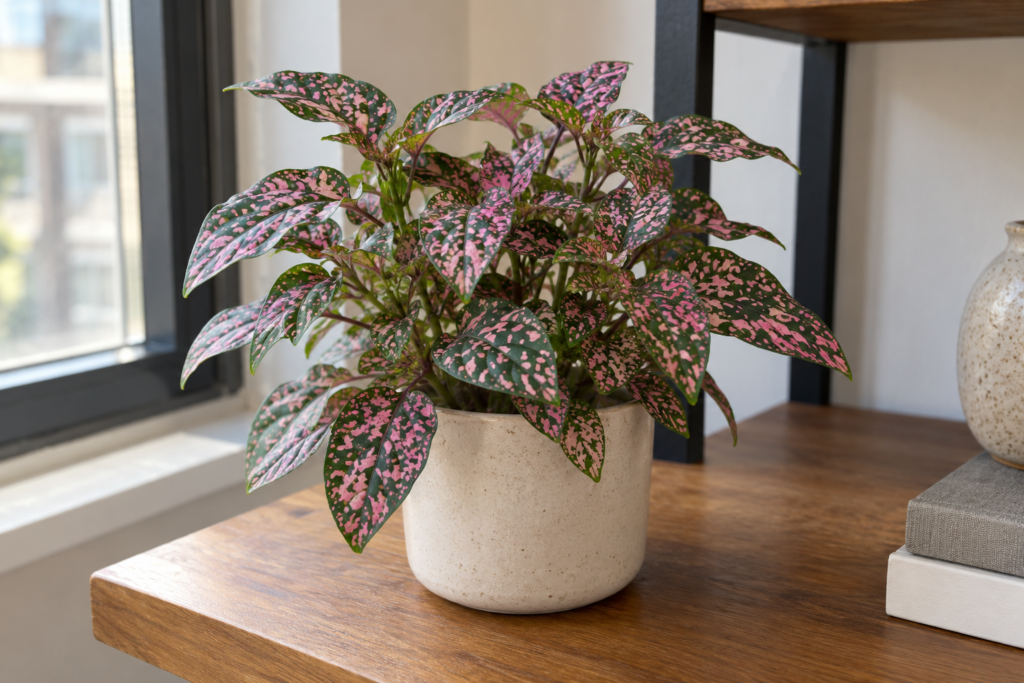 Save
Polka dot plant (Hypoestes phyllostachya) is non-toxic to cats, though the ASPCA notes eating it may cause mild vomiting or diarrhea. Its pink-speckled leaves need bright, indirect light to keep their color.
Friendship Plant
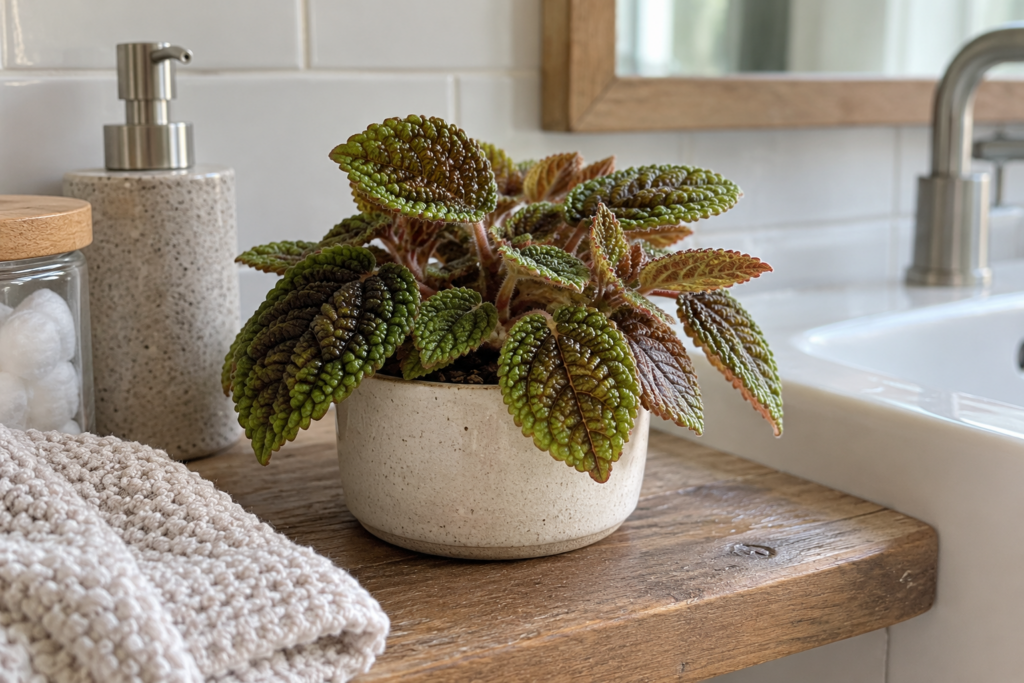 Save
The friendship plant (Pilea involucrata) is non-toxic to cats and dogs. It stays small, has quilted bronze-green leaves and likes humidity, which makes it a good bathroom or terrarium plant.
Safe Plants With Flowers
African Violet
 Save
African violets (Saintpaulia) are non-toxic to cats and dogs and can bloom for much of the year in bright, indirect light. Water from below and keep water off the fuzzy leaves.
Christmas Cactus
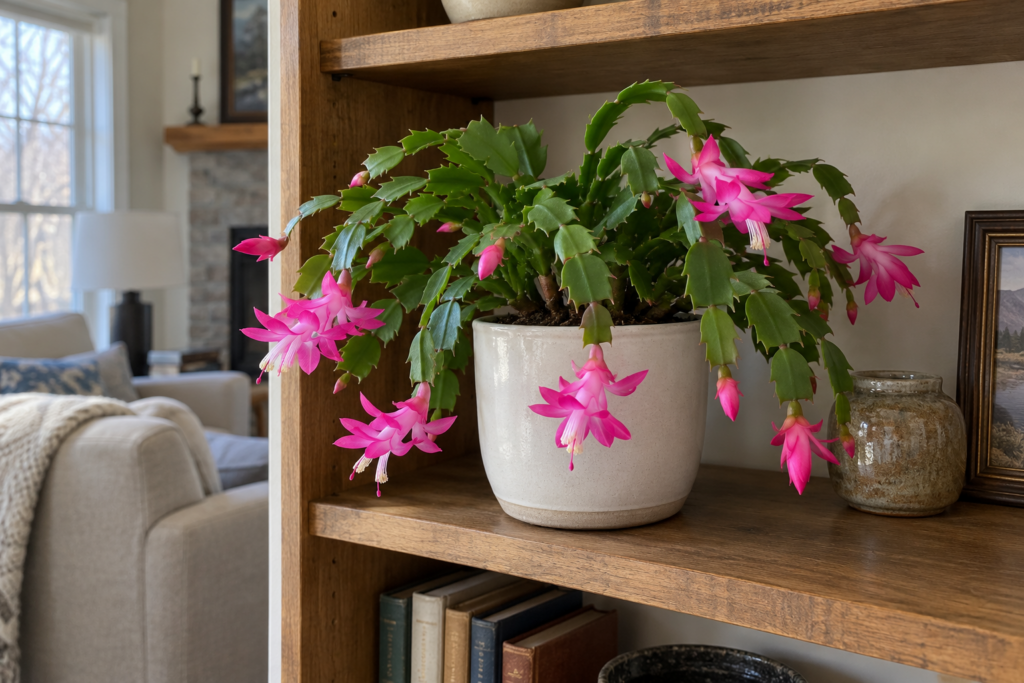 Save
Christmas cactus (Schlumbergera) is non-toxic to cats and dogs and has no sharp spines. It’s a forest cactus, so it wants more water than a desert cactus, and it sets buds after a few weeks of cooler nights and longer darkness in fall.
Keeping Cats Off Your Plants
- Go up: hanging pots and high, stable shelves are the simplest fix. Remember that cats climb, so “high” means out of jumping range, not just off the floor.
- Close them in: a glass cabinet or a plant cabinet keeps fussy plants humid and cats out.
- Cover the soil: a secure mesh soil cover stops digging and using the pot as a litter box.
- Offer a better option: a pot of cat grass often draws chewing away from your other plants.
- Skip the sprays: don’t use essential-oil sprays as deterrents. Many essential oils are harmful to cats.
FAQ
Is a spider plant safe for cats?
Yes. The ASPCA lists the spider plant (Chlorophytum comosum) as non-toxic to cats and dogs. Eating a lot of it can still upset a cat’s stomach, so hang it out of reach if your cat chews it.
Are any succulents safe for cats?
Yes. Zebra haworthia, ponytail palm and Christmas cactus are all listed as non-toxic to cats by the ASPCA. Aloe is not; it’s on the toxic list.
Can a non-toxic plant still make my cat sick?
It can cause a mild upset. The ASPCA notes that eating any plant material can cause vomiting or an upset stomach, so a cat that chews a lot of a safe plant may still throw up. Call your vet if the vomiting keeps happening or your cat seems unwell.
Where This List Comes From
- ASPCA Animal Poison Control Center: Toxic and Non-Toxic Plants. Each plant’s entry is linked above; checked October 24, 2026. Classifications can change, so check the entry if in doubt.
- U.S. Food and Drug Administration: Lovely Lilies and Curious Cats, a Dangerous Combination (checked October 27, 2026)