Snake plants put up with dim corners, dry air and weeks of being ignored. What they handle badly is soil that stays wet for days, which is how root rot starts. As the New York Botanical Garden says, “Too much water is the most frequent cause of failure.”
So most of this guide is about water: when to give it, when to wait, and what to do if you’ve already given too much. Light, soil, repotting and propagation follow.
Snake Plant at a Glance
- Light:
- Bright indirect is best; copes with low light
- Water:
- Only when the mix is dry through the pot
- Pets:
- Toxic to cats and dogs (ASPCA)
- Difficulty:
- Easy
- Humidity:
- Normal room air is fine
- Temperature:
- Keep above 55°F (13°C)
In This Post
How Often to Water a Snake Plant
There isn’t a fixed number of days. How fast the mix dries depends on the light, the pot and the room, so watering on a schedule is how many snake plants end up rotting. In winter a snake plant may need water only every month or two. Let the soil decide, not the calendar.
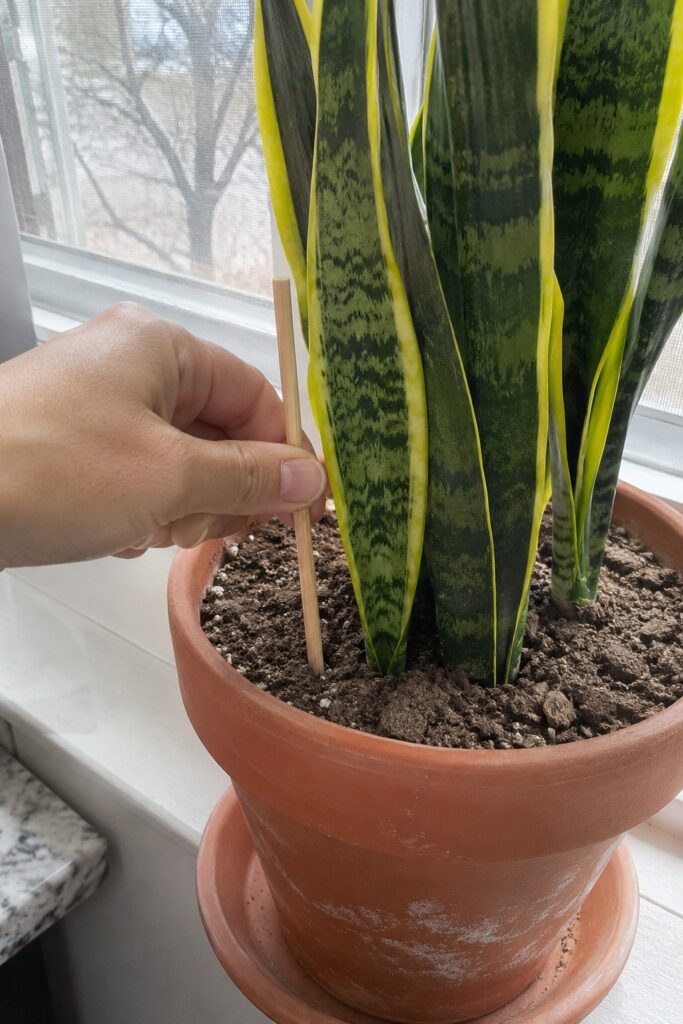
- Check deep, not just the top. The surface dries first and fools people. Push a wooden chopstick to the bottom of the pot, leave it a minute and pull it out. Damp soil stuck to it means wait.
- When it’s dry all the way down, water thoroughly until water runs out of the drainage hole.
- Empty the saucer once it stops dripping, so the roots never sit in water.
- Check the mix again in a week or so, and water only when the chopstick comes out dry.
 Save
Thin, wrinkled leaves on a plant with bone-dry soil can mean it’s thirsty, and a good soak is the first thing to try. If they stay wrinkled after watering, check the roots. Soggy roots are the real emergency.
Where to Put a Snake Plant
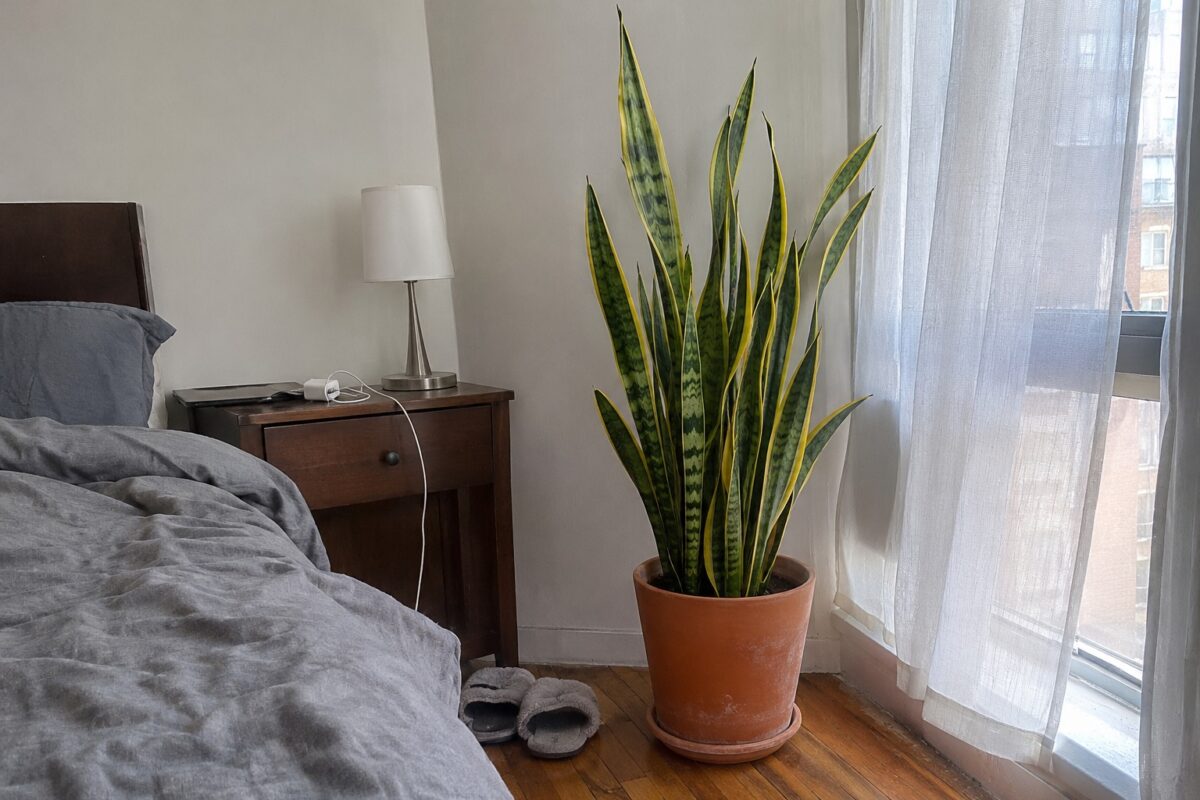
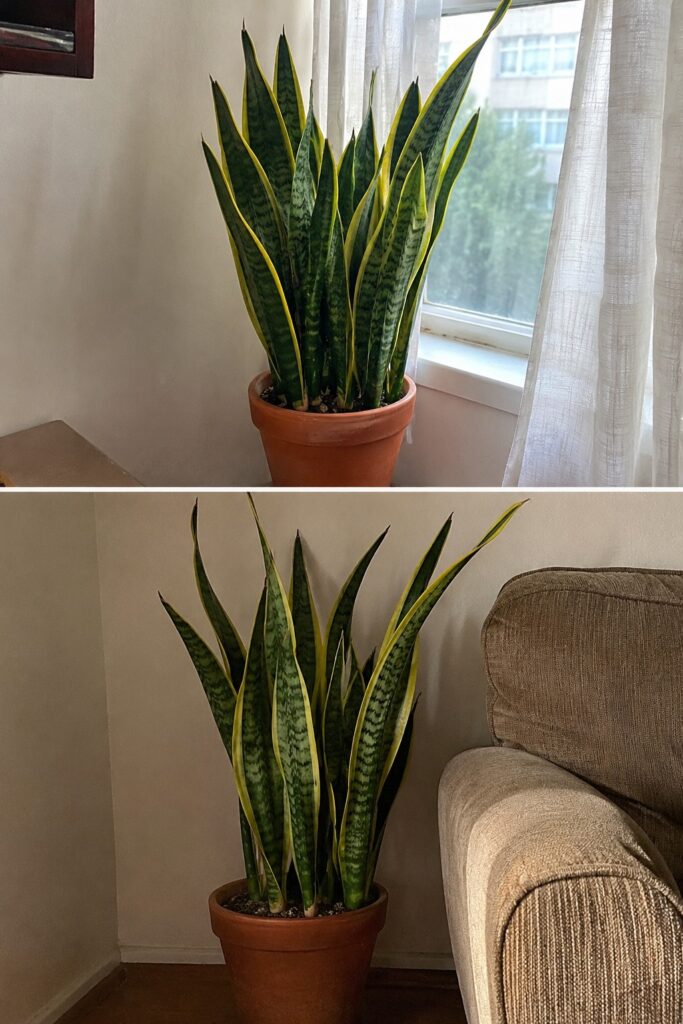
A snake plant will live almost anywhere, from a dim hallway to a sunny window, but living and growing aren’t the same thing. In a dark corner it stays alive and barely changes; near a bright window it pushes up new leaves and keeps its color.
 Save
- Low light: fine for survival. Water much less often.
- Bright indirect light: the sweet spot for steady growth.
- Direct sun: fine once the plant is used to it, but shade it from the strongest summer sun, especially in a south window, and move a plant out of a dim room gradually over a couple of weeks so the leaves don’t scorch.
Keep it above 55°F, which means away from drafty doors and cold window glass in winter. If you’re choosing a plant for a dark room, our guide to low light indoor plants compares it with the other tough ones.
The Right Soil and Pot
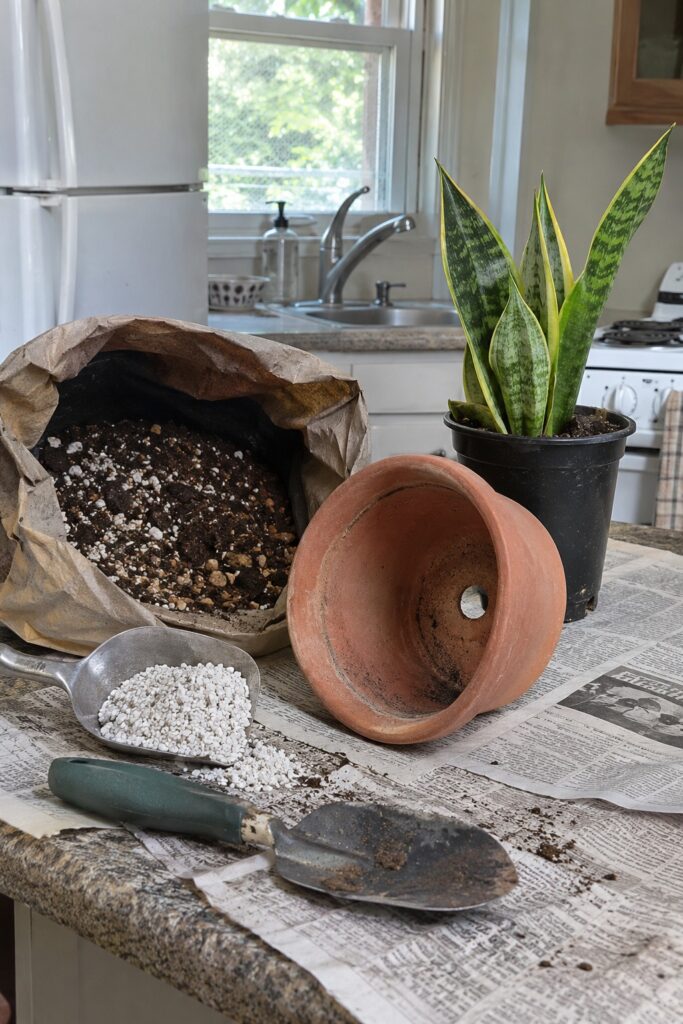
You want a mix that drains fast and dries out between waterings. A cactus and succulent mix works. So does ordinary potting soil with about a third sand or perlite mixed in.
 Save
- Use a pot with a drainage hole. If you love a pot without one, keep the plant in a plastic nursery pot inside it and tip out the water afterwards.
- Terracotta helps. Unglazed clay pulls moisture out of the soil, and its weight stops a tall plant from tipping over.
- Don’t oversize. A pot only a little wider than the root ball dries out faster than a big one.
What’s Wrong With My Snake Plant?
| What you see | Likely cause | What to do |
|---|---|---|
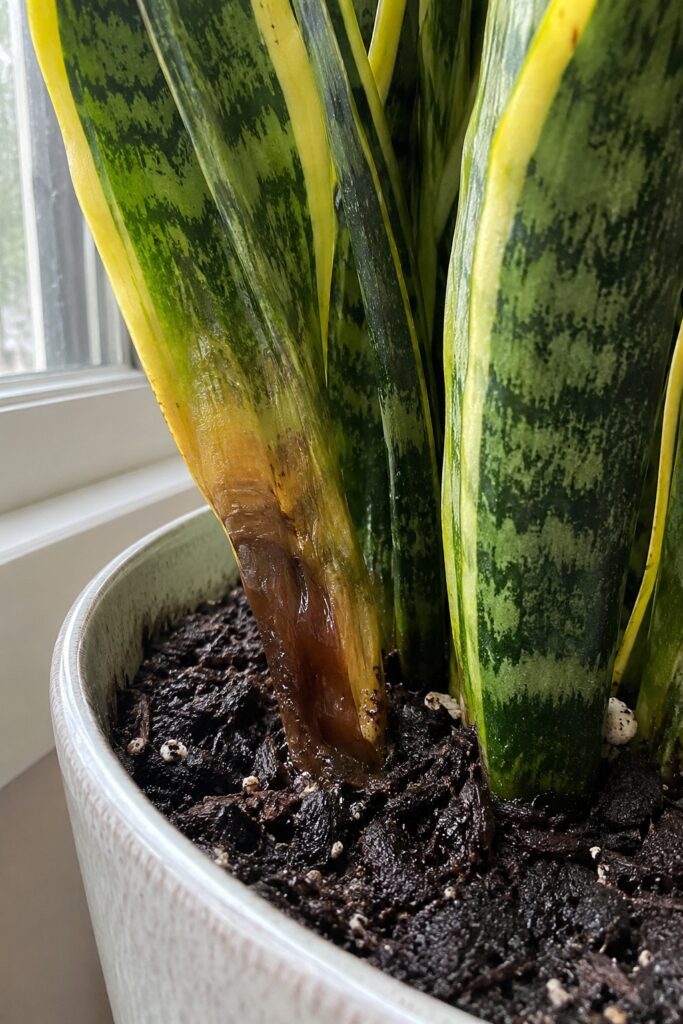
| Soft, mushy base; leaves falling over | Rot from overwatering | Unpot and check the roots (next section) |
| Thin, wrinkled leaves; dry soil | Thirst | Water thoroughly |
| Wrinkled leaves; wet soil | Roots already damaged | Check the roots for rot |
| Yellow leaves | Usually too much water, sometimes cold | Let the mix dry; move it off cold glass |
| Brown, crispy tips | Uneven watering or salt build-up | Water deeply but less often; flush the pot now and then |
| Leaning, floppy leaves; firm base | Too little light, or a top-heavy plant in a small pot | Move it somewhere brighter; repot into a heavier pot |
| White cottony spots at the base | Mealybugs | Wipe off with a damp cotton swab and keep the plant apart; insecticidal soap for a bad case |
 Save
A useful first check is the base. Press gently where a leaf meets the soil. If it’s soft or dark, especially in mix that has stayed wet, unpot the plant and look at the roots.
How to Save an Overwatered Snake Plant
- Tip the plant out of its pot and gently shake off the wet soil.
- Look at the roots and the thick underground stems (rhizomes). Healthy ones are firm and pale to tan. Rotten ones are dark, soft, hollow or smell bad.
- Cut away only the rotten parts with a clean, sharp knife, wiping the blade with rubbing alcohol between cuts.
- Let the cut surfaces dry before repotting.
- Repot in fresh, fast-draining mix, water lightly, and then let it dry out before watering again.
If rot has reached the base of every leaf, you can still start over: cut the firm, healthy leaves and propagate them (below).
How to Propagate a Snake Plant
There are two ways. Division gives you a bigger plant straight away and keeps the leaf pattern; leaf cuttings take longer but only need one leaf.
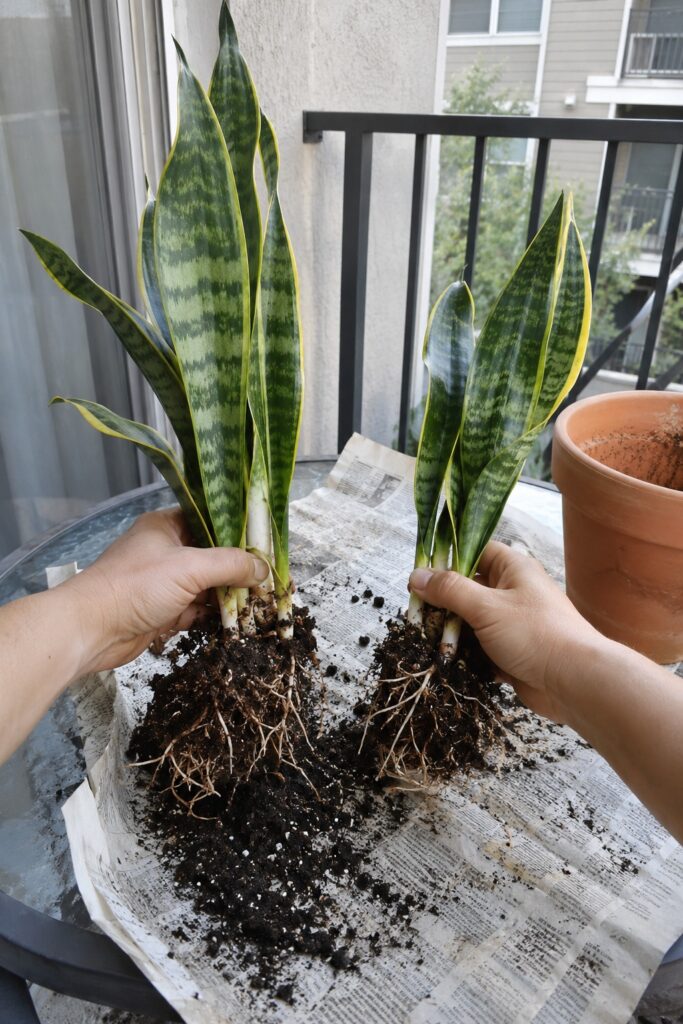
Division (best done when you repot in spring or summer):
- Slide the plant out of the pot and loosen the soil around the roots.
- Find the natural clumps or pups that already have their own leaves and roots, and pull or cut them apart with a clean knife.
- Pot each piece in fast-draining mix in a pot with a drainage hole, and water once the mix has had a chance to settle.
 Save
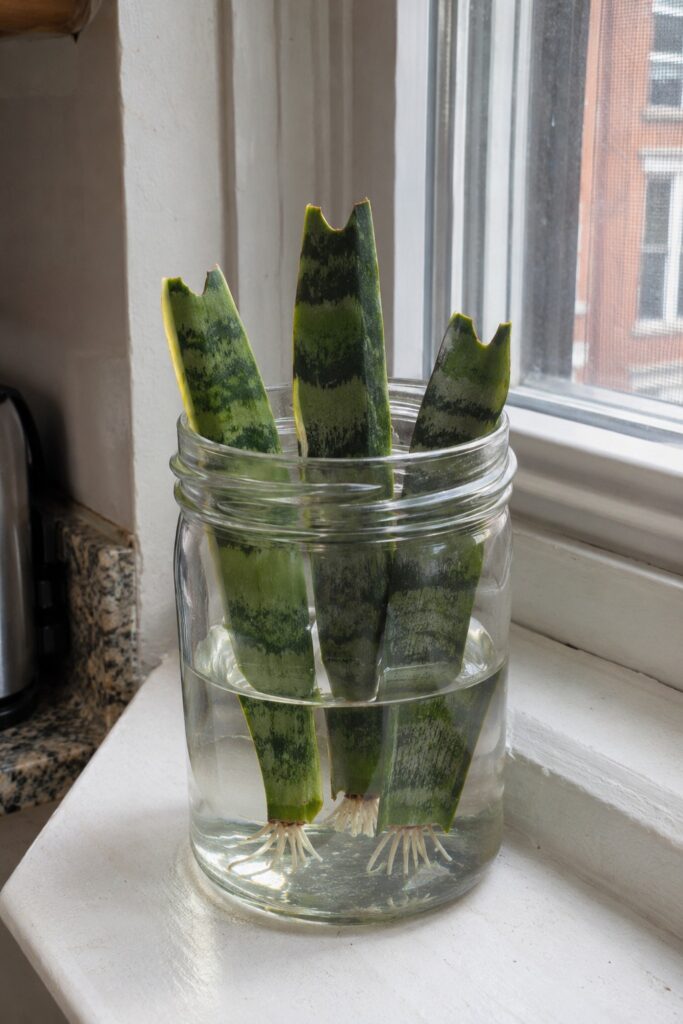
Leaf cuttings:
- Cut a healthy leaf into pieces three to four inches long.
- Cut a small notch in the top of each piece, so you remember which end was nearer the soil. That end goes down.
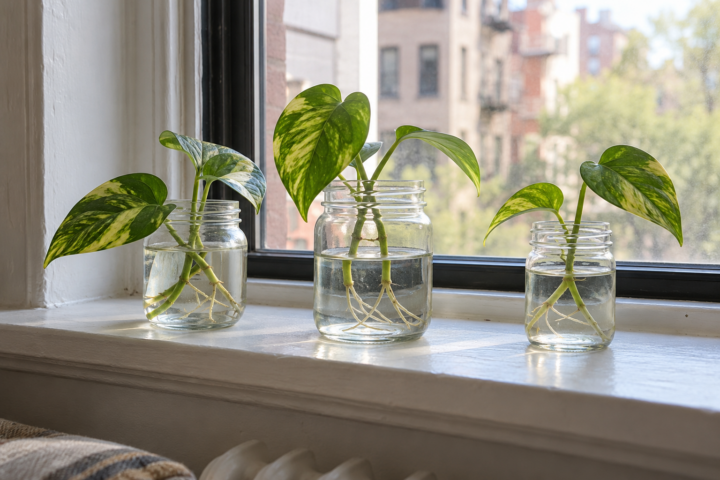
- Push the bottom end one to two inches into moist perlite or gritty mix, or stand the pieces in a jar of water and change the water once or twice a week.
- Keep them in bright, indirect light. New shoots usually appear at the base in about two months. Throw out any piece that turns soft.
 Save
One catch: yellow-edged varieties such as ‘Laurentii’ lose their yellow edges when grown from leaf cuttings, so divide those instead. If you enjoy rooting plants in water, propagating pothos in water is quicker and works almost every time.
Repotting, Feeding and Tidying
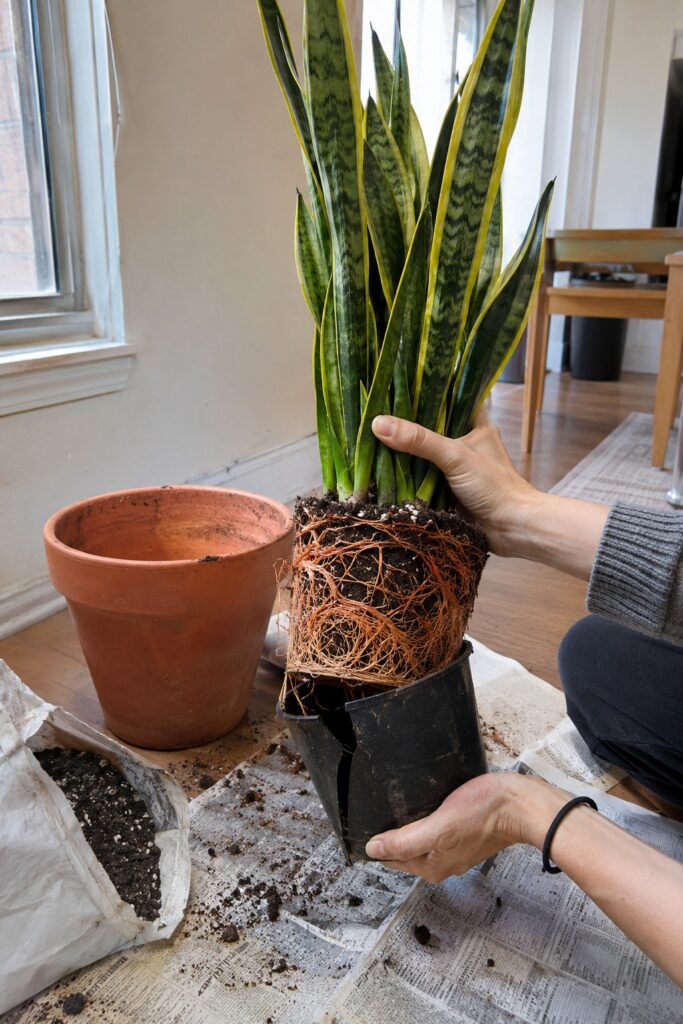
Snake plants like being a little crowded and often go a few years between pots. Repot in spring or summer when roots circle the bottom, push out of the drainage hole or crack a plastic pot.
 Save
Feeding is optional. A diluted houseplant fertilizer once or twice in spring and summer is plenty, and none in winter. To tidy the plant, cut damaged leaves off at the soil line; a leaf with its tip cut off won’t grow any taller. Older plants in good light sometimes send up a fragrant flower spike, which is a nice surprise, not a sign of trouble.
Is a Snake Plant Safe for Cats and Dogs?
No. The ASPCA, which lists it as mother-in-law’s tongue, marks it “Toxic to Dogs, Toxic to Cats” and lists the signs as “Nausea, vomiting, diarrhea.” Keep it out of reach, or pick something from our list of plants safe for cats.
Quick Questions
Should I water a snake plant from the top or the bottom?
Either works. Watering from the top until it drains also flushes out salts. If you bottom-water, let the pot sit in water for 15 to 20 minutes, then lift it out so it doesn’t stay wet.
How do I know if my snake plant is overwatered?
The mix stays wet for days, leaves turn yellow or soft, and the base of a leaf feels mushy or looks dark. Unpot it and check the roots: dark, soft roots need cutting away, as described above.
How long does it take to propagate a snake plant?
A division is a plant straight away. Leaf cuttings are slower: new shoots usually appear in about two months, sooner in a warm, bright spot.
Can a snake plant live in a bathroom?
Yes, as long as the bathroom gets some light. Humidity doesn’t bother it. The soil can stay damp longer in a steamy room, so check it before you water. Our low light bathroom plants guide covers rooms with little or no window light.
Why isn't my snake plant growing?
Usually low light, a cool room or winter rest. Snake plants are slow anyway and can go months without a new leaf in a dim spot. Give it more light in spring and summer.
Sources
- New York Botanical Garden: Snake plant
- University of Illinois Extension: Mother-in-law’s tongue
- NC State Extension: Dracaena trifasciata
- Iowa State Extension: Propagating houseplants by leaf section cuttings
- ASPCA: Mother-in-law’s tongue
All sources checked November 3, 2026.