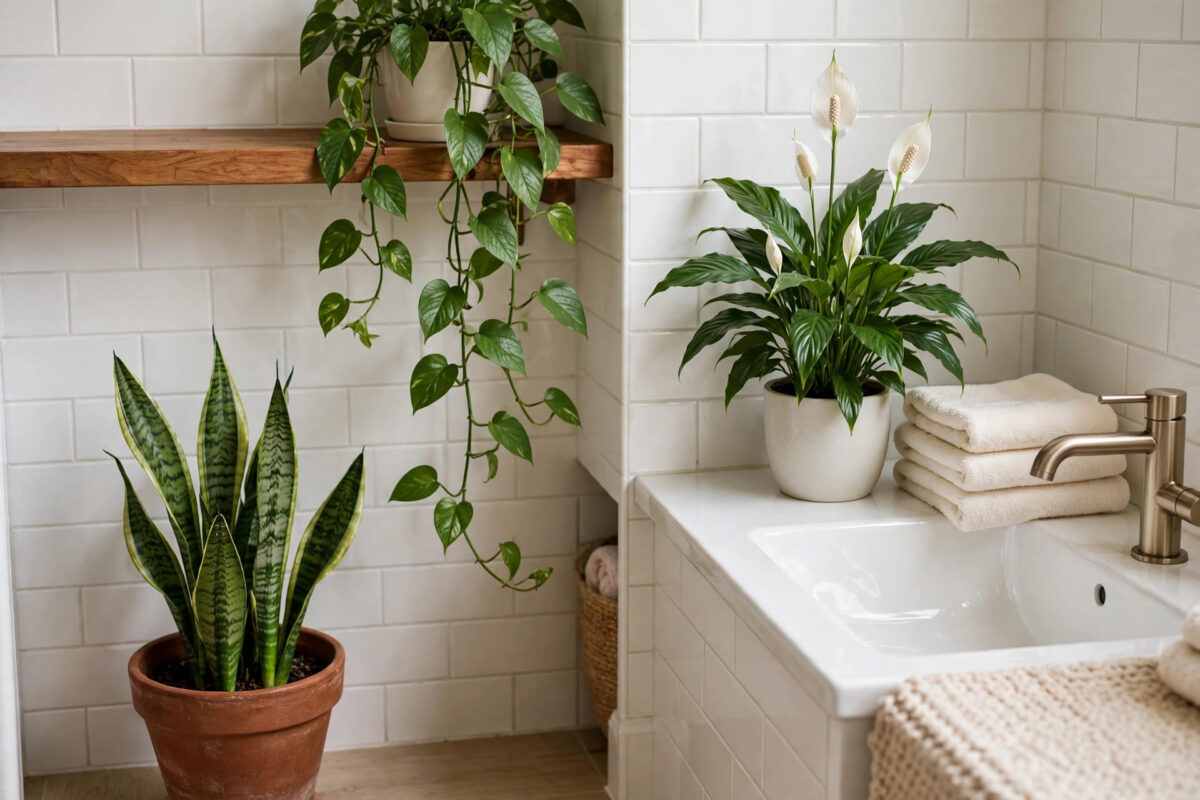
A bathroom with no window is one of the hardest rooms in the house for a houseplant. Shower humidity is genuinely helpful, but the room gets no natural light at all, and light is the one thing no plant can live without.
The good news is that a windowless bathroom is not a lost cause. With one of two simple workarounds, and plants chosen for low light rather than for looks alone, greenery can do well in this room long-term.
Quick Answer
No houseplant can survive long-term in total darkness, so a windowless bathroom needs added light or a rotation system. The most reliable setup is a full-spectrum grow light on a timer, paired with low-light-tolerant plants such as snake plant, ZZ plant, cast iron plant, pothos, or peace lily.
In This Post
The honest truth about windowless bathrooms
Plants make their food from light. In a windowless room, the only light comes from the bathroom fixture, usually on for short periods and far too weak to keep a plant alive on its own.
Even the toughest low-light plants are only tolerating low light, not thriving without any light. In permanent darkness, a plant slowly uses up its stored energy, stops growing, and declines over weeks or months, which is why a plant can look fine at first and then fail.
There are two proven ways around this: add light with an inexpensive grow light on a timer, or rotate plants between the bathroom and a brighter room. Everything else in this guide assumes you pick one of these two options.
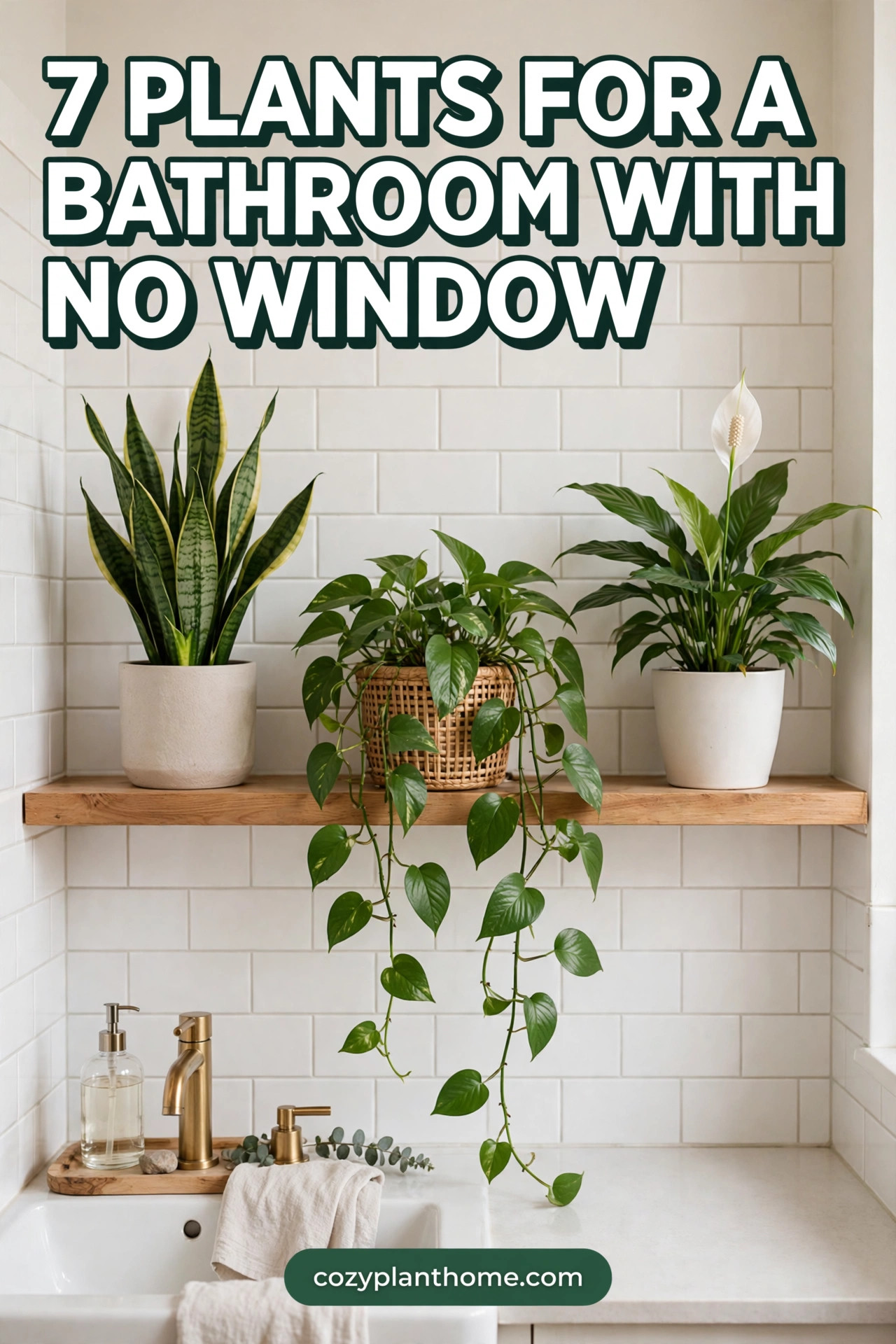 Save to Pinterest
Option 1: a simple grow light setup
A grow light does not need to be expensive or complicated. For a small bathroom, a single full-spectrum LED bulb in a standard socket, or a small LED bar under a shelf, is usually enough for a few plants.
- Choose a bulb or fixture labeled “full spectrum” or “grow light.” A full-spectrum bulb gives better results than a standard warm-white LED.
- Put the light on a plug-in timer so it runs whether you remember it or not. As general guidance, 10 to 12 hours a day is a reasonable starting point for low-light plants.
- Keep the light roughly 6 to 12 inches above the leaves, and place plants where the light actually reaches them.
A timer matters more than bulb strength. A modest light that runs reliably every day beats a strong light switched on only when someone remembers.
Option 2: the two-plant rotation
If you do not want a grow light, rotation is the other honest option: keep two plants of the same type, one in the bathroom and one recovering in a room with a window, and swap them on a schedule.
- Swap the plants every one to two weeks. The bathroom plant goes to a bright spot to recharge, and the rested plant comes back in.
- Use the same plant type in both spots so the look of the room stays consistent.
- Choose sturdy plants for rotation. Snake plants, ZZ plants, and cast iron plants handle the move and the dim weeks better than most.
Rotation works well for one or two feature plants. For a shelf full of greenery, the grow light is less work.
The best plants for a windowless bathroom
Each plant below tolerates low light and bathroom humidity. All of them still need the grow light or rotation described above.
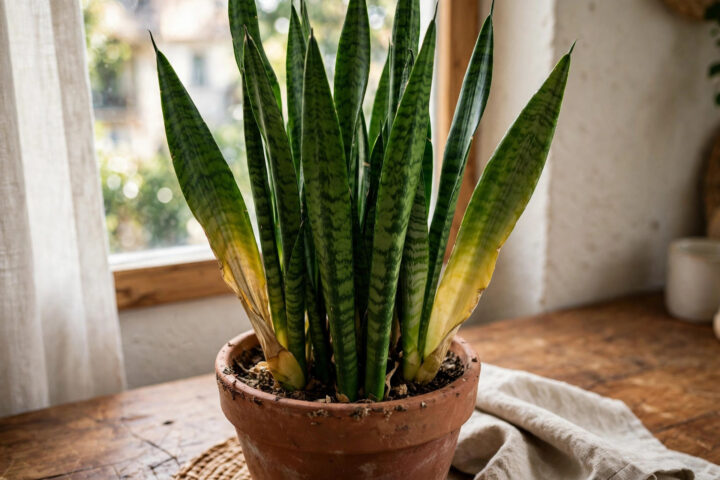
Snake plant (Dracaena trifasciata)
The snake plant is the classic low-light survivor. NC State Extension notes that it tolerates very low light and low humidity, and that careful watering is the main requirement. Its upright leaves suit narrow counters and floor corners.
Care Card
- Light:
- Very low to bright indirect
- Water:
- Let soil dry fully between waterings; about once a month in winter
- Pets:
- Toxic to cats and dogs (ASPCA)
- Difficulty:
- Easy
- Humidity:
- Low to average; tolerates bathroom humidity
The main risk in a bathroom is overwatering, not darkness. Soggy soil leads to root rot, so a pot with a drainage hole is essential.
ZZ plant (Zamioculcas zamiifolia)
The ZZ plant stores water in thick underground rhizomes, which makes it highly drought tolerant and forgiving of missed waterings. NC State Extension notes it will grow in very low light, even under fluorescent light only, making it a strong candidate for a bathroom with a grow light.
Care Card
- Light:
- Very low to medium indirect
- Water:
- Water sparingly; about once a month in winter, only when soil is dry
- Pets:
- Toxic to cats and dogs (ASPCA)
- Difficulty:
- Easy
- Humidity:
- Average; tolerates bathroom humidity
Keep the ZZ plant away from standing water. Its rhizomes rot if soil stays wet.
Cast iron plant (Aspidistra elatior)
The cast iron plant earned its common name by surviving neglect. NC State Extension describes it as a good choice for dense shade and low light indoors, drought tolerant once established, and intolerant of direct sun, which makes it a natural fit for a windowless room.
Care Card
- Light:
- Low to medium indirect; no direct sun
- Water:
- Keep lightly moist; drought tolerant once established
- Pets:
- Non-toxic to cats and dogs (ASPCA)
- Difficulty:
- Easy
- Humidity:
- Average to high
Growth is slow, so buy a plant close to the size you want. It is also the safest pick here for pet homes.
Pothos (Epipremnum aureum)
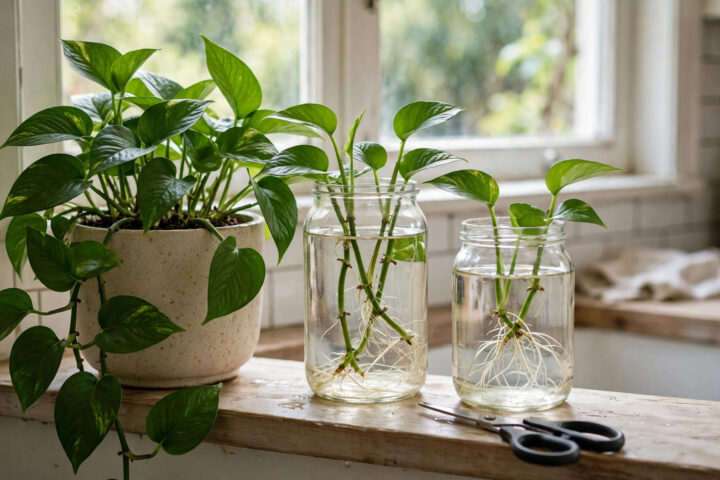
Pothos is the trailing option for a shelf or the top of a cabinet. It tolerates low light, though leaves may lose some variegation and vines grow more slowly in dim conditions.
Care Card
- Light:
- Low to bright indirect
- Water:
- Water when the top of the soil is dry
- Pets:
- Toxic to cats and dogs (ASPCA)
- Difficulty:
- Easy
- Humidity:
- Average to high
In very low light, pothos can grow leggy, with long gaps between leaves. Occasional time in a brighter room keeps it looking full.
Peace lily (Spathiphyllum)
The peace lily is the humidity lover of the group. Its broad leaves enjoy moist air, and it droops visibly when it needs water, which makes watering mistakes easier to catch.
Care Card
- Light:
- Low to medium indirect; needs a grow light or rotation in a windowless room
- Water:
- Keep soil evenly moist; water when leaves just begin to droop
- Pets:
- Toxic to cats and dogs (ASPCA)
- Difficulty:
- Moderate
- Humidity:
- High
Be clear about the trade-off: a peace lily will not flower, and may not survive, in a windowless bathroom without added light. With a grow light it is a good choice; without one, it is the weakest pick on this list.
Watering in a humid bathroom
Bathroom air is moist, so soil dries out far more slowly than in a living room. Watering on the same schedule as your other houseplants is the fastest way to rot roots in this room.
- Check the soil before every watering. Push a finger about an inch into the mix; if it still feels damp, wait.
- Use pots with drainage holes and empty any saucer after watering. Plants should never sit in standing water.
- Water less often than the plant label suggests. For snake plants and ZZ plants in a humid, low-light bathroom, that can mean once a month or less.
- Run the exhaust fan or crack the door after showers. Air movement helps soil dry at a healthy rate and discourages mold.
Common mistakes
- Assuming “low light” means “no light.” Every plant on this list still needs the grow light or rotation system.
- Overwatering. Humidity slows drying, and more bathroom plants die from wet soil than from darkness.
- Choosing high-light plants for the look. Succulents, herbs, and most flowering plants will decline quickly in this room.
- Skipping the timer. A grow light that depends on memory will be off more than it is on.
- Ignoring pet safety. Four of the five plants above are toxic to cats and dogs if chewed. In a pet home, choose the cast iron plant, or place toxic plants where pets cannot reach them.
Can any plant live in a bathroom with absolutely no light?
No. Plants need light to make food, and even the most shade-tolerant houseplants decline in total darkness. A grow light on a timer, or rotating plants through a lit room, is required for long-term survival.
How many hours should a bathroom grow light run?
As general guidance, 10 to 12 hours a day works well for low-light plants. Use a plug-in timer so the schedule stays consistent.
Which of these plants is safe for cats and dogs?
Of the five plants in this guide, only the cast iron plant is listed by the ASPCA as non-toxic to cats and dogs. Snake plant, ZZ plant, pothos, and peace lily are all listed as toxic if eaten, so keep them out of reach or choose the cast iron plant.
Why is my bathroom plant's soil always wet?
Bathroom humidity slows evaporation, and low light means the plant drinks slowly too. Water less often, check the soil before watering, and make sure the pot drains freely and does not sit in standing water.
Is a regular LED bulb enough, or do I need a grow light?
A full-spectrum grow light gives the most reliable results for low-light plants. A standard bulb may keep tough plants going for a while, but growth will be slower and weaker.
Sources
- ASPCA Toxic and Non-Toxic Plants List: https://www.aspca.org/pet-care/animal-poison-control/toxic-and-non-toxic-plants
- NC State Extension Plant Toolbox, Snake Plant (Dracaena trifasciata): https://plants.ces.ncsu.edu/plants/dracaena-trifasciata/
- NC State Extension Plant Toolbox, ZZ Plant (Zamioculcas zamiifolia): https://plants.ces.ncsu.edu/plants/zamioculcas-zamiifolia/
- NC State Extension Plant Toolbox, Cast Iron Plant (Aspidistra elatior): https://plants.ces.ncsu.edu/plants/aspidistra-elatior/
- NC State Extension Plant Toolbox, Pothos (Epipremnum aureum): https://plants.ces.ncsu.edu/plants/epipremnum-aureum/