A large plant changes a room. It fills an empty corner, softens a tall ceiling, and gives a living room a layered look that small pots on a windowsill cannot match.
The problem is that many popular large houseplants are toxic to cats. A cat that chews the wrong leaf can end up with mouth irritation, vomiting, or worse, depending on the plant.
This guide works from one source only: the ASPCA’s list of plants toxic and non-toxic to cats. Every plant featured below is listed by the ASPCA as non-toxic to cats, and each botanical name is included so the listing can be checked directly.
Quick Answer
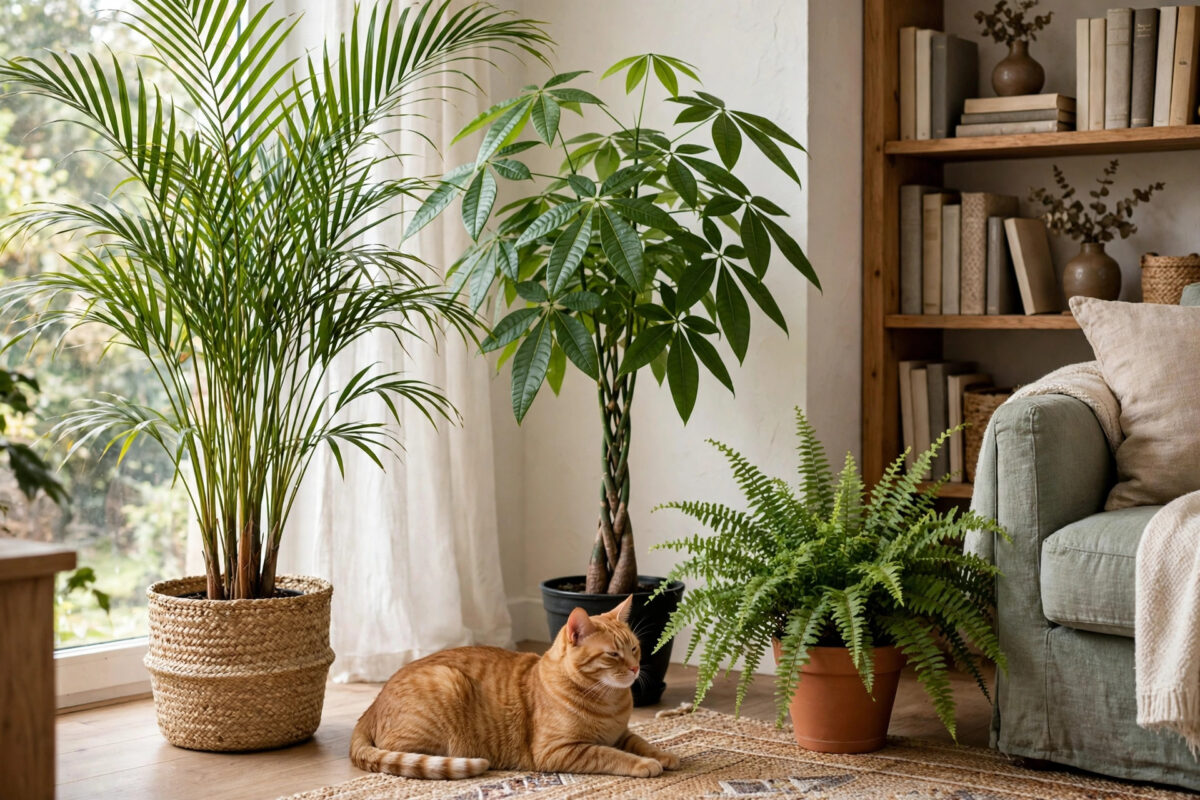
The large indoor plants the ASPCA lists as non-toxic to cats include the areca palm (Dypsis lutescens), money tree (Pachira aquatica), parlor palm (Chamaedorea elegans), banana plant (Musa acuminata), majesty palm (Ravenea rivularis), Boston fern (Nephrolepis exaltata), calathea (Calathea spp.), and cast iron plant (Aspidistra elatior). “Non-toxic” does not mean a good snack: any plant material can upset a cat’s stomach, so chewing should still be discouraged.
In This Post
What “safe” really means
“Non-toxic” is a specific claim, not a general promise. On the ASPCA list it means the plant has not been reported to cause systemic poisoning in cats and is not expected to be life-threatening if nibbled.
That does not make any plant food. The ASPCA notes that eating any plant material can cause vomiting and gastrointestinal upset in cats and dogs, because their digestive systems are not built for leaves and stems.
A practical approach:
- Treat non-toxic plants as safe to have in the home, not as food.
- Discourage chewing with placement first: stands and corners a cat cannot easily reach.
- Offer an approved alternative, such as cat grass, in an easy spot.
- Watch new plants for a few weeks; some cats ignore foliage, and a few are determined chewers.
The plants below are featured because they make a real presence: tall palms, a tree-form money tree, a wide fern. Mature sizes use hedged wording, because indoor growth depends on light, pot size, and time.
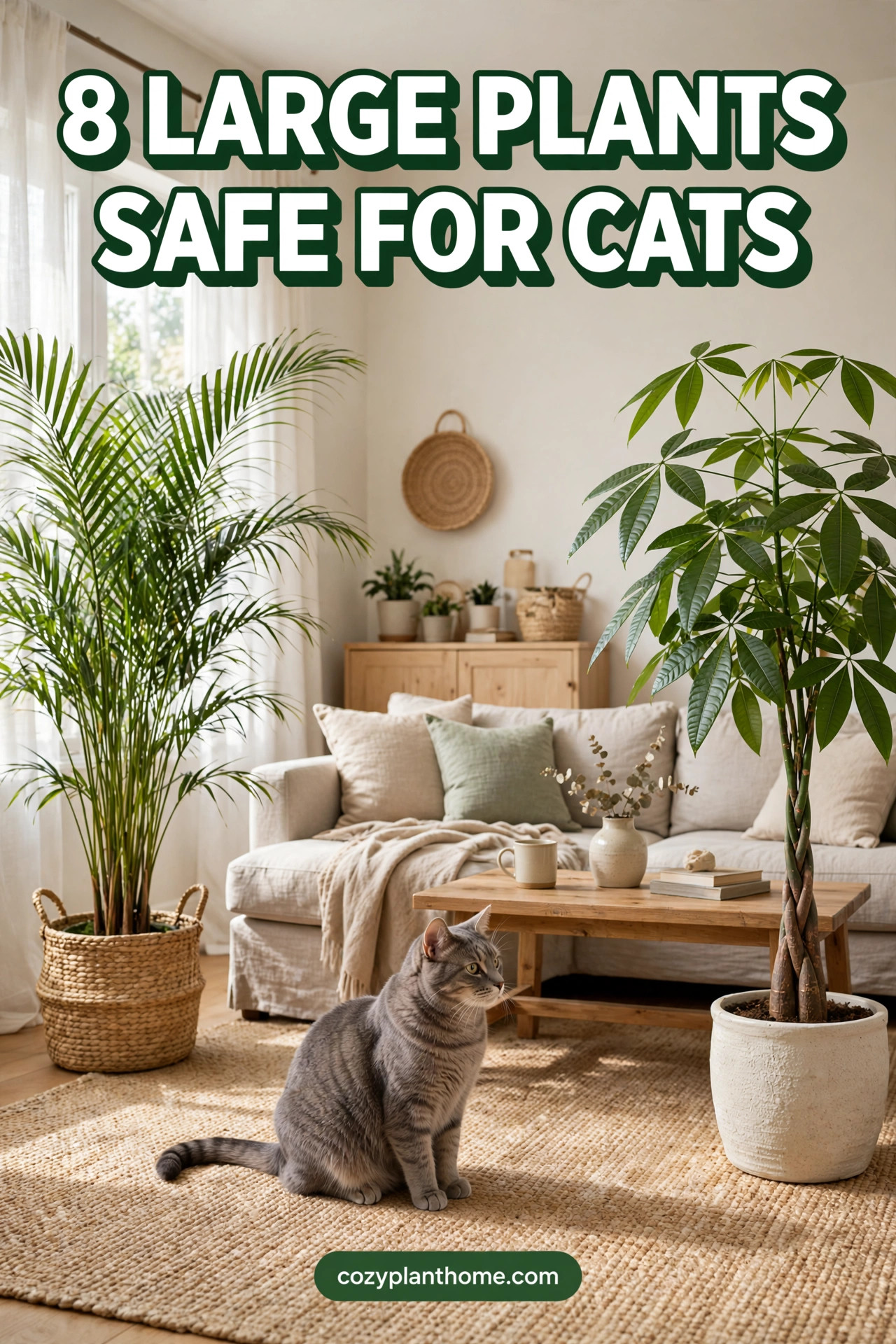 Save to Pinterest
The 8 large plants
1. Areca Palm (Dypsis lutescens)
The classic feathery palm for a bright corner. Indoors it can reach roughly 6 to 8 feet over time in a large pot. NC State Extension advises a bright location, soil kept moist but not soggy, and repotting every two to three years. It also appreciates higher humidity.
Care Card
- Light:
- Bright, indirect
- Water:
- Keep moist, not soggy
- Pets:
- Non-toxic to cats and dogs (ASPCA)
- Difficulty:
- Moderate
- Humidity:
- Prefers higher humidity
2. Money Tree (Pachira aquatica)
Often sold with a braided trunk and a canopy of large, hand-shaped leaves. As a houseplant it typically grows 6 to 8 feet tall, making it a true floor plant. It prefers indirect light and humidity, in the 65 to 75 degree range, and standing water must be avoided because it causes root rot.
Care Card
- Light:
- Bright to medium, indirect
- Water:
- Water well, then allow to dry partway; no standing water
- Pets:
- Non-toxic to cats and dogs (ASPCA)
- Difficulty:
- Easy
- Humidity:
- Likes humidity
3. Parlor Palm (Chamaedorea elegans)
A slow-growing palm that can reach around 4 to 6 feet indoors in a large pot. Its fine, arching fronds look lighter than most floor plants, so it suits smaller living rooms. It is one of the most shade-tolerant palms; keep the soil lightly moist and out of direct sun.
Care Card
- Light:
- Medium to low, indirect
- Water:
- Keep lightly moist
- Pets:
- Non-toxic to cats and dogs (ASPCA)
- Difficulty:
- Easy
- Humidity:
- Average to high
4. Banana Plant (Musa acuminata)
The fastest route to a tropical look. Dwarf forms sold for indoors can still reach about 4 to 6 feet, with very large, soft leaves. It needs the brightest indirect light on this list, evenly moist soil, and high humidity. The big leaves tear in drafts, so a sheltered corner works best.
Care Card
- Light:
- Bright, indirect; the most light on this list
- Water:
- Keep evenly moist
- Pets:
- Non-toxic to cats and dogs (ASPCA)
- Difficulty:
- Moderate
- Humidity:
- High
5. Majesty Palm (Ravenea rivularis)
The tall palm sold in most garden centers, reaching roughly 5 to 8 feet indoors in a large container. It wants bright, indirect light and evenly moist soil. It is fussier about dry air than the areca palm, so misting or a humidifier helps prevent brown leaf tips.
Care Card
- Light:
- Bright, indirect
- Water:
- Keep evenly moist, do not let it dry out fully
- Pets:
- Non-toxic to cats and dogs (ASPCA)
- Difficulty:
- Moderate
- Humidity:
- High
6. Boston Fern (Nephrolepis exaltata)
Not tall, but a mature plant in a large hanging basket or on a tall stand can spread 2 to 3 feet wide with long, arching fronds – width that earns it a place here. It prefers indirect light, consistently moist soil, and humid air; dry air is the usual cause of leaf drop.
Care Card
- Light:
- Medium to bright, indirect
- Water:
- Keep consistently moist
- Pets:
- Non-toxic to cats and dogs (ASPCA)
- Difficulty:
- Moderate
- Humidity:
- High
7. Calathea (Calathea spp.)
Most calatheas are tabletop plants, but larger varieties in floor pots can reach around 2 to 3 feet tall and wide, with broad patterned leaves. They prefer medium, indirect light and lightly moist soil. Brown leaf edges are common with heavily treated tap water, so some growers use rainwater or distilled water.
Care Card
- Light:
- Medium, indirect
- Water:
- Keep lightly moist
- Pets:
- Non-toxic to cats and dogs (ASPCA)
- Difficulty:
- Moderate
- Humidity:
- High
8. Cast Iron Plant (Aspidistra elatior)
The low-light option on this list. Its dark, upright leaves can reach about 2 feet, and a mature plant fills a dark corner most large plants would refuse. NC State Extension describes it as a good specimen for dense shade and low light areas indoors, and drought tolerant once established. Growth is slow, so buy it close to its intended size.
Care Card
- Light:
- Low to medium; tolerates dense shade
- Water:
- Allow to dry between waterings; drought tolerant
- Pets:
- Non-toxic to cats and dogs (ASPCA)
- Difficulty:
- Easy
- Humidity:
- Average
Popular large plants to AVOID with cats
These plants are sold everywhere as statement plants, and every one is listed by the ASPCA as toxic to cats:
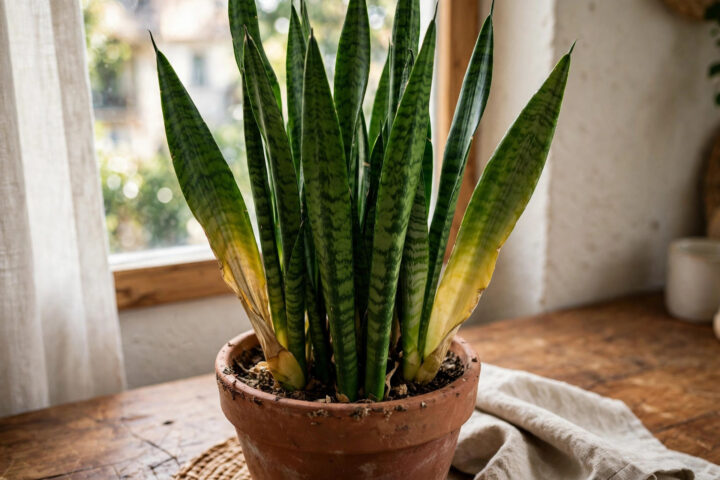
- Snake Plant (Dracaena trifasciata)
- Fiddle Leaf Fig (Ficus lyrata)
- Monstera (Monstera deliciosa)
- ZZ Plant (Zamioculcas zamiifolia)
- Dracaena (Dracaena spp.)
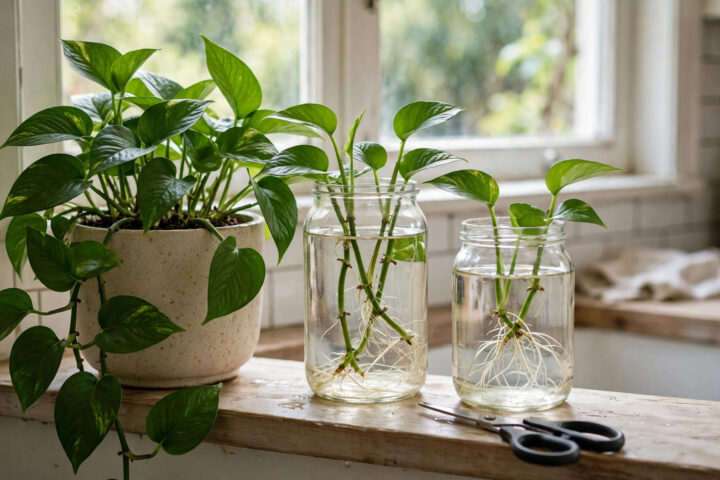
- Pothos (Epipremnum aureum)
- Peace Lily (Spathiphyllum spp.)
Common names are shared by unrelated plants, which is why the botanical name is included for every entry: it is the reliable way to check a plant.
How to check any plant before you buy
- Search the ASPCA list by botanical name. The Latin name on the tag is the one to search.
- Match the full name, not just the genus. Toxicity can differ between related species.
- Label plants at home, so future checks take seconds.
- Keep the receipt or a photo of the tag. If a cat eats a mystery plant, the name is the first thing a veterinarian will ask for.
- Treat unidentified plants as unverified, and place them out of reach until checked.
If your cat eats a plant
- Move the cat away and gently remove any plant material from its mouth.
- Do not induce vomiting unless a veterinarian tells you to.
- Identify the plant from its tag or a clear photo.
- Call your veterinarian, or ASPCA Poison Control at (888) 426-4435. A consultation fee may apply.
- Watch for vomiting, drooling, pawing at the mouth, or loss of appetite, and report what you see.
With a non-toxic plant, a nibble most often causes nothing worse than a mild stomach upset. With a plant from the avoid list, call for advice straight away rather than waiting for symptoms.
What is the biggest houseplant that is safe for cats?
Palms are usually the tallest safe option: an areca palm or majesty palm can reach roughly 6 to 8 feet indoors over time, and a money tree commonly grows 6 to 8 feet as a houseplant. All three are listed by the ASPCA as non-toxic to cats.
Are palm plants safe for cats?
True palms such as the areca, parlor, and majesty palms are listed by the ASPCA as non-toxic to cats. The caution is with look-alikes: the sago palm is not a true palm and is highly toxic, so always check the botanical name rather than the plant’s shape.
Is a money tree safe for cats?
Yes. The money tree (Pachira aquatica) is listed by the ASPCA as non-toxic to cats and dogs. A large amount of any plant can still cause a mild stomach upset, so chewing should be discouraged even with safe plants.
My cat chews every plant. What should I do?
Start with placement: stands and spots a cat cannot reach, and non-toxic plants only. Offer cat grass as an approved chewing option, and check the ASPCA list before adding anything new. If a cat shows symptoms after eating a plant, call a veterinarian or ASPCA Poison Control at (888) 426-4435.
How do I check whether a plant is safe for my cat?
Search the ASPCA’s Toxic and Non-Toxic Plants list using the plant’s botanical name, which is printed on most nursery tags. Common names are unreliable because unrelated plants often share them. Unidentified plants should stay out of reach until checked.
Sources
- ASPCA, Toxic and Non-Toxic Plants List – https://www.aspca.org/pet-care/animal-poison-control/toxic-and-non-toxic-plants
- NC State Extension Gardener Plant Toolbox, Areca Palm (Dypsis lutescens) – https://plants.ces.ncsu.edu/plants/dypsis-lutescens/
- NC State Extension Gardener Plant Toolbox, Money Tree (Pachira aquatica) – https://plants.ces.ncsu.edu/plants/pachira-aquatica/
- NC State Extension Gardener Plant Toolbox, Cast Iron Plant (Aspidistra elatior) – https://plants.ces.ncsu.edu/plants/aspidistra-elatior/