A snake plant with yellow leaves is sending a clear signal, and it is usually about water. Snake plants store moisture in their thick leaves and rhizomes, so they cope far better with drought than with wet soil.
Most causes of yellowing are fixable if caught early. Diagnose before you act, because the right fix for an overwatered plant is the opposite of the fix for a thirsty one.
Quick Answer
The most common cause of yellow snake plant leaves is overwatering, which leads to root rot. Yellow leaves that feel soft or mushy, especially with wet soil, mean the plant has been kept too wet. Let the soil dry fully; if rot is present, unpot the plant, trim damaged roots, and repot in fresh, well-draining mix.
In This Post
Care Card
- Light:
- Low to bright indirect; tolerates very low light
- Water:
- Let soil dry fully; every 2-4 weeks, less in winter
- Pets:
- Toxic to cats and dogs (ASPCA)
- Difficulty:
- Easy
- Humidity:
- Low to average
First, read the leaf
Before changing anything, look closely at where the yellow starts and how the leaf feels. These two details narrow down the cause quickly.
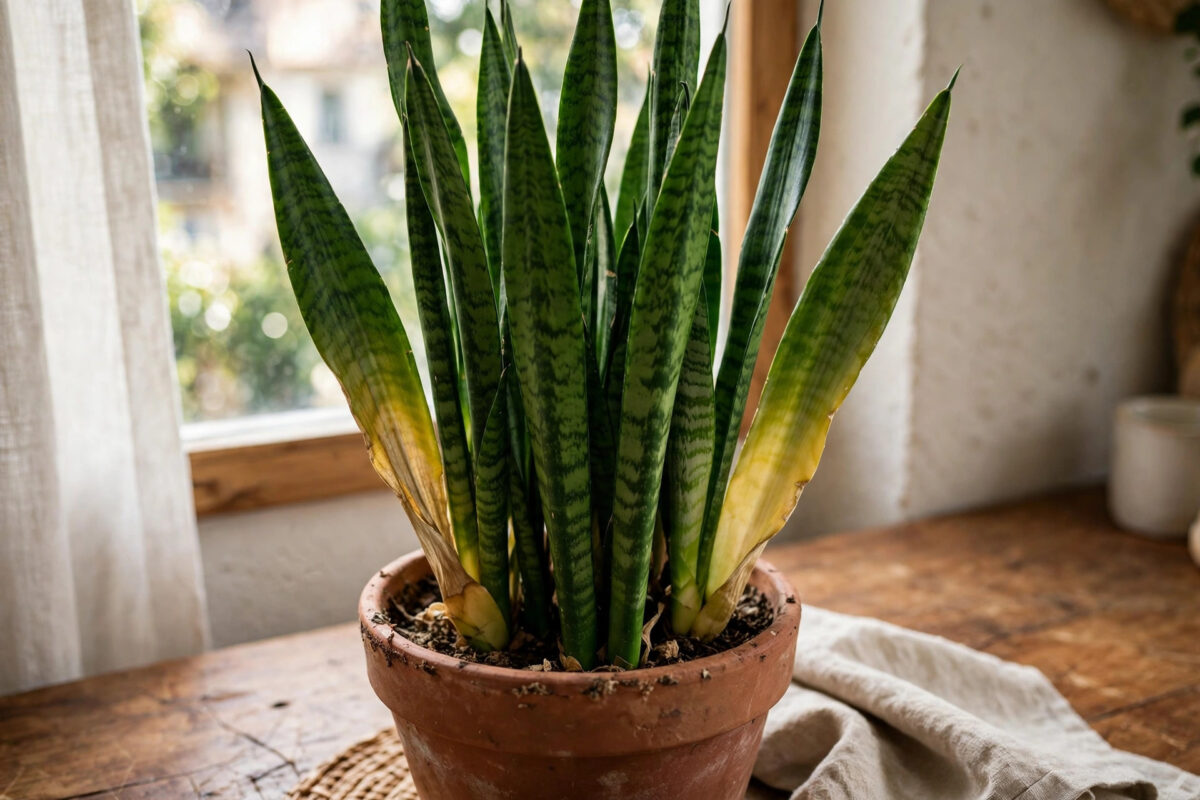
- Yellow starting at the base, leaf soft or mushy: almost always too much water and possible root rot.
- Yellow with dry, crispy edges or tips: more likely underwatering, low humidity combined with dry soil, or salt buildup.
- Yellow patches on one side of the leaf: often sun scorch, if that side faces strong direct sun.
- Pale, washed-out yellow across the whole plant: can point to very low light or a plant that has been wet and cold.
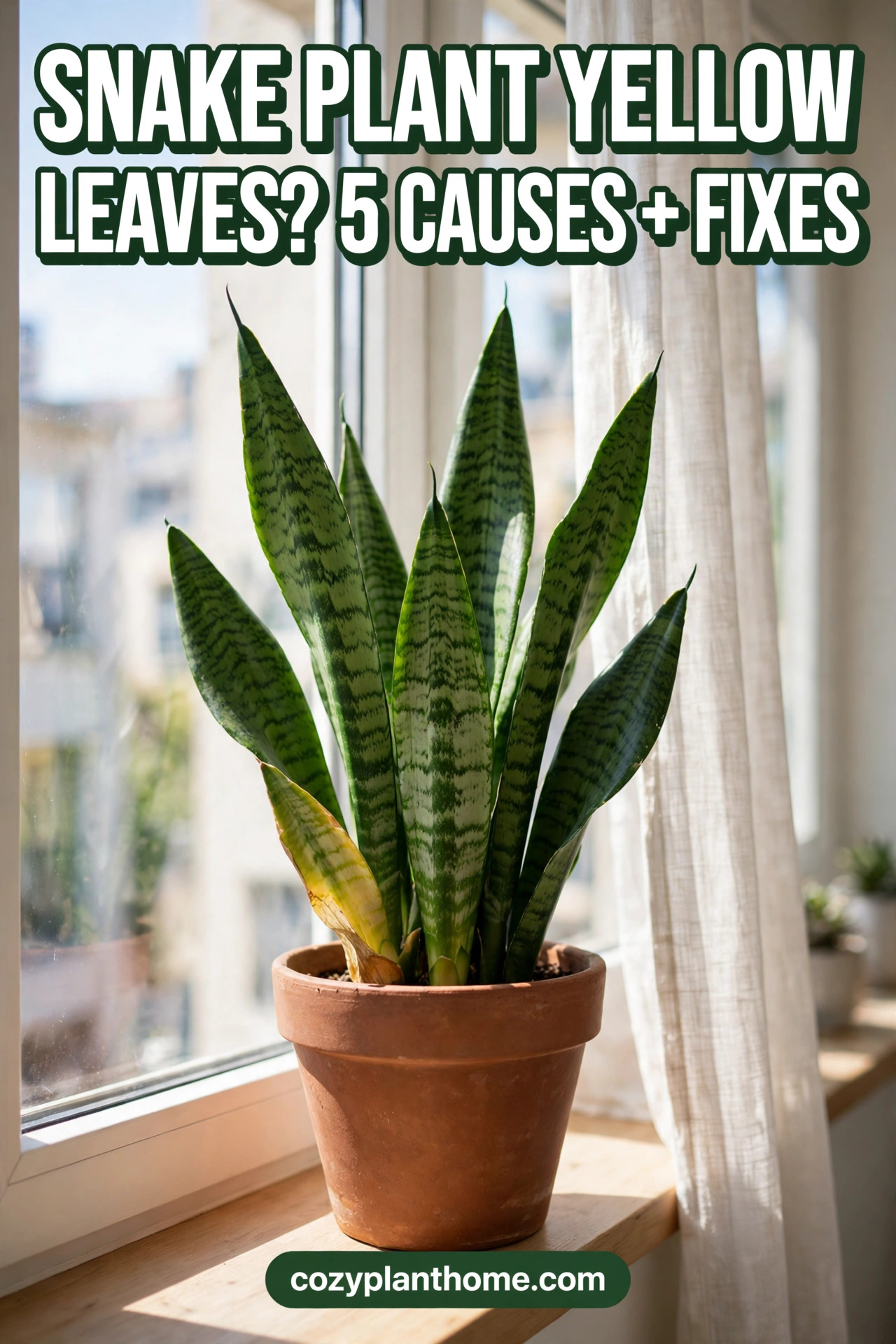
- One yellow leaf at the bottom while the rest look healthy: usually normal aging of an old leaf.
Feel the soil too. Push a finger two inches into the mix. If it feels wet and the leaf is mushy, water is the problem. If it is bone dry all the way down and the leaf feels thin and dry, the plant may simply be thirsty.
 Save to Pinterest
Cause 1: Overwatering and root rot
This is the cause to check first. NC State Extension is direct about snake plants: do not overwater, because the roots will rot, and overwatering may cause root rot. Indoors, more snake plants are lost to wet soil than to anything else.
Signs include yellow leaves that start at the base, a soft or collapsing leaf, soil that smells sour, and a pot that stays wet for weeks. In low light the risk rises, because the plant drinks slowly and the soil dries slowly.
The rescue, step by step
- Slide the plant out of its pot and gently shake or rinse the soil from the roots.
- Inspect the roots. Healthy roots are firm and pale. Rotten roots are dark brown or black, soft, and mushy, and may smell bad.
- With clean scissors, cut away every rotten root and any leaf that is mushy at the base. Cut back to firm, healthy tissue.
- Let the plant sit out of soil for a few hours so the cut surfaces can dry slightly.
- Repot in fresh, dry, well-draining mix, in a pot with a drainage hole. A gritty cactus or succulent mix with added perlite works well.
- Wait several days before watering at all, then water lightly. The goal is to let the roots recover in mostly dry conditions.
- After repotting, water only when the soil has dried out fully, and in winter reduce watering further. NC State guidance is to let the soil dry between waterings in the growing season and to water only every one to two months in winter.
Cause 2: Underwatering
A snake plant can also yellow from drought, though this is less common. Leaves look dry rather than mushy, may curl slightly, and feel thinner than usual, and the soil is dry throughout the pot.
The fix is a thorough watering: water slowly until it drains from the bottom, empty the saucer, and then return to a normal routine of watering only when the soil is fully dry. Do not compensate by watering little and often afterward.
Cause 3: Too much direct sun
Snake plants tolerate a wide range of light, but harsh direct sun, especially sudden afternoon sun through glass, can scorch leaves. Scorched areas look pale, yellow, or bleached in patches, usually on the sun-facing side.
Move the plant to bright indirect light, shifting it gradually from a dim spot. Scorched patches will not turn green again, but new growth should be healthy.
Cause 4: Too little light
A snake plant tolerates very low light, but in near-darkness growth slows, color can fade to a dull yellow-green, and the plant becomes more vulnerable to rot because the soil stays wet longer.
Move it to the brightest indirect light you have, or supplement with a grow light. Expect recovery to be gradual; existing pale leaves may not fully regain their color, but new leaves should be firm and green.
Cause 5: Cold drafts and temperature stress
Snake plants dislike cold. Leaves exposed to cold drafts from windows or air conditioning vents, or rooms that drop to near-freezing temperatures, can yellow and soften.
Move the plant away from vents and cold glass, and keep it in a spot with stable, normal room temperatures. Damaged leaves will not recover, so trim any that turn fully yellow or mushy.
Cause 6: Pests
Mealybugs and spider mites are the pests NC State Extension flags for snake plants. Mealybugs look like small white cottony clusters in leaf joints and along the base. Spider mites are tiny and hard to see; look for fine webbing and speckled, fading leaves.
Isolate the plant from other houseplants. Wipe mealybugs off with a cotton swab dipped in rubbing alcohol, and wipe leaves down to remove mites. Recheck weekly and repeat as needed, because one cleaning rarely removes every pest.
Cause 7: Old leaf aging
A single bottom leaf yellowing on an otherwise healthy plant is usually just age. Old leaves are retired as new ones grow from the center, and this is not a problem to solve.
Cut the yellow leaf off at the base with a clean blade if you dislike how it looks, or leave it until it dries. Only worry if several leaves yellow at the same time, which points back to water, light, or roots.
Cause 8: Fertilizer and salt buildup
Over time, fertilizer salts and minerals from tap water can build up in the soil and stress roots, showing as yellowing or browning leaf edges. This is most likely in a plant that has been in the same soil for years and is fed often.
Flush the soil by watering slowly and deeply and letting a generous amount of water drain through, then empty the saucer. Snake plants need very little fertilizer; feeding lightly once or twice in the growing season is plenty for most indoor plants.
Prevention checklist
- Water only when the soil is completely dry, and check with a finger before you water.
- Always use a pot with a drainage hole, and empty saucers after watering.
- Use a gritty, fast-draining mix rather than dense, moisture-retentive soil.
- Water much less in winter; every one to two months can be enough.
- Give bright indirect light where possible, even though the plant tolerates low light.
- Keep the plant away from cold drafts, vents, and freezing windows.
- Inspect leaf joints and bases monthly for mealybugs, and leaf surfaces for mite speckling.
- Repot into fresh soil every couple of years to prevent salt buildup and compaction.
Should I cut off yellow snake plant leaves?
Yes, if a leaf is fully yellow or mushy at the base, cut it off at the base with a clean blade so the plant stops spending energy on it and rot cannot spread. If only the tip is yellow and the rest of the leaf is firm and green, you can leave it or trim just the damaged part.
Can a yellow snake plant leaf turn green again?
No. Yellowed leaf tissue does not regain its green color, because the chlorophyll in that tissue has broken down. The goal of treatment is to stop the cause so new leaves grow in healthy; the yellow leaf can be trimmed away when you are ready.
How often should I water a snake plant?
There is no fixed calendar schedule, because it depends on light, pot size, and season. As a general guide, water every two to four weeks in the growing season once the soil is fully dry, and much less in winter, when watering every one to two months is often enough.
How do I tell root rot from normal aging?
Root rot affects multiple leaves, starts at the base, and the leaves feel soft or mushy, often with wet soil and dark, mushy roots. Aging affects a single older bottom leaf while the rest of the plant stays firm, upright, and green, and the roots are healthy.
Is a yellow snake plant dangerous for pets?
Snake plants are listed by the ASPCA as toxic to cats and dogs, so keep the plant where pets cannot chew the leaves. If a pet eats part of the plant and seems unwell, contact a veterinarian or the ASPCA Poison Control hotline.
Sources
- NC State Extension Plant Toolbox, Snake Plant (Dracaena trifasciata): https://plants.ces.ncsu.edu/plants/dracaena-trifasciata/
- ASPCA Toxic and Non-Toxic Plants List: https://www.aspca.org/pet-care/animal-poison-control/toxic-and-non-toxic-plants