Pothos has a reputation as the plant you can’t kill, and it mostly earns it. It grows in a dim hallway, forgives a missed watering and roots in a glass of water. But “alive” and “looking good” are not the same thing. A pothos left in low light with a wet pot turns into a few long, bare vines with small, plain leaves at the ends.
Good pothos care fixes that with very little effort. Light keeps the color, the right watering keeps the roots healthy, and a trim keeps it full. Here’s how each one works.
Pothos at a Glance
- Light:
- Bright indirect is best; tolerates lower light
- Water:
- When the top of the soil is dry
- Pets:
- Toxic to cats and dogs (ASPCA)
- Difficulty:
- Easy
- Humidity:
- Normal room air is usually fine
- Temperature:
- Keep above 55°F (13°C)
In This Post
Light Decides How Your Pothos Looks
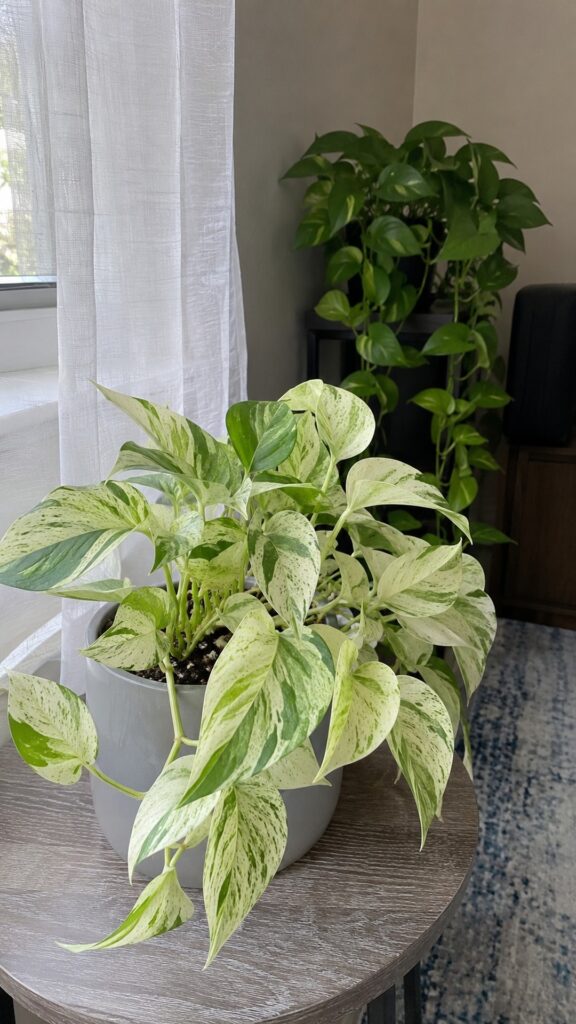
Pothos grows best in bright, indirect light, like a spot a few feet from an east or west window or behind a sheer curtain. It will put up with less, which is why it shows up on every list of low light indoor plants. The catch is the leaves. In dim light, new growth comes in smaller and the cream or yellow streaks fade toward plain green.
The variety matters here:
- Golden pothos is the most forgiving. It keeps some streaking in moderate light.
- Marble Queen and other pale, heavily variegated types need the brightest spot you have, but not direct sun. The New York Botanical Garden notes that light-colored cultivars scorch easily.
- Jade, the all-green form, is the one NC State Extension points to for low light. It still grows slower in dim light, but it has no variegation to lose, so it keeps its looks better.
If an old pothos has gone plain green, move it brighter. The leaves it already has won’t change much, but the new ones should come in with more color.
 Save
Watering: Let the Top Dry First
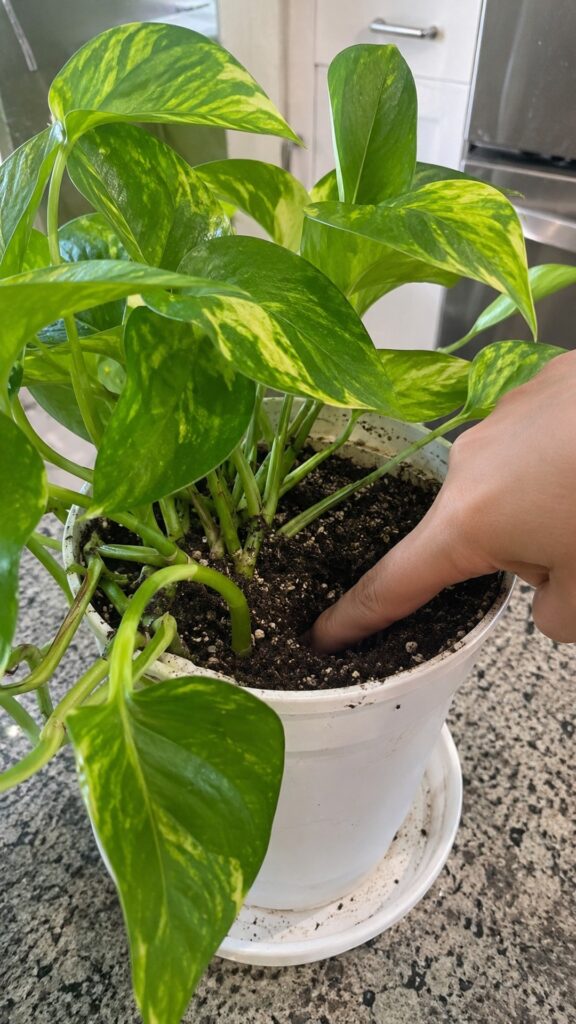
Most pothos problems start with water, and usually too much of it. NYBG’s advice is simple: while the plant is growing, let the top of the soil dry between waterings. In winter, when growth slows, give only enough to keep the soil from drying out completely.
- Feel the top inch or two. Push a finger in. Damp means wait.
- When it’s dry, water thoroughly until water runs out of the drainage hole.
- Empty the saucer after a few minutes so the pot isn’t standing in water.
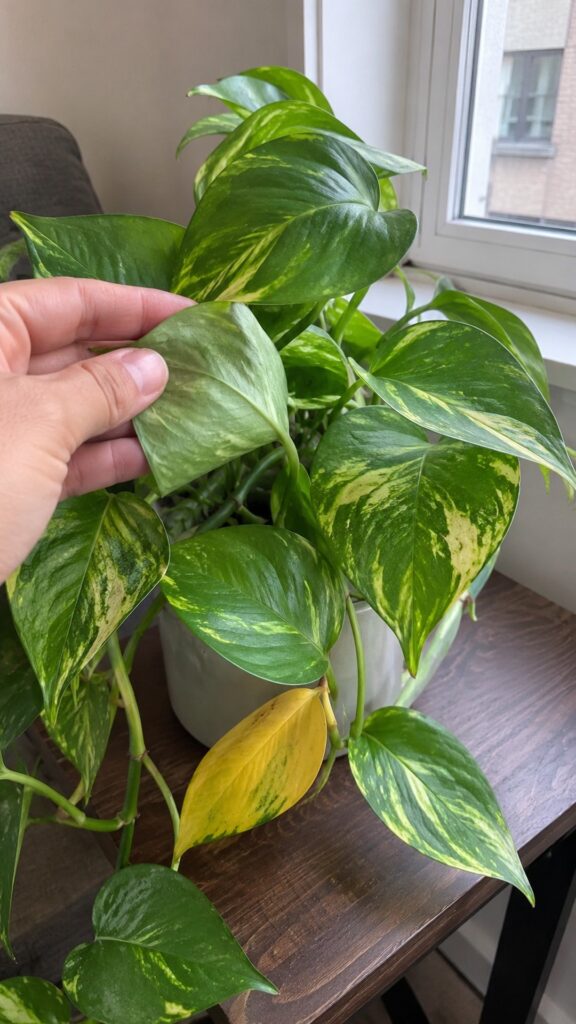
A pothos tells you when you’ve got it wrong. Yellow leaves that drop easily, along with dark, soft stems at the soil line, point to overwatering. Brown, dry edges with brown spots can mean the root ball went completely dry while the plant was growing. If yours has yellow leaves and you’re not sure which it is, our guide to plant leaves turning yellow walks through the checks.
 Save
Soil, Pot and Repotting
Any good, well-drained potting mix works. The pot matters more than the mix: it needs a drainage hole. A decorative pot without one is fine as an outer cover, as long as you lift the plant out to water it.
NYBG suggests repotting each spring into a pot one size larger. In practice, many pothos go longer than a year. Repot when roots circle the bottom or poke out of the drainage hole, or when the soil dries out within a day or two of watering.
How to Make a Leggy Pothos Fuller
Older pothos leaves yellow and drop over time, so the leaves end up bunched at the ends of long, bare vines. NC State Extension’s fix is to cut the stems back to keep the plant bushy. Spring is the best time, but a pothos in decent light recovers from a trim any time of year.
- Cut the longest, barest vines back by a third to a half, just above a leaf.
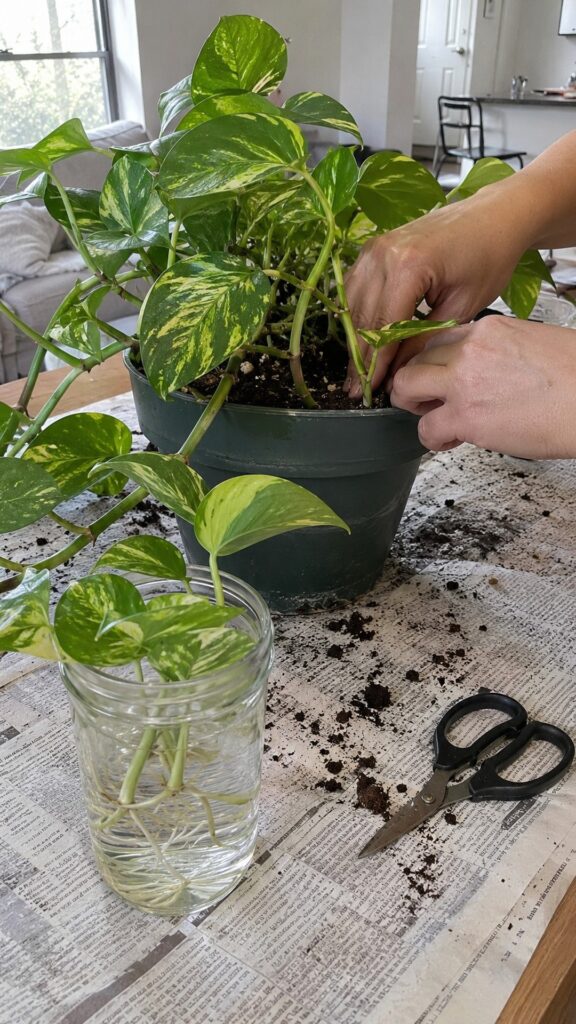
- Keep the pieces. Any section with a node (the small bump where a leaf meets the stem) can root.
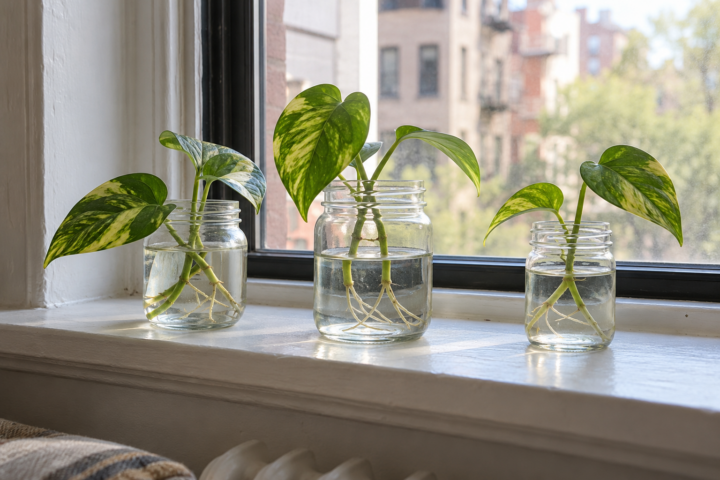
- Root them in water. NC State shows pothos cuttings rooting in water in about two weeks. Our step-by-step guide to propagating pothos in water covers when the roots are ready.
- Plant the rooted cuttings back into the same pot, around the base. This is the real trick to a full pothos: more stems from the soil, not just longer ones.
 Save
Trailing or Climbing?
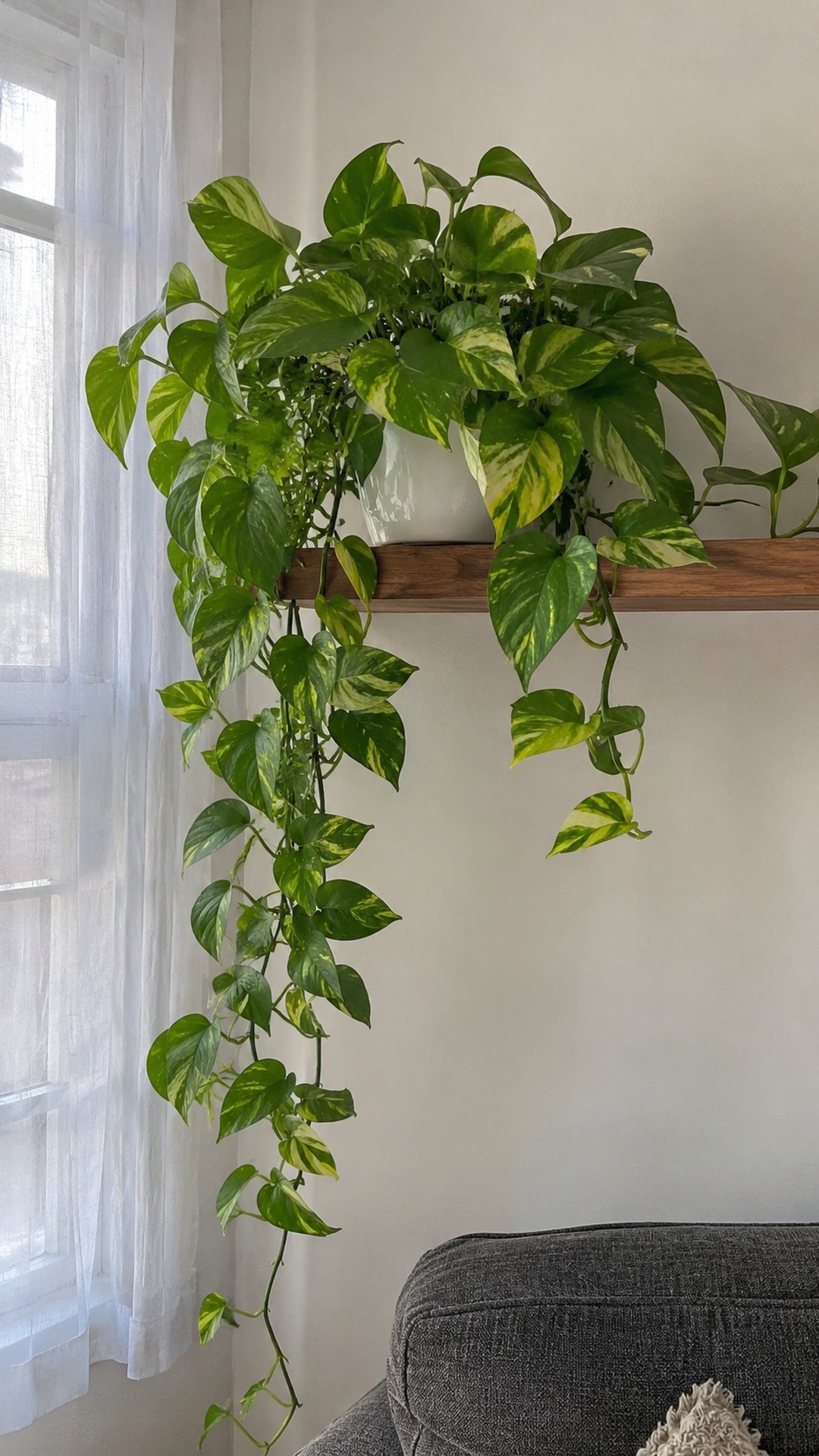
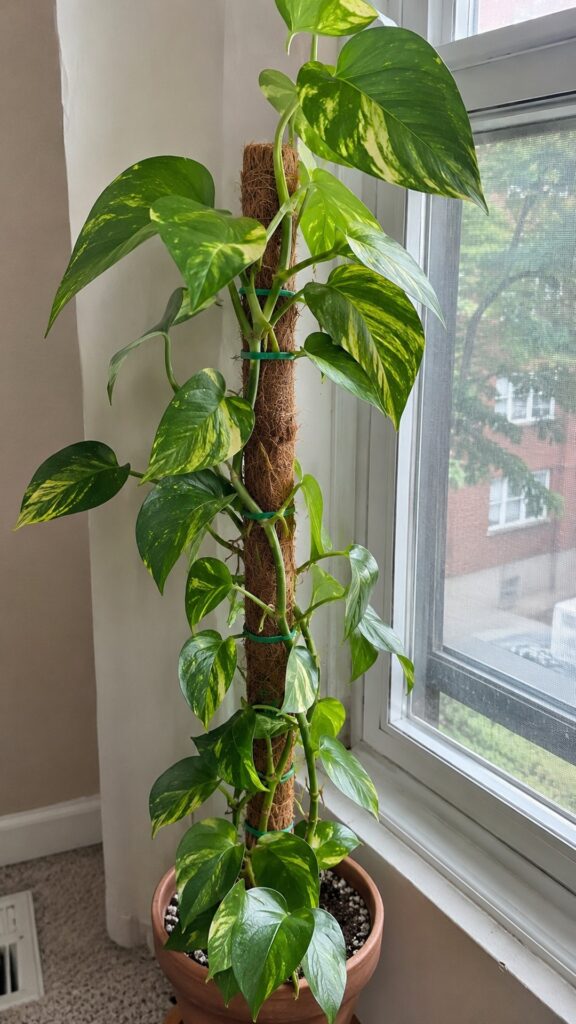
Left alone, pothos trails, which suits a high shelf or a hanging pot. Give it something to climb and it changes. Pothos climbs with small brown aerial roots that cling to a support, and NC State notes that a support plus enough light encourages larger, more mature leaves.
- A moss or coir pole in the pot is the classic choice. Tie the vines on loosely. A moss pole kept lightly moist helps the aerial roots attach; a dry coir pole still works as a support.
- Clips along a wall or shelf edge let you trace a vine around a window or across a bookcase. Skip letting it cling straight to painted walls, since the aerial roots can leave marks.
 Save
Feeding
Pothos needs little fertilizer, and the sources don’t agree on how often. NYBG feeds at half strength every two weeks from March to September, while NC State suggests about every two months. Both skip winter. A plant in low light uses far less than one in a bright window, so start at the lighter end and only feed while it’s putting out new leaves.
Quick Fixes for Common Pothos Problems
- Yellow leaves dropping, soft stems: too much water. Let it dry further between waterings and check the roots for rot.
- Brown, crispy edges with spots: the soil dried out completely. Water more regularly in spring and summer.
- Brown tips in a warm, dry room: low humidity. A tray of wet pebbles under the pot or a humidifier helps.
- Variegation fading to plain green: not enough light. Move it brighter.
- Pale, bleached or scorched patches: direct sun, especially on light-colored varieties. Pull it back from the glass.
- Sticky leaves, white fluff or tiny bumps: check under the leaves for mealybugs or scale, the pests NC State lists for pothos, and wipe them off early.
 Save
Pothos and Pets
Pothos is not safe for cats or dogs. The ASPCA lists golden pothos as “Toxic to Dogs, Toxic to Cats” because of insoluble calcium oxalates, with signs that include “intense burning and irritation of mouth, tongue and lips,” drooling and vomiting. Hang it well out of reach or keep it in a room pets can’t get into. If you’d rather not worry about it, our list of plants safe for cats has trailing options that are.
Pothos Questions People Ask
How often should I water a pothos?
There’s no fixed schedule. In a bright, warm room in summer it might be every week; in a dim room in winter it can be every few weeks. Water when the top inch or two of soil is dry.
Can pothos live in a bathroom?
Yes, if there’s a window or a grow light. It likes the humidity, but it still needs light to keep its leaves. Our low light bathroom plants guide covers how to set that up.
Why are my new pothos leaves so small?
Usually low light. Small, plain new leaves on long stems mean the plant is stretching for light. A brighter spot and something to climb both lead to bigger leaves.
Sources
This guide is based on the NC State Extension Gardener Plant Toolbox profile of Epipremnum aureum, the New York Botanical Garden’s pothos care guide, University of Illinois Extension advice on pothos, and the ASPCA’s entry on golden pothos. All sources checked November 13, 2026.