Most people don’t search for peace lily care until something looks wrong. The plant collapses over the pot, or it hasn’t flowered since the day it came home, or every leaf has a brown tip. The good news is that peace lilies are clear about what they want, and each of those problems has a short list of causes.
So this guide is built around those questions. Start with the basics below, then jump to whatever your plant is doing.
In short: bright, indirect light, no direct sun, soil kept moist but never soggy, a warm room above 60°F (16°C), and very little fertilizer. Peace lilies are toxic to cats and dogs.
In This Post
Where Should a Peace Lily Go?
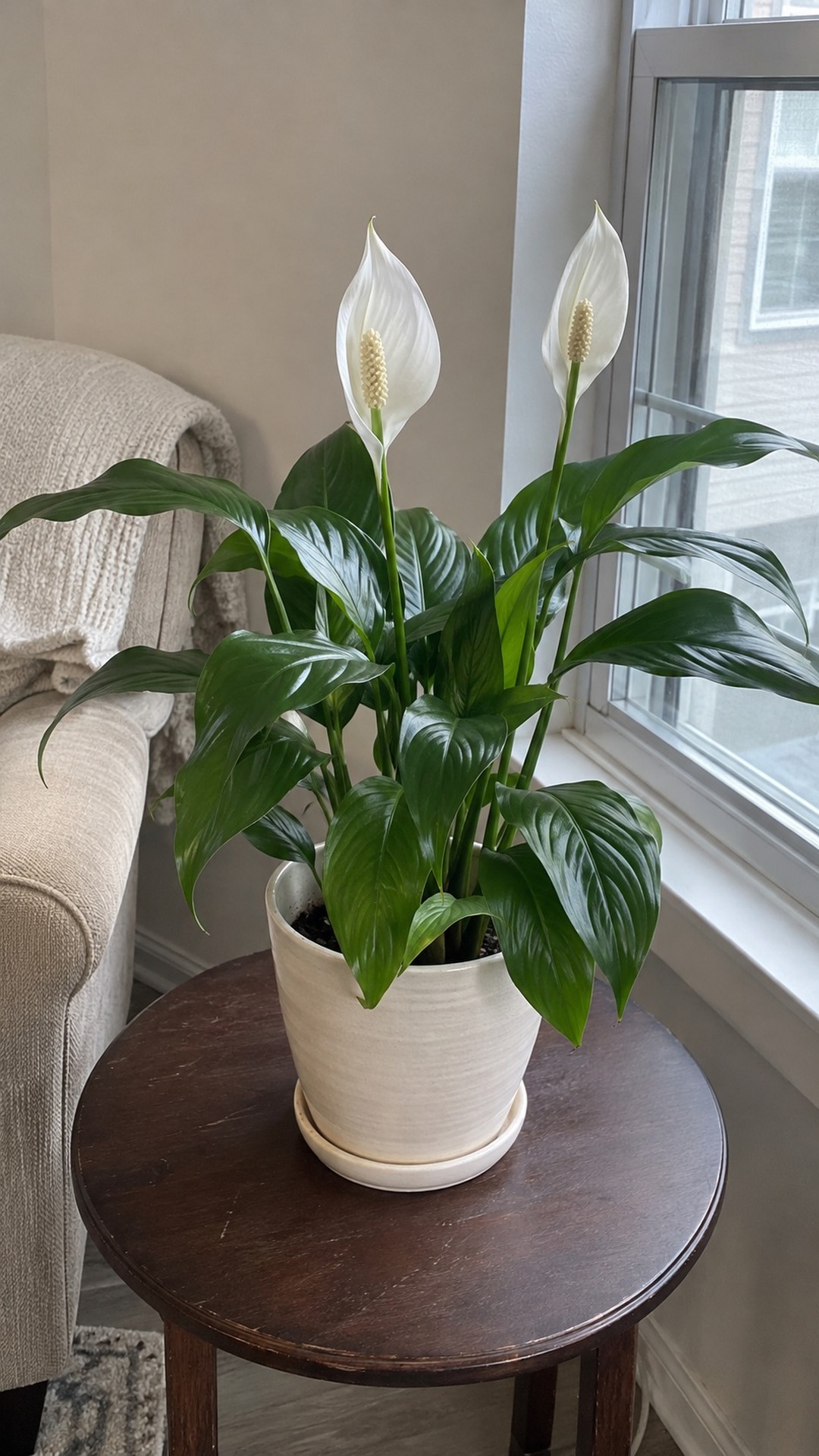
Clemson Extension puts it simply: a peace lily tolerates low light but grows best in bright, indirect light. South Dakota State Extension suggests an east or north window. That’s why it shows up among low light indoor plants and works in a bathroom with a small window. It can live in a dim corner, but brighter indirect light gives it a much better chance to flower.
Two things to keep it away from:
- Direct sun. Clemson warns that the heat will scorch the foliage. Pale or brown patches on the leaves facing the window are the sign.
- Cold and moving air. Peace lilies like daytime temperatures between 68 and 85°F, and Clemson advises avoiding anything below 60°F. Keep them off cold windowsills in winter and away from heat and air-conditioning vents.
Why Is My Peace Lily Drooping?
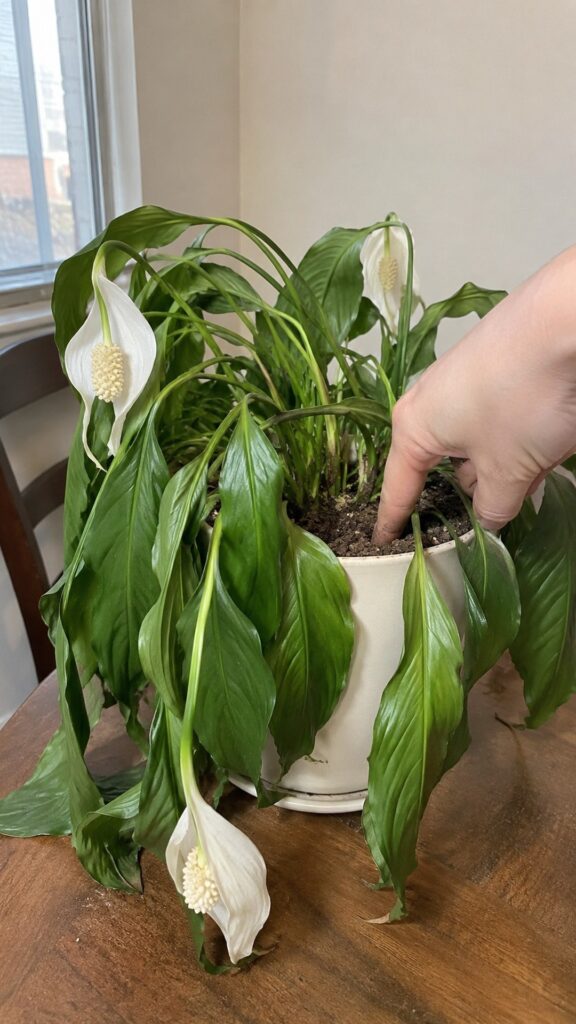
Usually because it’s thirsty. A peace lily wilts dramatically when the soil dries out; SDSU Extension lists drooping as the sign that it isn’t getting enough water. Check before you water, though, because a plant sitting in wet soil can droop too.
- Push a finger into the soil. If it’s dry an inch or two down and the pot feels light, water it thoroughly until water runs from the drainage hole. It often perks up within hours, though a badly wilted plant can take longer.
- If the soil is wet and it’s still drooping, don’t add water. Clemson notes that root and stem diseases, usually caused by overwatering, are the most common peace lily problem. Check that the pot drains and the saucer is empty, and let the soil dry a little. If it keeps drooping or the stems turn soft at the base, slide it out and look at the roots: firm, light-colored roots are healthy, while brown, mushy, smelly ones are rotting.
A peace lily that wilts often isn’t ruined, but repeated collapses stress it. If it droops every few days, check how fast the soil dries and whether roots are crowding the pot. Repot only when roots circle the pot or grow out of the drainage holes, as covered below.
 Save
How Often Should You Water a Peace Lily?
When the top of the soil has dried slightly, not on a fixed day. Clemson, SDSU and NC State all say the same thing in different words: keep the soil moist but not soggy, and let it dry a little between waterings. In a warm, bright room that can mean once a week; in winter, less.
- Use room-temperature water.
- Never leave the pot standing in water. Empty the saucer after watering.
- Bottom watering works well, NC State notes: set the pot in a few inches of water for a while, then let it drain.
Why Won’t My Peace Lily Flower?
Clemson Extension gives the two usual reasons: “Lack of flowering usually occurs when plants are less than a year old or are growing in insufficient light.” Store plants are often sold in full bloom, so a pause after you bring one home is normal.
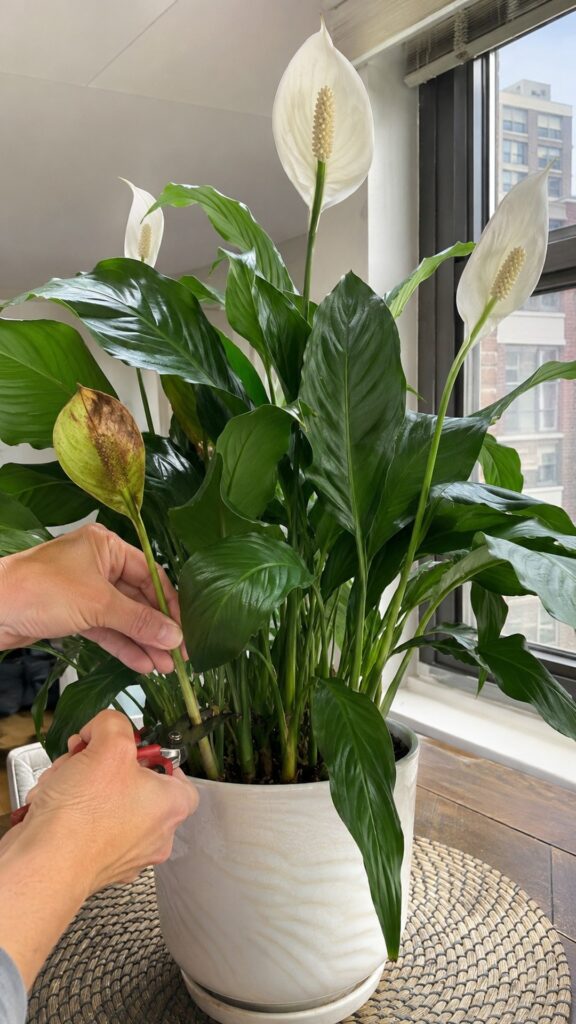
If your plant is mature and still won’t bloom, move it to the brightest spot you have that gets no direct sun, and be patient. The white flowers turn pale green after about 10 days and can last another month or more, according to NC State. Once a flower turns brown, cut its stalk off near the base.
 Save
Brown Tips and Brown Edges
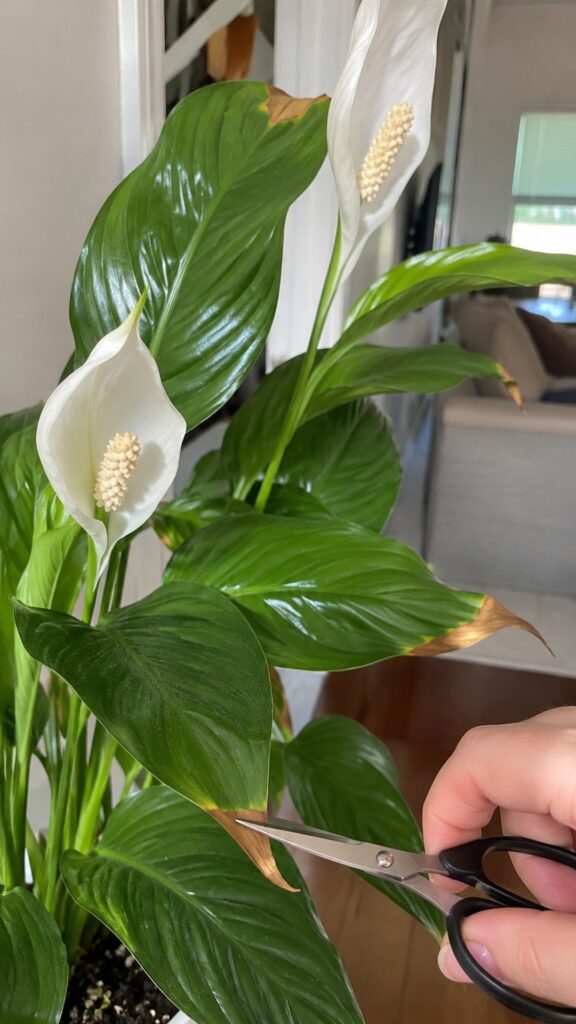
Brown tips are the most common complaint, and they usually have one of a few causes. SDSU lists too much light, too much fertilizer, too little water and low humidity. Clemson adds that overfeeding or letting the plant dry out too far browns the edges.
- Tips brown after a feeding: too much fertilizer. Flush the pot with plain water and feed far less often.
- Brown, crispy edges after wilting: the soil dried out too far. Water a little sooner.
- Brown patches on the side facing the window: direct sun. Move it back.
- Tips brown in a heated room in winter: dry air. A humidifier is the most reliable fix.
Brown tips won’t turn green again. Trim them with clean scissors, following the leaf’s natural shape, and watch whether new leaves stay clean.
 Save
What About Yellow Leaves?
An occasional yellow leaf at the bottom is just an old leaf finishing up. Several at once usually mean a watering problem, too much or too little, and SDSU notes that older leaves also yellow when a plant hasn’t been repotted in a while. Our guide to plant leaves turning yellow helps you tell which one you’re dealing with.
Feeding and Repotting
Peace lilies need very little fertilizer. Clemson suggests a balanced liquid houseplant fertilizer at one-quarter strength every six to eight weeks in spring and summer, and none in fall and winter. More than that is a common cause of the brown tips above.
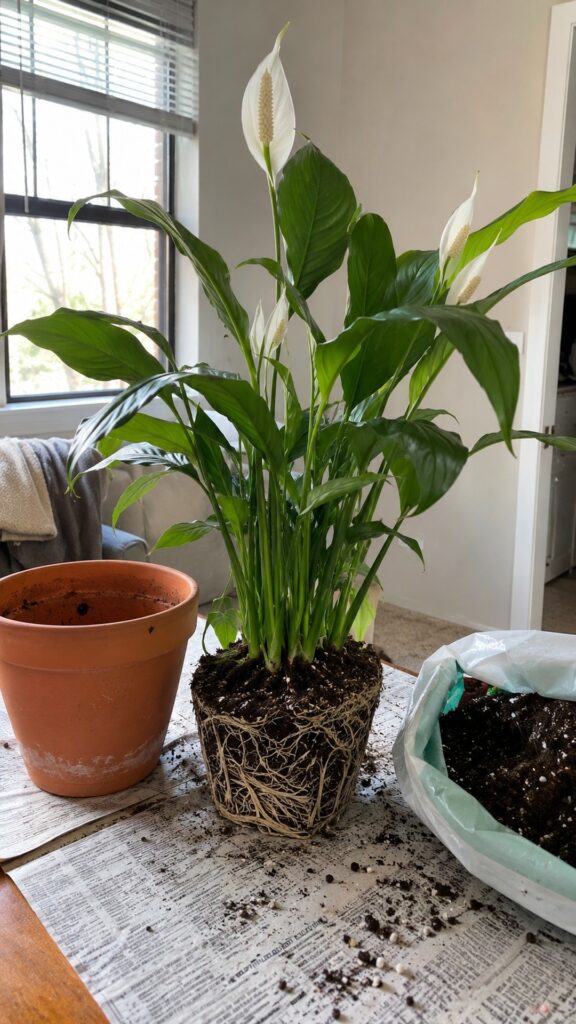
They like being slightly pot-bound, so don’t rush to repot. When roots grow through the drainage holes or circle the top of the soil, move it to a pot just one to two inches larger, as Clemson recommends. NC State suggests doing it in February or March.
 Save
Is a Peace Lily Safe for Cats and Dogs?
No. Despite the name, a peace lily isn’t a true lily, but it’s still toxic to pets. The ASPCA lists it as “Toxic to Dogs, Toxic to Cats” because of insoluble calcium oxalates, which cause mouth irritation, drooling, vomiting and trouble swallowing if chewed. Keep it where pets can’t reach the leaves, or pick something from our list of plants safe for cats instead.
Peace Lily Questions
Can a peace lily live in a room with no windows?
Not long-term on its own. It tolerates low light, but it needs some. A grow light on a timer can make a windowless room work.
Should I mist my peace lily?
Misting raises humidity only for a few minutes. If brown tips point to dry air, a humidifier does far more.
How big does a peace lily get?
Indoors, most reach about 3 feet tall and wide, according to NC State, though some varieties stay much smaller.
Sources
This guide is based on the Clemson Cooperative Extension fact sheet on peace lilies, South Dakota State University Extension’s peace lily houseplant how-to, the NC State Extension Gardener Plant Toolbox profile of Spathiphyllum, and the ASPCA’s entry on peace lily. All sources checked November 13, 2026.